

TL;DR:
- Proper stone care in South Florida requires pH-neutral cleaners, prompt spill blotting, and grit prevention.
- Environmental factors like humidity, salt air, and grit accelerate natural stone deterioration here.
- Professional restoration is recommended when surface dulls, etches, or deep stains occur, to avoid costly replacements.
That bottle of all-purpose cleaner sitting under your kitchen sink could be quietly destroying your marble countertop. It sounds dramatic, but it’s true. Many popular household cleaners contain acids, bleach, or harsh alkaline compounds that eat into natural stone, leaving behind dull spots, etch marks, and damage that no amount of scrubbing will reverse. The good news is that proper stone care is straightforward once you know the rules: use pH-neutral cleaners, blot spills fast, and keep grit off your floors. This guide gives you the practical, South Florida-specific knowledge to protect your investment for years to come.
Table of Contents
- Why stone maintenance matters in South Florida
- Daily and weekly stone care routines
- Special care for marble tile grout
- Preventing damage: Most common stone maintenance mistakes
- When to call the professionals for restoration
- What most guides miss about stone care in South Florida
- Restore and protect your stone—get local, professional help
- Frequently asked questions
Key Takeaways
| Point | Details |
|---|---|
| Use pH-neutral cleaners | Only use stone-safe, pH-neutral products to avoid damage or etching. |
| Blot spills immediately | Quickly blot, don’t wipe, to prevent stains and surface dullness on stone. |
| Protect with mats and regular sweeping | Trap dirt and grit with mats, and sweep or dust-mop often to minimize scratches. |
| Seal marble grout after cleaning | Sealing grout after deep cleans prevents stains and water intrusion. |
| Know when to call pros | Serious stains, dullness, or etching require expert stone restoration services. |
Why stone maintenance matters in South Florida
South Florida is genuinely one of the toughest environments for natural stone. The combination of heat, salt air, high humidity, and sandy grit creates conditions that accelerate wear on marble, travertine, limestone, and granite faster than almost anywhere else in the country. A surface that might last decades with minimal care in a dry northern climate can show visible deterioration within a few years here if it’s not properly maintained.
Think about what happens in a typical South Florida home. Guests track in fine beach sand from the driveway. The air conditioning runs constantly, creating condensation on stone floors near sliding glass doors. Humidity encourages mold and mildew growth in grout lines. Kitchens and bathrooms see daily exposure to water, food acids, and cleaning products. All of these factors combine to create a maintenance challenge that generic cleaning advice simply doesn’t address.
High-traffic areas face the most pressure. Commercial lobbies in Miami office buildings, hotel corridors in Pompano Beach, and restaurant floors throughout Boca Raton see hundreds of foot-traffic cycles per day. Each step grinds microscopic particles of grit across the stone surface, acting like sandpaper on a finish that took years to develop. Understanding stone care in South Florida means accepting that what works elsewhere may not be enough here.
Here’s what you’re actually fighting against every day:
- Fine sand and grit tracked in from driveways, pools, and beaches
- High humidity that keeps surfaces slightly damp and encourages mold growth in grout
- Hard water deposits from South Florida’s mineral-rich water supply
- Frequent spills in kitchens and bathrooms from acidic foods and cleaning products
- UV exposure on outdoor patios and pool decks that can fade and weaken stone sealers
“The core homeowner routine for natural stone is pH-neutral cleaning, prompt spill blotting, and prevention of grit abrasion.” This isn’t optional in South Florida. It’s the baseline.
For business owners and facility managers, the stakes are even higher. Damaged stone in a commercial space signals neglect to clients and customers. Detailed commercial stone care tips can help you build a maintenance schedule that keeps your property looking sharp without constant costly repairs.
Daily and weekly stone care routines
Consistent, simple routines do more for your stone than any single deep-cleaning session. The goal is to prevent damage from accumulating rather than trying to reverse it after the fact. Here’s how to build a routine that actually works for South Florida conditions.
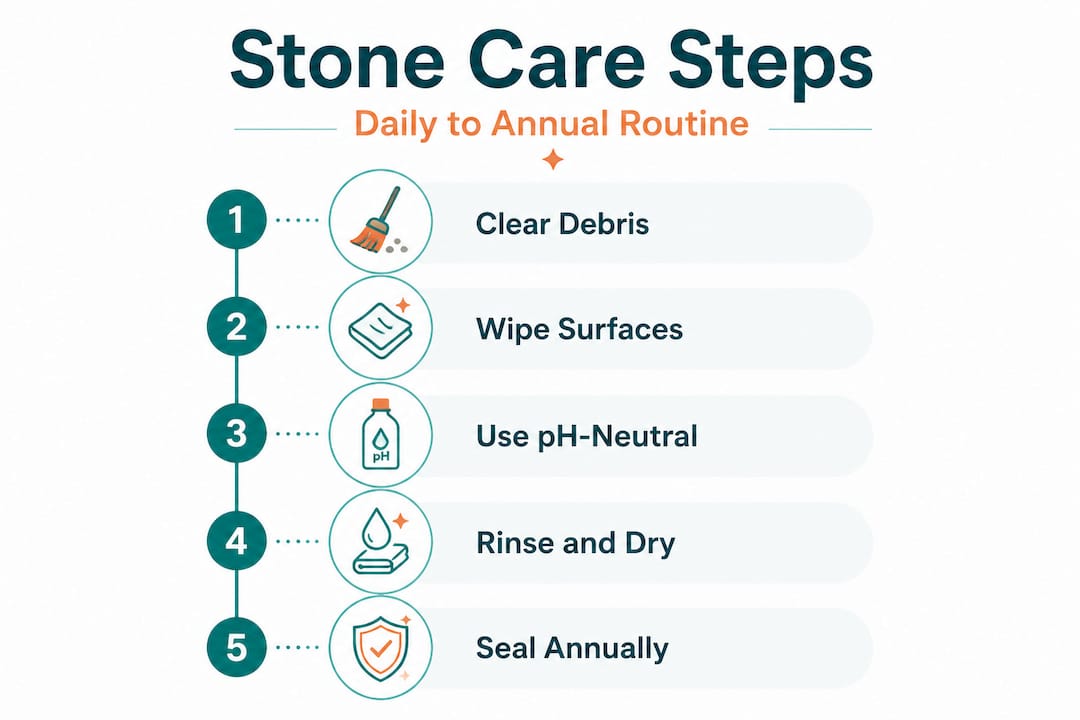
Daily steps for stone floors and countertops:
- Dust-mop or dry-sweep all stone floors every morning before foot traffic begins. Use a clean, untreated dust mop. This removes the fine grit that causes scratching before it gets ground in.
- Wipe down countertops with a damp microfiber cloth and warm water after every use. Dry immediately with a soft cloth.
- Blot spills the moment they happen. Don’t wipe. Wiping spreads the liquid and pushes it into pores. Press a clean cloth straight down and lift.
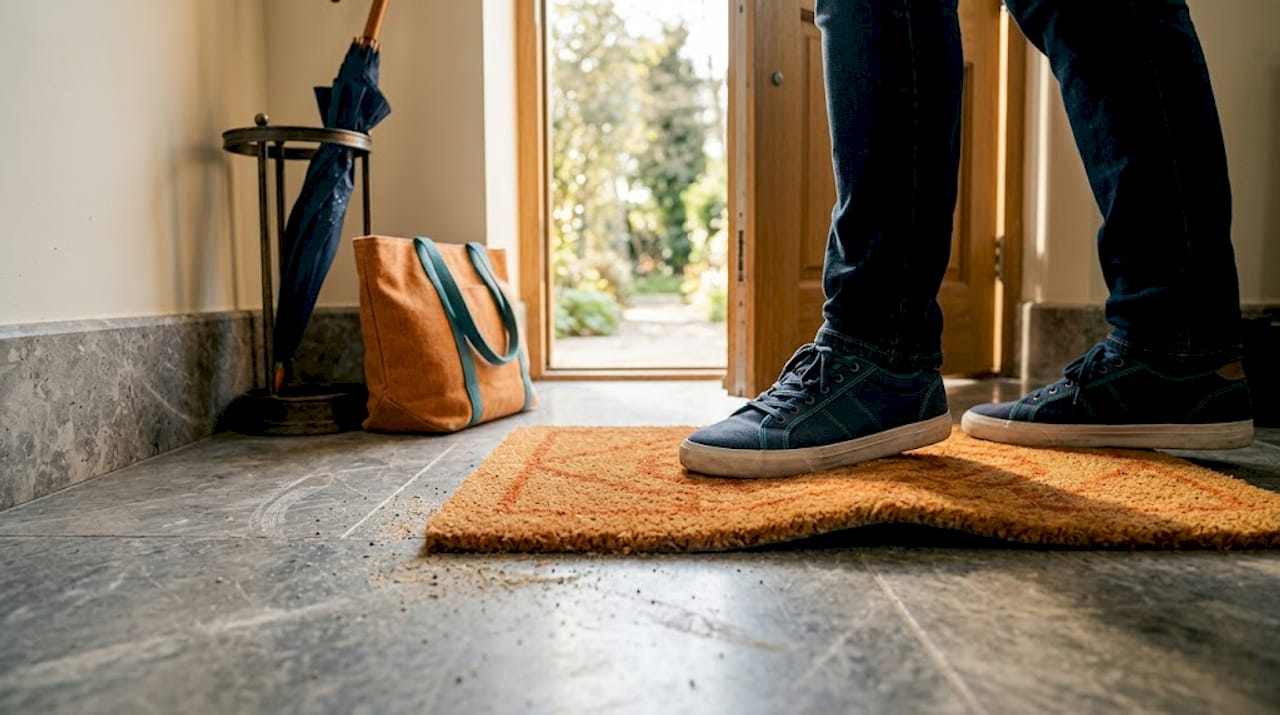
- Check mats and rugs at entry points. Shake them out or vacuum them so they keep doing their job of trapping grit.
Weekly steps for deeper cleaning:
- Mop stone floors with warm water and a pH-neutral cleaner specifically formulated for natural stone. Never use general-purpose floor cleaners.
- Rinse thoroughly with clean water after mopping. Residue from even safe cleaners can build up over time and dull the finish.
- Dry the floor completely with a clean mop or soft towels. Standing water is the enemy of stone and grout.
- Inspect grout lines for early signs of discoloration or mold. Catching it early means a simple cleaning fix rather than a restoration job.
Choosing the right products matters enormously. Look into green stone cleaning solutions that are both effective and safe for your surfaces and your family. Many eco-friendly formulas are also pH-balanced, making them a smart choice for stone care.
Pro Tip: Place absorbent mats at every entry point, in front of the kitchen sink, and near bathroom vanities. These three locations account for the majority of grit and liquid damage on stone floors in South Florida homes. A good mat is cheaper than a single restoration visit.
The marble care basics guide is also worth bookmarking for quick reference on product selection and cleaning frequency. Avoid scouring powders, cream cleansers, and anything with bleach or ammonia. These products strip sealers and etch the stone surface, often invisibly at first, until the damage becomes obvious.
Special care for marble tile grout
Grout is the weak link in most marble tile installations. It’s porous, sits slightly below the tile surface, and collects everything: dirt, soap residue, mold spores, and mineral deposits from South Florida’s hard water. Ignoring grout care leads to staining that eventually becomes nearly impossible to remove without professional help.
The chemistry of grout cleaning is what most people get wrong. Using the wrong product, even once, can permanently discolor or weaken grout. Here’s a quick comparison of what works and what doesn’t:
| Method | Effect on marble tile grout | Recommended? |
|---|---|---|
| pH-neutral stone cleaner | Cleans without etching or weakening | Yes |
| Soft nylon brush scrubbing | Removes buildup without scratching | Yes |
| Sealing after cleaning | Locks out future stains and moisture | Yes |
| Vinegar or lemon juice | Etches grout and marble, causes dullness | Never |
| Bleach-based grout cleaner | Discolors grout, damages marble finish | No |
| Stiff metal brush | Scratches tile surface and breaks down grout | No |
Consistent, gentle maintenance and correct chemistry are the keys to keeping marble tile grout clean and intact. As American Stone Center notes, pH-neutral cleaning, soft brushes, and sealing after cleaning are the three pillars of good grout care.
The step-by-step process for grout cleaning is straightforward:
- Apply a pH-neutral stone cleaner to the grout lines and let it sit for two to three minutes.
- Scrub gently with a soft-bristled nylon brush. Work in small sections.
- Rinse thoroughly with clean water to remove all cleaner residue.
- Dry the area completely before sealing.
- Apply a penetrating stone sealer to the grout lines once dry.
For more detail on the full process, the marble grout cleaning tips and stone sealing guidance pages walk through each step with professional-level detail.
Pro Tip: Never use vinegar or lemon juice on marble grout, even diluted. The acid reacts with the calcium carbonate in marble and causes etching that appears as dull, rough patches. Once etched, the surface requires professional honing or polishing to restore.
Preventing damage: Most common stone maintenance mistakes
Knowing what not to do is just as important as knowing the right routine. Most stone damage in South Florida homes and businesses comes from a handful of repeated mistakes, not from single catastrophic events.
“Acidic household items and cleaners, including vinegar, lemon and citrus, and some specialty bathroom cleaners, can etch and permanently dull calcite-based stones. Quick blotting and stone-safe cleaners are the key defense.”
Here are the top five mistakes that lead to costly repairs:
- Using the wrong cleaner. Bathroom tile sprays, glass cleaners, and multi-surface products often contain acids or ammonia that etch marble and limestone on contact.
- Letting spills sit. Coffee, wine, juice, and even plain water left on stone for more than a few minutes can penetrate the surface and cause staining that won’t buff out.
- Skipping mats and rugs. Without mats at entry points, grit is tracked directly onto stone floors where foot traffic grinds it in like sandpaper.
- Using abrasive scrubbing tools. Steel wool, rough sponges, and stiff brushes scratch stone finishes and remove sealers, leaving the surface exposed.
- Ignoring resealing schedules. Sealers wear down over time, especially in high-traffic areas. An unsealed stone surface absorbs stains deeply and becomes much harder to restore.
| Cleaning habit | Safe for stone? | Long-term impact |
|---|---|---|
| pH-neutral stone cleaner | Yes | Preserves finish and sealer |
| Vinegar or citrus cleaner | No | Permanent etching and dullness |
| Microfiber cloth, soft mop | Yes | No scratching, even cleaning |
| Steel wool or abrasive pad | No | Scratches and sealer removal |
| Immediate spill blotting | Yes | Prevents deep staining |
| Leaving spills to dry | No | Permanent stains and mineral deposits |
Understanding the difference between stone restoration vs replacement becomes very relevant once damage accumulates. In most cases, professional restoration is significantly less expensive than replacing stone tile or countertops, but only if you act before the damage becomes severe.
When to call the professionals for restoration
There’s a point where regular cleaning stops being enough. Recognizing that point early saves you money and prevents further damage. Here’s how to know when it’s time to bring in professional help.
- The shine won’t come back. If your marble or travertine looks dull even after cleaning, the surface finish has been compromised. This requires professional honing and polishing, not more scrubbing.
- You see etch marks. These appear as dull, rough patches where acidic liquids made contact. They’re not stains. They’re physical damage to the stone surface.
- Deep stains remain after cleaning. If a stain doesn’t respond to proper stone cleaner and gentle scrubbing, it has penetrated below the surface and needs professional treatment.
- Grout is crumbling or heavily discolored. Deteriorating grout allows moisture to get under tiles, which can lead to lifting and cracking.
- The surface feels rough or uneven. Scratches, chips, and worn areas on high-traffic floors need professional grinding and honing to restore a level, smooth surface.
Arizona Tile recommends professional services for deep restoration, especially after damage from improper cleaning. This is sound advice. Attempting to fix etching or deep stains with DIY methods often makes the problem worse.
Pro Tip: Restoration almost always costs less than replacement. A professional can hone, polish, and reseal damaged marble for a fraction of what new stone installation would cost. Before you consider ripping out floors or countertops, get a restoration assessment first.
If you’re unsure whether your situation calls for DIY or professional work, the comparison at DIY vs professional restoration lays out the decision clearly. For surfaces that need expert attention, stone restoration services cover everything from grinding and honing to polishing and sealing.
What most guides miss about stone care in South Florida
Most stone care advice is written for a generic American home. It assumes moderate humidity, minimal grit, and occasional spills. South Florida is none of those things. After years of working with stone surfaces across Miami, Boca Raton, and Pompano Beach, we’ve seen the same pattern repeat: homeowners follow standard advice, their stone still deteriorates faster than expected, and they don’t understand why.
The real issue is frequency. In South Florida, you can’t dust-mop once a week and call it maintenance. Grit accumulates daily. Hard water deposits form within days on unsealed surfaces. Humidity keeps grout slightly damp almost year-round, which accelerates mold growth. The routines we’ve outlined in this guide need to happen consistently, not occasionally.
We’ve also noticed that many people underestimate how much damage comes from “safe” products that are simply the wrong pH for stone. A cleaner labeled “natural” or “gentle” is not automatically safe for marble. The only label that matters is “pH-neutral” and “safe for natural stone.” Everything else is a gamble.
The other thing most guides skip is the psychological barrier around calling professionals. Many homeowners wait too long because they assume restoration is expensive or disruptive. In reality, a professional assessment often reveals that the damage is less severe than it looks, and a single polishing and sealing visit can restore a surface to near-original condition. We’ve seen restoration examples where surfaces that looked completely ruined came back beautifully with the right professional treatment.
The bottom line: South Florida stone care requires more vigilance, more frequent attention, and a clearer understanding of when to call for help. That’s not a burden. It’s just the reality of living with beautiful natural stone in a demanding climate.
Restore and protect your stone—get local, professional help
If your stone surfaces have already taken some damage, or if you want to make sure they’re properly sealed and protected before South Florida’s humidity does its worst, professional restoration is the smartest next step. At Affordable Marble Restoration, we work with marble, granite, travertine, limestone, terrazzo, and more, providing cleaning, honing, polishing, sealing, and repair for residential and commercial clients across South Florida. Whether you need granite restoration services for a commercial kitchen or concrete restoration services for an outdoor patio, our team brings local expertise and professional-grade equipment to every job. Contact Affordable Marble Restoration today to schedule an assessment and find out what’s possible for your stone surfaces.
Frequently asked questions
What type of cleaner is best for natural stone surfaces?
A pH-neutral cleaner specifically formulated for stone is safest. Acidic or alkaline cleaners should always be avoided, as they etch the surface and strip sealers over time.
How often should I seal my marble tile grout?
Reseal marble grout after every deep cleaning, or at least once a year in busy South Florida homes or businesses. American Stone Center recommends sealing after regular cleaning to lock out stains and moisture.
Can vinegar be used to clean natural stone?
No. Vinegar and other acidic cleaners etch and permanently dull natural stone, especially marble. Arizona Tile explicitly advises against using acidic cleaners of any kind on stone surfaces.
Are mats or rugs really necessary for stone floors?
Yes, they are essential. Tracked-in dirt is abrasive and grinds across stone surfaces with every step, causing scratches and wear that accumulate into visible damage over time.
When should I hire a professional for damage or dullness?
If routine cleaning no longer restores shine, or you see etching, deep stains, or rough patches, it’s time for expert restoration. Professional services are especially important after damage from improper cleaning products.
