

TL;DR:
- Proper cleaning and sealing are essential to preserve natural stone surfaces in South Florida homes.
- Different stones require specific gentle, pH-neutral cleaning methods, with professional restoration for deep damage.
- Regular maintenance and expert care extend stone lifespan and protect long-term property value.
Natural stone surfaces are one of the most valuable features in a South Florida home, but they also demand the right care. Use the wrong cleaner once, and you could permanently etch the finish on your marble floor or strip the sealant from your granite countertop. Regular maintenance enhances stone longevity and protects your investment, yet most homeowners don’t realize how many everyday products actively damage natural stone. This guide walks through the key criteria for evaluating cleaning methods, the top techniques for marble, granite, travertine, and terrazzo, and how to decide when a professional should handle the job.
Table of Contents
- How to evaluate stone cleaning methods
- Top recommended methods for marble, granite, and more
- Comparing popular stone cleaning methods
- DIY vs. professional stone cleaning: Which is best for your home?
- Our take: What most guides get wrong about stone cleaning
- Professional stone care services for South Florida homes
- Frequently asked questions
Key Takeaways
| Point | Details |
|---|---|
| Choose safe products | Always use pH-neutral cleaners and avoid anything acidic or abrasive for stone surfaces. |
| Know your stone | Identifying your stone type is essential before cleaning to prevent permanent damage. |
| Professional care benefits | Expert restoration and scheduled maintenance keep marble, granite, and other stones looking their best. |
| Seal regularly | Resealing is key to long-term stain resistance and shine for most natural stones. |
| DIY with caution | Basic cleaning is fine for light messes, but deep stains or etching call for professional help. |
How to evaluate stone cleaning methods
Before jumping into the top methods, let’s consider the factors that ensure your cleaning choice works and isn’t harmful to your surfaces.
Not all stone is the same, and treating it like it is leads to real, expensive problems. Marble, limestone, and travertine are calcium-based stones that react badly to acids. Granite is denser and more forgiving. Terrazzo is a composite, and onyx is delicate and translucent. Each one responds differently to cleaners, tools, and techniques.
Here are the key factors to evaluate before choosing any cleaning method:
- Stone type: Calcium-based stones (marble, limestone, travertine) are highly sensitive to acids and require very gentle, pH-neutral products.
- Surface finish: Polished, honed, and brushed finishes each respond differently. Polished marble shows scratches and etch marks far more easily than a honed surface.
- Porosity: High-porosity stones absorb liquids quickly, meaning spills and improper cleaners penetrate deep and become much harder to remove.
- Traffic level: High-traffic floors in kitchens, entryways, or commercial spaces accumulate grime faster and may need more frequent professional attention.
- Stain type and depth: A fresh spill is an entirely different challenge from a years-old oil stain embedded beneath the surface.
Different stone types require specific cleaning approaches to avoid etching or dullness, which is why grabbing the first “all-purpose” cleaner under your sink can do more harm than good. Vinegar, lemon juice, and common bathroom sprays are all acidic enough to dull and etch marble, often in a single application.
The DIY versus professional decision also matters at this stage. For light maintenance cleaning, a quality pH-neutral product and a soft mop will get you far. But for anything beyond surface dust and light grime, professional stone cleaning addresses what household tools simply cannot. Professionals use rotary machines, diamond-impregnated pads, and industrial-grade sealants that restore texture and protection at a level no store-bought kit can replicate.
Pro Tip: Always test any new cleaner on a small, hidden section of stone first. A closet corner, the inside edge of a step, or a low-traffic spot near a wall are ideal. Wait 24 hours to check for discoloration, etching, or finish changes before applying it to the full surface.
Top recommended methods for marble, granite, and more
With the criteria in mind, here are the top methods experts use to clean and restore popular stone types.
1. pH-neutral mopping for marble and limestone
This is the foundation of routine marble and limestone care. Mix a small amount of pH-neutral stone cleaner, specifically formulated for calcium-based stone, with warm water and mop with a soft, non-abrasive microfiber mop. Avoid soaking the floor. Damp is ideal. Marble surfaces benefit from gentle cleaners and regular resealing, and this method supports that routine beautifully when done weekly.
2. Mild detergent and microfiber for granite
Granite can handle slightly more robust cleaning than marble, but it still isn’t bulletproof. A few drops of mild dish soap mixed in warm water, applied with a microfiber cloth in gentle circular motions, works well for daily or weekly maintenance. Always dry granite completely after cleaning to prevent water spots and residue buildup.
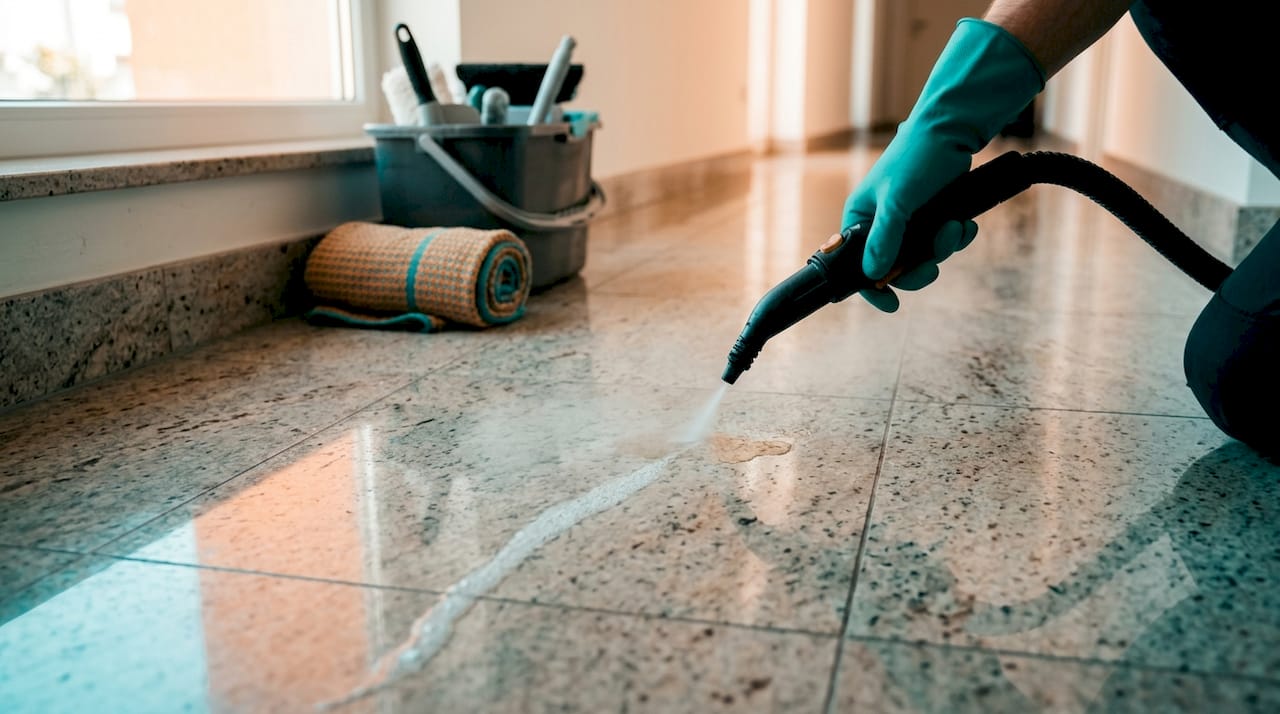
3. Steam cleaning for deep stains
Steam cleaning uses pressurized hot vapor to loosen embedded dirt, grease, and bacteria without relying on chemical cleaners. When done correctly, it is effective for non-porous or sealed stone. However, it is not appropriate for every surface. High-pressure steam on unsealed, porous, or already-damaged stone can force moisture into the material and worsen existing problems. Always consult a professional before using steam on travertine or limestone.
4. Professional powder polishing for restoration
This is where residential cleaning transitions into true restoration. Fine marble polishing powders, when applied and worked in by a professional using a rotary machine, chemically react with the stone surface to restore clarity and shine. This technique addresses light etching and dullness that routine cleaning cannot fix. It’s particularly effective for cleaning marble surfaces that have gone flat over years of foot traffic.
5. Specialized products for travertine and terrazzo
Travertine has natural voids and a rougher surface that traps dirt. Travertine cleaning best practices call for neutral stone cleaners applied with a scrub brush rather than a flat mop, to get product into the pores without over-saturating the surface. Terrazzo, which is made from chips of marble or granite set in a cement or epoxy base, needs pH-neutral cleaners and regular buffing to maintain its signature shine. Abrasive scrubbers will ruin terrazzo’s smooth surface.
6. Professional honing and deep cleaning
For floors that are visibly scratched, stained, or lackluster despite routine maintenance, professional stone cleaning services ensure deep cleaning without harmful abrasion. Professionals use diamond abrasive pads in progressive grits to remove the damaged surface layer and expose fresh, clean stone underneath. This is a fully restorative process, not just maintenance, and it is the right call for any surface that looks permanently dull or scratched.
The goal of any cleaning method isn’t just to make stone look clean today. It’s to keep the stone structurally sound and visually beautiful for the next decade. That requires gentleness, the right tools, and the right timing.
Pro Tip: Never use steel wool, abrasive sponges, or acidic sprays on any natural stone. Even granite, which is more resistant than marble, can lose its polish and become more susceptible to staining when the surface is scratched or etched. Protect your stone’s beauty by treating every surface as though it’s the most delicate one in your home.
Comparing popular stone cleaning methods
Now, let’s put these cleaning methods head-to-head so you can quickly match your needs to the right solution.
Using the correct cleaning method prolongs stone life and appearance, and one of the simplest ways to make a smart choice is to see all your options side by side.
| Method | Materials needed | Works best for | Avoid when | Approx. cost | Skill level |
|---|---|---|---|---|---|
| pH-neutral mopping | Stone cleaner, microfiber mop | Marble, limestone, routine maintenance | Deep stains, etching | $10–$30/month DIY | Beginner |
| Mild detergent and microfiber | Dish soap, microfiber cloths | Granite countertops and floors | Highly porous or unsealed stone | Under $10/month | Beginner |
| Steam cleaning | Steam machine | Non-porous sealed surfaces | Porous, cracked, or unsealed stone | $50–$200 rental | Intermediate |
| Powder polishing | Polishing powder, rotary machine | Light etch removal on marble | Deep scratches, uneven surfaces | $150–$500 professional | Professional only |
| Specialized travertine/terrazzo cleaner | Stone-specific neutral cleaner, soft brush | Travertine floors and terrazzo surfaces | Standard multi-surface products | $20–$60/month DIY | Beginner to intermediate |
| Professional honing and cleaning | Diamond pads, industrial equipment | Deeply stained, dull, or scratched stone | As a weekly routine (too abrasive at high frequency) | $200–$800+ professional | Professional only |
The most beginner-friendly option is pH-neutral mopping for routine upkeep. It’s low cost, low risk, and keeps marble and limestone in great condition between professional visits.
The most effective deep-cleaning option is professional honing and cleaning. No DIY approach comes close when the goal is full restoration.
One critical point that often gets overlooked: resealing is crucial to prevent stains and preserve stone value. Even the best cleaning routine breaks down quickly on an unsealed surface. Sealing your stone every 12 to 24 months, depending on traffic and use, creates a barrier that makes every cleaning session more effective and longer-lasting. Skipping it means you’re constantly cleaning a surface that’s absorbing what you’re trying to wipe away. For more stone care tips that apply to both residential and commercial surfaces, it’s worth reviewing guidance built for high-traffic environments since those standards translate well to busy home kitchens and entryways.
DIY vs. professional stone cleaning: Which is best for your home?
Finally, let’s help you decide whether to tackle cleaning yourself or bring in professional expertise.
This is where most homeowners make a costly mistake. They assume that because they’ve been cleaning their floors for years without obvious problems, they’re doing it right. The truth is that stone damage often accumulates slowly. A surface that looks fine today may be showing early signs of dullness, micro-scratching, or sealant breakdown that only becomes obvious after a few more years of the same routine.
When DIY works well:
- Weekly or daily maintenance cleaning with pH-neutral products
- Wiping up spills immediately before they can penetrate the stone
- Dusting and dry mopping to prevent abrasive grit from scratching polished surfaces
- Applying a consumer-grade stone sealer as a temporary barrier between professional sealings
- Spot cleaning with a soft cloth and appropriate stone cleaner for minor surface smudges
When you need a professional:
- Visible etching, scratches, or dull patches that don’t respond to regular cleaning
- Deep stains from wine, oil, rust, or organic matter that have penetrated the sealant layer
- Cracked, chipped, or pitted surfaces that need grinding and refinishing
- Grout lines in tile installations that have turned dark and don’t clean up with standard products
- Full restoration projects before selling a home or after a major renovation
Expert restoration delivers results that DIY simply cannot, especially for deep stains or etched surfaces. It’s not about skill. It’s about equipment, product access, and technique. A professional carrying a rotary machine with diamond pads and commercial-grade polishing compounds is operating in a completely different category than a homeowner with a mop and a spray bottle.
Pro Tip: Before attempting any DIY cleaning on a high-value surface, weigh the replacement or restoration cost against the time and risk involved. A marble foyer floor that cost $8,000 to install deserves professional-grade care. The math almost always favors calling a pro for anything beyond basic maintenance. Check out the expert restoration advantages that go beyond aesthetics when you’re also protecting long-term property value.
Our take: What most guides get wrong about stone cleaning
Most cleaning guides treat stone like it’s a task to complete rather than a material to preserve. They focus heavily on “how to clean a stain right now” and barely mention what happens to your floor five years from now if you keep using that same method.
Here’s what we’ve learned from working with stone surfaces across South Florida. The homeowners who maintain the most beautiful marble and granite aren’t the ones who spend the most time scrubbing. They’re the ones who got professional help early, invested in proper sealing, and then committed to a simple, gentle routine between visits. That’s it. That’s the whole secret.
The tricky part is that even “natural” or “gentle” products can cause cumulative damage. Baking soda paste, for example, is mildly abrasive. Used once, it’s probably fine. Used monthly for three years on a polished marble countertop, and you’ll start to see a cloudy, uneven surface that no amount of mopping will fix. The same is true for essential oil sprays, homemade vinegar solutions, and even some commercial “natural” stone cleaners that aren’t truly pH-neutral.
Protecting long-term stone value means thinking beyond the surface-level clean and committing to a preservation strategy. That means professional cleaning and resealing on a schedule, not just when something goes visibly wrong. It means using the right products every single time, not just most of the time. And it means recognizing that natural stone in a South Florida home is constantly battling humidity, salt air, heavy foot traffic, and UV exposure. These surfaces work hard. They deserve care that matches that challenge.
The most common regret we hear from homeowners? “I wish I’d called sooner.” Not because the damage was catastrophic, but because getting ahead of deterioration is always cheaper, faster, and less disruptive than restoring a neglected surface years later.
Professional stone care services for South Florida homes
Ready to protect your investment? Here’s how partnering with local pros makes all the difference.
At Affordable Marble Restoration, we work with homeowners across Miami, Boca Raton, and Pompano Beach to keep natural stone looking its absolute best. Whether your floors need routine maintenance, a deep professional clean, or full restoration, we tailor every service to the specific condition and type of your stone. We offer free quotes and customized maintenance plans, so you always know exactly what your surfaces need and what it will cost. Our team specializes in everything from granite restoration services to travertine polishing and care and terrazzo restoration. Scheduling is flexible, and we bring the equipment, expertise, and products to your door so your stone gets professional-grade results every time.
Frequently asked questions
How often should marble or granite floors be professionally cleaned?
Professional cleaning is recommended once every 6 to 12 months for high-traffic areas to maintain shine and prevent deep staining. Lower-traffic spaces may only need it once a year.
What home cleaning products are safe for natural stone?
Use only pH-neutral, non-abrasive cleaners specifically labeled safe for marble and granite. Different stone types require specific cleaning approaches, so avoid acidic or abrasive products entirely.
Do all stone surfaces need to be sealed?
Most natural stones like granite and marble benefit from regular sealing, while some engineered stones may not require it. Resealing is crucial for stain resistance and long-term surface protection in both granite and marble.
Is steam cleaning safe for all types of stone?
Steam cleaning is usually safe for non-porous sealed stones but should be avoided on porous or unsealed surfaces. Stone porosity and finish determine whether steam is appropriate, and a professional assessment is always the safest first step.
Can I remove stains from marble myself?
Light stains can often be removed with gentle methods, but deep or etched stains typically require professional restoration. Professional services address deeper damage that DIY methods simply cannot reach or reverse.
