

TL;DR:
- Most worn stone surfaces in Florida can be restored without full replacement.
- Restoration involves deep cleaning, honing, polishing, and sealing, while replacement requires removal and new installation.
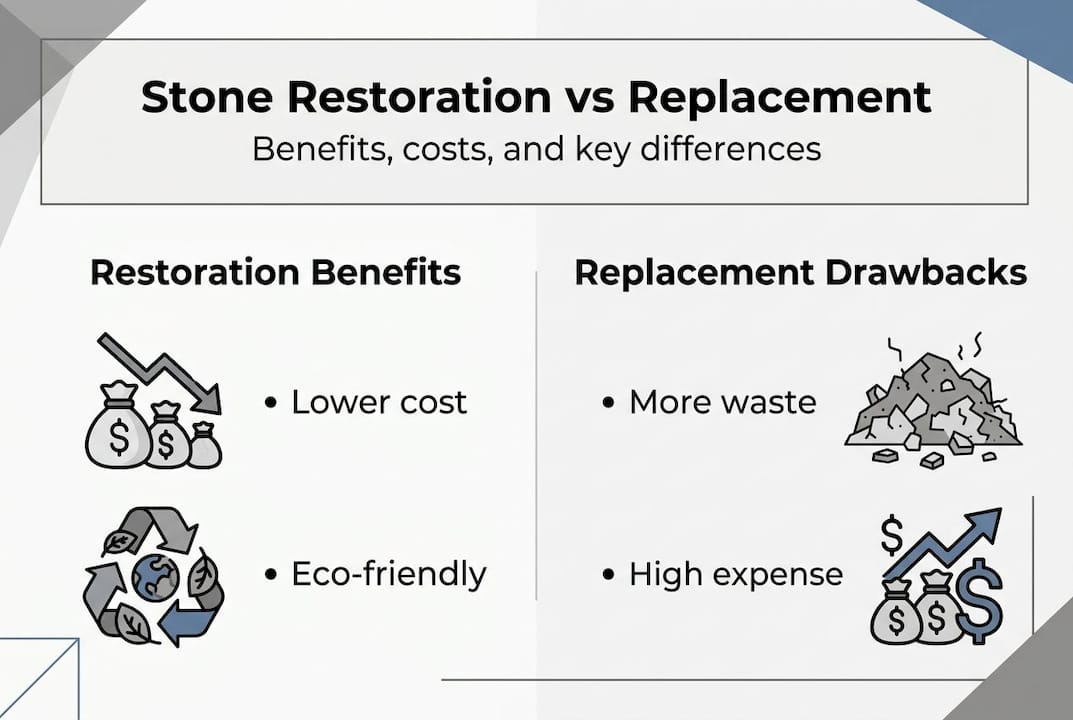
- Restoration costs significantly less, is eco-friendly, and extends stone lifespan compared to replacement.
Most South Florida homeowners assume that worn, dull, or scratched marble or granite means one thing: time for a costly replacement. That assumption is wrong, and it costs people thousands of dollars every year. Most stone surfaces with visible wear do not need outright replacement. In fact, the vast majority of stone problems you’ll encounter in a Florida home, from etching and scratches to surface dullness caused by humidity and salt air, can be fully reversed through professional restoration. This guide will walk you through the real differences between restoration and replacement, help you recognize which one your situation calls for, and give you the numbers to make a smart decision.
Table of Contents
- Understanding stone restoration and replacement
- Signs it’s time to restore or replace your stone
- Cost comparison: Restoration vs replacement in South Florida
- Maximizing stone longevity in Florida’s climate
- Why restoration wins: real lessons from South Florida homes
- Stone looking dull or damaged? We can help!
- Frequently asked questions
Key Takeaways
| Point | Details |
|---|---|
| Restoration suits most damage | Stone restoration fixes visible wear and tear in the majority of cases—replacement is rarely necessary. |
| Major cost savings | Choosing restoration over replacement can save 70-80% on your stone surface projects. |
| Climate-specific care is crucial | South Florida’s humidity and salt air require regular sealing and maintenance to preserve stone beauty. |
| Eco-friendly and less disruptive | Restoration avoids demolition waste and lets homeowners keep their original stone. |
Understanding stone restoration and replacement
Before you call a contractor or start pricing new tile, it helps to understand exactly what each option involves. These two paths are very different in scope, cost, and outcome.
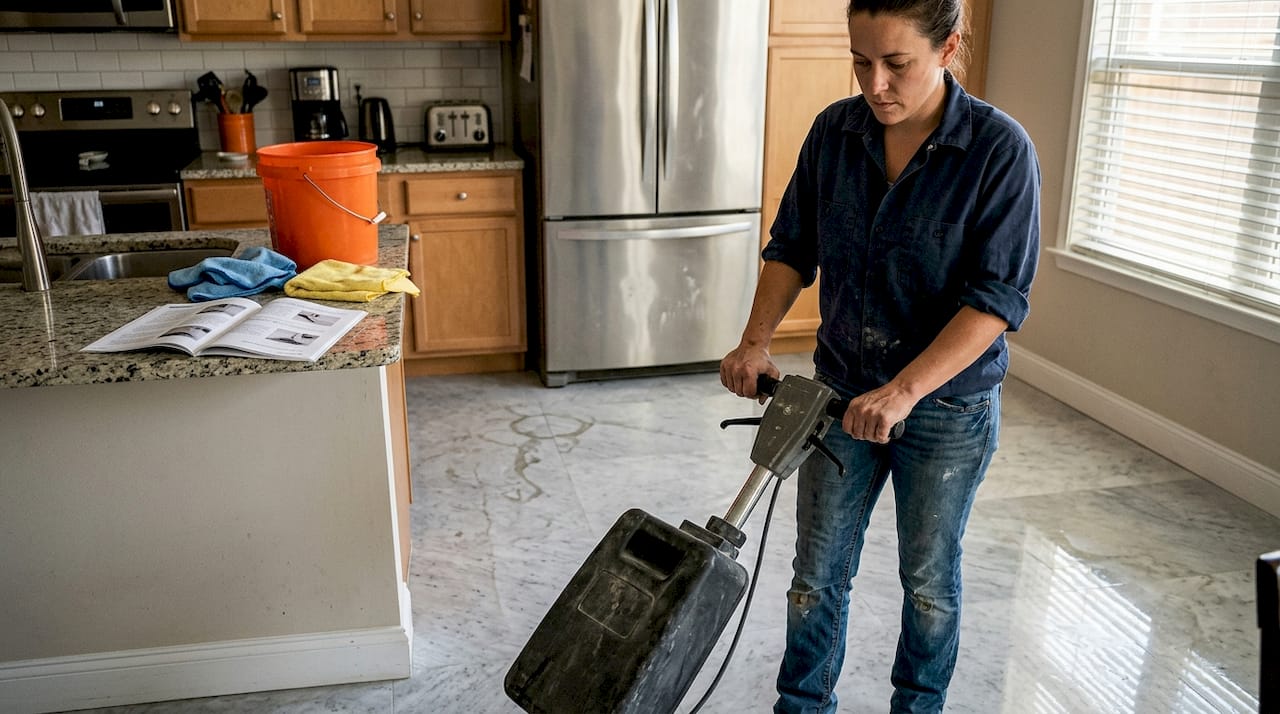
Stone restoration is the process of renewing an existing stone surface without removing it. The stone restoration process typically includes deep cleaning, honing (which removes surface scratches and etching), polishing to restore shine, crack and chip repair, and professional sealing. Technicians work through different grit progressions to resurface the stone layer by layer, revealing a clean, smooth finish underneath the damage. The stone stays exactly where it is.
Stone replacement means physically removing the existing stone and installing entirely new material. This is a construction project. It involves demolition, disposal, subfloor preparation, new material sourcing, and installation. It is loud, messy, and takes days or even weeks to complete.
Here’s a side-by-side look at how the two options compare:
| Factor | Restoration | Replacement |
|---|---|---|
| Average cost (floors) | $2 to $6 per sq ft | $20 to $40 per sq ft |
| Disruption | Minimal, 1 to 2 days | Major, several days to weeks |
| Preserves original stone | Yes | No |
| Best for | Surface wear, dullness, minor chips | Structural damage, severe cracking |
| Eco impact | Low waste | High demolition waste |
| Lifespan added | 2 to 5+ years per cycle | Full material lifespan |
Restoration works well for:
- Dull or etched marble and granite countertops
- Scratched or worn travertine and limestone floors
- Surface staining that cleaning alone cannot fix
- Minor chips or small cracks in otherwise sound stone
- Terrazzo that has lost its original luster
Replacement is only truly necessary when the stone has deep structural cracks, when the substrate beneath it has shifted or failed, or when more than 25 to 30 percent of the surface is beyond repair. That scenario is far less common than most homeowners think.
Signs it’s time to restore or replace your stone
Now that you know the core difference, how do you tell which solution is right for your home or property?
The good news is that restoration handles 80 to 90% of stone problems, with structural damage being the rare exception. Here’s a practical way to assess your situation:
- Look at the surface, not just the appearance. Run your hand across the stone. Dullness and minor roughness are surface issues. They respond well to honing and polishing.
- Check for cracks. Hairline cracks in the surface are repairable. Wide, deep cracks that go through the full thickness of the stone, especially if they follow grout lines or show vertical displacement, are a warning sign.
- Test for stability. Press gently on different areas. If tiles shift, rock, or feel hollow, the adhesive or substrate may have failed. That usually points toward replacement for those specific sections.
- Estimate the damage area. If less than 25 percent of the surface is severely affected, restoration is almost always the smarter call. Above that threshold, a professional assessment is essential.
- Consider your Florida environment. South Florida’s combination of high humidity, salt air from the coast, and sand tracked in from beaches accelerates surface wear on all stone types. This means you may need restoration more frequently here than in drier climates, but it does not mean you need replacement sooner.
“Stone that looks terrible on the surface often looks brand new after a professional restoration. The mistake is judging the stone’s future by its current appearance.”
Pro Tip: Before assuming the worst, have a professional evaluate your stone. Many issues that look severe, like deep-looking scratches or heavy etching, are purely surface level and fully reversible.
To protect stone value in your home, catching wear early and restoring promptly is far more cost-effective than waiting until damage worsens. You can also learn more about restoring terrazzo and marble specifically in Florida conditions, where these materials are especially common. For a broader look at criteria for replacement versus repair, the principle is consistent: structural failure is the deciding line.
Cost comparison: Restoration vs replacement in South Florida
Budget realities matter for every homeowner and manager. Let’s break down what you can expect to pay in South Florida.
The numbers here are not guesses. Restoration costs $2 to $6 per sq ft for standard floor work, and $4 to $12 per sq ft for a full-service treatment that includes grinding, honing, polishing, and sealing. Replacement, by contrast, runs $20 to $40 per sq ft for floors once you factor in demolition, materials, and labor.
| Service | Restoration cost | Replacement cost |
|---|---|---|
| Marble floor (200 sq ft) | $400 to $1,200 | $4,000 to $8,000 |
| Travertine floor (200 sq ft) | $400 to $1,200 | $4,000 to $8,000 |
| Granite countertop (40 sq ft) | $160 to $480 | $1,200 to $3,200 |
| Full kitchen marble (60 sq ft) | $240 to $720 | $1,800 to $4,800 |
The savings are significant. On a typical South Florida home with 300 square feet of marble flooring, restoration saves between $5,400 and $10,200 compared to replacement. That is not a small difference.
Pro Tip: Schedule restoration before your stone reaches a critical state. Early-stage restoration is faster, less expensive, and delivers better results than waiting until the damage is severe.
The marble restoration benefits go beyond the immediate savings. Each restoration cycle adds years of life to your stone, meaning you delay replacement indefinitely with proper care. For rental property managers in areas like Miami Beach or Pompano Beach, this math matters even more. Learn how Miami marble restoration professionals approach high-turnover properties where cost control and quick turnaround are both priorities.
One more thing worth noting: restoration does not just save money on the service itself. It also avoids the hidden costs of replacement, like temporary relocation during construction, disposal fees, and the risk of new materials not matching adjacent surfaces.
Maximizing stone longevity in Florida’s climate
Saving money with restoration is just the start. Keeping your stone looking great requires local know-how, because South Florida is genuinely harder on stone than most other regions in the country.
Sealing stone protects against humidity, salt air, and sand abrasion, and it can extend your restoration cycle by 2 to 5 or more years. That is not a minor benefit. In a coastal environment like Boca Raton or Miami, unsealed stone absorbs moisture, which leads to staining, surface breakdown, and accelerated wear. Sealing creates a barrier that keeps these elements from penetrating the stone.
Here are the key habits that protect your stone between professional visits:
- Seal on schedule. Most stone in South Florida needs professional sealing every 1 to 3 years depending on traffic and exposure.
- Clean with pH-neutral products. Acidic cleaners, including many common household products, etch marble and limestone. Use stone-safe cleaners only.
- Use mats and rugs at entry points. Sand and grit are the primary cause of micro-abrasion on polished stone floors. Trapping them at the door reduces wear dramatically.
- Wipe spills immediately. Citrus, wine, and even water can etch or stain unsealed stone within minutes in high-humidity conditions.
- Avoid steam mops. The heat and moisture force water into the stone and can loosen sealers prematurely.
For detailed guidance, the marble floor maintenance tips for South Florida’s humid climate are worth reading before your next cleaning day. You can also explore why sealing marble floors matters specifically for protection and longevity. And if you have granite surfaces, working with granite restoration experts who understand Florida’s specific conditions makes a measurable difference in results. Research on outdoor stone durability confirms that environmental exposure is the leading factor in surface degradation, which is why local expertise matters so much here.
Pro Tip: Ask your restoration professional about the right sealer type for your specific stone and its location. A sealer used on an indoor marble floor is not always the right choice for a poolside travertine patio.
Why restoration wins: real lessons from South Florida homes
After years of working on stone surfaces across South Florida, from beachfront condos in Miami to luxury rentals in Boca Raton, one pattern stands out clearly: the homeowners who default to replacement almost always regret it.
The assumption that old or worn stone must be replaced is one of the most expensive misconceptions in home improvement. We have restored marble floors that looked completely destroyed and delivered a finish that clients described as better than when it was first installed. That is not an exaggeration. It is what professional honing and polishing actually does.
Restoration is more eco-friendly, less disruptive, and preserves stone value, making it especially smart for high-turnover managed properties. But beyond the practical benefits, there is something worth saying about the stone itself. Natural marble, travertine, and granite are irreplaceable. Once you tear them out, they go to a landfill. The new material that replaces them is rarely as unique or as beautiful as what was there before.
For rental managers, the case is even clearer. A professional restoration can be completed in one to two days with no major disruption, protecting both asset value and guest satisfaction. For expert marble care in residential settings, the goal is always to restore first and replace only when there is truly no other option. That philosophy saves money, reduces waste, and consistently delivers better outcomes.
Stone looking dull or damaged? We can help!
If your marble, granite, travertine, or terrazzo is showing signs of wear, do not assume the worst. At Affordable Marble Restoration, we assess each surface individually and recommend only what the stone actually needs. Whether it is a full honing and polish for a dull marble floor or a targeted repair on a chipped granite countertop, we bring South Florida expertise to every project. Explore our granite restoration services and terrazzo polishing options, or get a free restoration quote today and find out exactly what your stone needs to look like new again.
Frequently asked questions
How do I know if my marble or granite needs restoration or replacement?
If your stone has dullness, scratches, or minor chips but no deep cracks or shifting, restoration is usually the right choice. Restoration handles 80 to 90% of stone problems unless there are structural failures.
How long does stone restoration last in South Florida?
Professional restoration can extend surface life by 2 to 5 years, with sealing recommended every 1 to 3 years for best results. Sealing and restoration together last 2 to 5 or more years even in high-traffic, humid settings.
How much cheaper is restoration compared to replacing stone?
Restoration typically costs 70 to 80% less than replacement for both floors and countertops. The restoration cost savings are consistent across stone types and project sizes.
Are there eco-friendly reasons to restore instead of replace stone?
Yes. Restoration minimizes demolition waste and reuses existing materials, making it the more sustainable choice. Restoration preserves material and minimizes waste compared to full replacement.
Can regular maintenance reduce how often I need restoration services?
Absolutely. Routine cleaning and professional sealing make each restoration last longer and reduce surface wear between cycles. Regular cleaning and sealing help prolong the time between restoration visits significantly.
