

TL;DR:
- Vinegar and baking soda damage natural stone surfaces, causing etching and dulling.
- True green cleaning uses pH-neutral, biodegradable products with safe surfactants for stone.
- Professional restoration is recommended for etched, stained, or damaged natural stone surfaces.
Many South Florida homeowners reach for vinegar or baking soda when they want a “natural” clean, assuming these are safe, eco-friendly choices. They’re not. Acidic and abrasive cleaners damage natural stone rather than protect it, causing etching, dulling, and long-term surface breakdown. If you have marble countertops, granite floors, or any polished stone surface in your home or business, the cleaning products you choose matter more than most people realize. This article breaks down what truly green cleaning looks like for natural stone, which products and methods are safe, and how to protect your investment without compromising your commitment to the environment.
Table of Contents
- What makes cleaning natural stone ‘green’?
- Essential dos and don’ts for marble and granite care
- Choosing and using green cleaning products for natural stone
- Advanced tips: Maintaining beauty and handling tough stains
- Our take: The inconvenient truths about ‘natural’ cleaners and lasting stone care
- Professional help for natural stone: Restoration and safe green cleaning
- Frequently asked questions
Key Takeaways
| Point | Details |
|---|---|
| Avoid acidic and abrasive cleaners | Vinegar, lemon, and baking soda cause rapid etching, stains, or dullness on natural stone. |
| Choose pH-neutral, certified products | Plant-based or EPA Safer Choice-certified cleaners with non-ionic surfactants are safest for stone. |
| Adopt microfiber for safe cleaning | Microfiber cloths remove dust and organics while preserving sealants and shine. |
| Routine care extends stone life | Consistent, gentle cleaning and proper sealing can double the life and look of natural stone surfaces. |
| Know when to call professionals | Deep stains, etching, or lost shine often require expert restoration for best results. |
What makes cleaning natural stone ‘green’?
Most people assume that “green” means plant-based, natural, or homemade. For general household surfaces, that logic sometimes holds. For natural stone, it almost always backfires.
True green cleaning is about using products that are safe for people, surfaces, and the planet simultaneously. When it comes to marble, granite, travertine, or limestone, that definition gets much more specific. A cleaner has to be pH-neutral, biodegradable, and formulated with surfactants that won’t break down the stone’s mineral structure or the protective sealant on top.
The problem is that most popular “eco” products aren’t designed with stone in mind. 68% of eco products fail safer standards, and only pH-neutral, biodegradable surfactants are truly fit for stone surfaces. That’s a sobering number, especially when you consider how many well-meaning homeowners are unknowingly stripping their stone’s finish every week.
So what should you look for? The gold standard ingredients for green stone cleaning are:
- pH-neutral formulas (between 6.5 and 7.5 on the pH scale)
- Alkyl polyglucoside (APG) surfactants, which are plant-derived, non-ionic, and gentle on stone
- Enzyme-based cleaners that break down organic matter without chemical aggression
- Distilled water as a mixing base to avoid mineral deposits
- Microfiber cloths for mechanical lift instead of chemical force
The “plant-based” label on a product bottle means very little on its own. Citrus-derived cleaners, for example, are technically plant-based but are highly acidic and will etch marble on contact. Always look for the EPA Safer Choice certification, which requires products to meet strict standards for human health, environmental safety, and ingredient transparency. That label is your most reliable shortcut when shopping.
Protecting your stone also means protecting its value. Homeowners who invest in protecting stone value through proper cleaning habits avoid costly restoration work down the line.
Pro Tip: When in doubt, test any new cleaner on a small, hidden area of your stone first. Wait 24 hours before using it across the full surface.
Essential dos and don’ts for marble and granite care
Knowing the right ingredients is only half the battle. You also need a clear picture of what to do and what to absolutely avoid when cleaning marble and granite.
pH-neutral cleaners in the 6.5 to 7.5 range prevent etching, while vinegar causes visible etching in seconds. That’s not an exaggeration. Marble is made of calcite, a mineral that reacts almost instantly with acids. Even a brief exposure to vinegar or lemon juice can leave a dull, rough patch that no amount of wiping will fix.
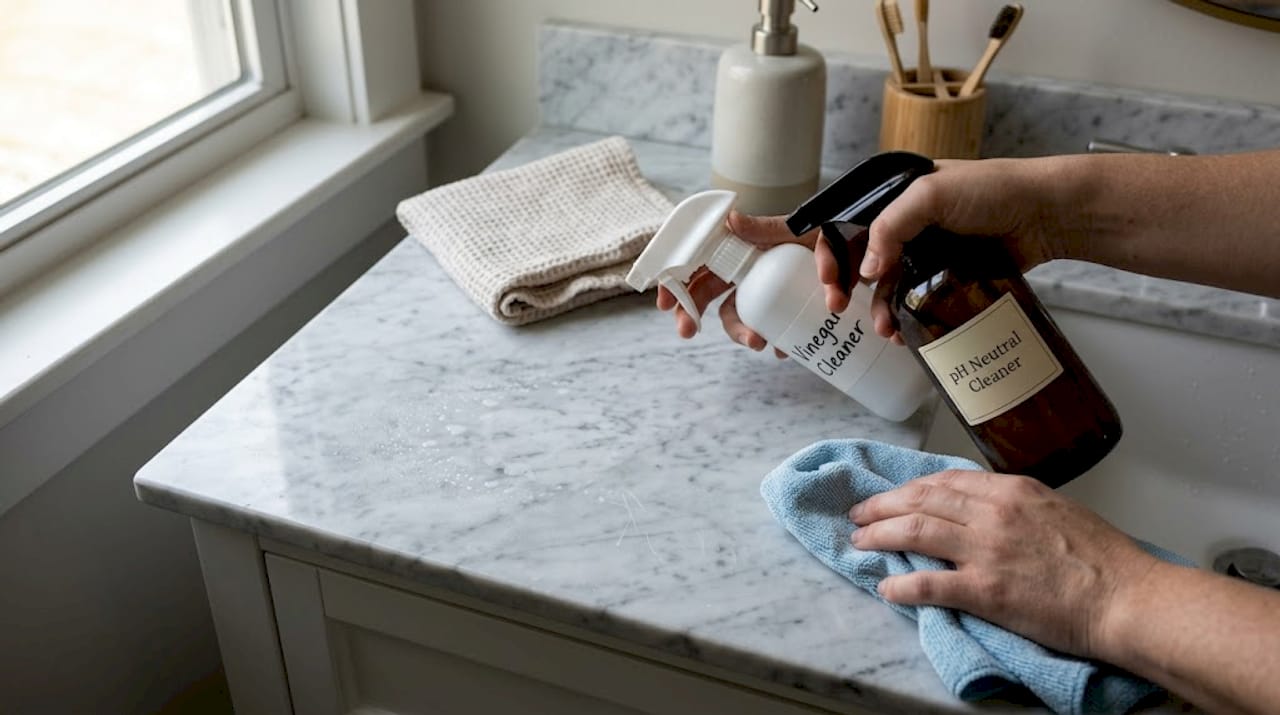
Here’s a practical breakdown of what’s safe and what isn’t:
| Product | Safe for marble? | Safe for granite? | Notes |
|---|---|---|---|
| pH-neutral stone cleaner | Yes | Yes | Best choice for both |
| APG-based cleaner | Yes | Yes | Biodegradable, gentle |
| Enzyme cleaner | Yes | Yes | Great for organic stains |
| Vinegar | No | No | Etches calcite instantly |
| Baking soda | No | No | Abrasive, raises pH |
| Bleach | No | No | Strips sealant, discolors |
| Rubbing alcohol | Limited | Limited | Degrades sealant over time |
| Dish soap | No | No | Leaves residue, dulls finish |
For your daily routine, follow these steps:
- Dust the surface with a dry microfiber cloth to remove loose particles.
- Dampen a second microfiber cloth with distilled water and a few drops of pH-neutral cleaner.
- Wipe in gentle, circular motions. Never scrub.
- Dry the surface immediately with a clean, dry cloth.
- For spills, blot immediately. Never wipe, which spreads the liquid.
Alcohol deserves a special note. Many people use it on granite because it seems to cut through grease without leaving residue. It does work short-term, but cleaning methods research shows repeated alcohol use degrades the sealant layer, leaving the stone more vulnerable to staining. Use it sparingly if at all.
Pro Tip: For restoring marble floors that have already been etched by acidic cleaners, professional honing is the only reliable fix. Prevention is far cheaper.
Always review marble sealing best practices to understand how your sealant interacts with the cleaners you choose.
Choosing and using green cleaning products for natural stone
With the rules clear, the next challenge is finding products that actually meet them and using them correctly.
APG surfactants and enzyme cleaners are the two categories worth focusing on. APGs are derived from plant sugars and fatty acids. They’re non-ionic, meaning they don’t carry an electrical charge that could interact with stone minerals. Enzyme cleaners work differently: they contain biological catalysts that break down specific types of organic matter like food, grease, or mildew without any harsh chemistry.
Microfiber lifts 99.4% of dust from surfaces, and enzyme plus APG cleaners remove stains in about 90 seconds with no residue left behind. Compare that to conventional chemical sprays, which often leave a film that attracts more dirt over time.
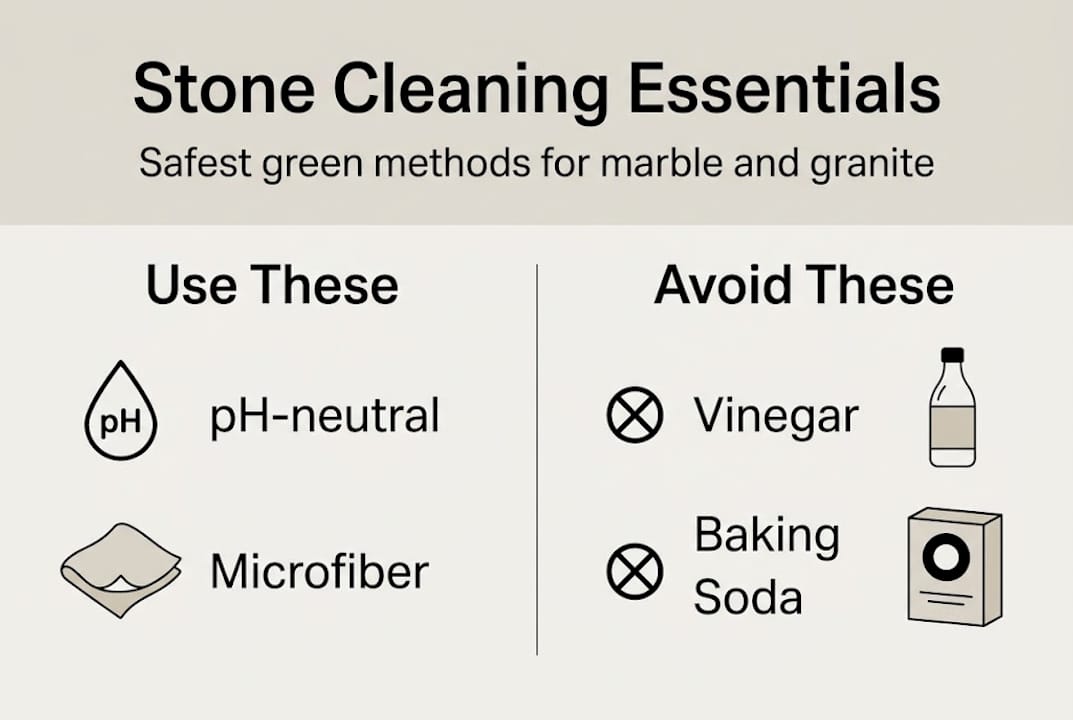
Here’s how these methods stack up:
| Method | Dust removal | Stain removal | Residue risk | Stone-safe? |
|---|---|---|---|---|
| Dry microfiber | Excellent | Poor | None | Yes |
| Damp microfiber + distilled water | Good | Moderate | Very low | Yes |
| Enzyme + APG cleaner | Good | Excellent | None | Yes |
| Conventional spray cleaner | Moderate | Good | High | Often no |
When shopping, look for these markers of a trustworthy product:
- EPA Safer Choice label on the packaging
- Full ingredient disclosure (avoid products that list “fragrance” without detail)
- No added dyes or optical brighteners, which can stain porous stone
- pH listed on the label or available on the manufacturer’s website
Application matters just as much as product selection. Never spray a cleaner directly onto the stone surface. Spray it onto your microfiber cloth first, then wipe. This prevents oversaturation, which can push moisture into micro-cracks or grout lines.
Distilled water is worth the small extra cost. Tap water in South Florida contains minerals that leave white spots on polished stone, especially after evaporation. Distilled water eliminates that problem entirely.
For broader stone care tips that apply to commercial and residential settings, the same principles hold: gentle chemistry, proper tools, and consistent habits beat aggressive cleaning every time. If you’re also thinking about which stone to install next, choosing stone wisely from the start makes long-term care much easier.
Advanced tips: Maintaining beauty and handling tough stains
Once your daily routine is solid, a few advanced strategies will help you handle emergencies and extend the life of your stone significantly.
Different stains require different approaches:
- Organic stains (coffee, wine, food): Apply an enzyme cleaner directly to the stain. Let it sit for two minutes, then blot with a damp microfiber cloth.
- Oil-based stains (cooking oil, grease): Use a poultice made from a small amount of baking soda mixed with dish soap, applied only to the stain and rinsed thoroughly. This is a targeted exception, not a routine method.
- Efflorescence (white mineral deposits from below the stone): This requires professional attention. DIY removal often makes it worse.
- Rust stains: Use a commercial rust remover specifically rated for stone. Never use generic rust removers, which are highly acidic.
- Mold or mildew: A diluted hydrogen peroxide solution (12% or less) applied with a microfiber cloth works well on most stone types.
Knowing when to reseal is just as important as knowing how to clean. Your stone needs resealing when water no longer beads on the surface and instead absorbs within a few minutes. Proper care extends sealant life up to 26 months, while vinegar-based cleaning reduces that to as little as 5 months. A field study across 2,147 sites found zero etching when pH-neutral methods were used consistently.
“Mechanical lift combined with low-chem emulsifiers consistently outperforms aggressive cleaning in both surface preservation and long-term finish quality.” This is the principle we build every maintenance plan around.
Regular gentle care is always better than occasional harsh deep cleans. Each time you use an aggressive product, you’re removing a thin layer of sealant or stone surface. Over months and years, that adds up. Stone polishing benefits become most visible on surfaces that have been maintained gently, because there’s more original material left to work with.
Pro Tip: Schedule a professional inspection once a year. A trained eye can spot early signs of etching, sealant failure, or subsurface moisture before they become expensive problems. See stone restoration examples to understand what’s recoverable and what isn’t.
For deeper reading on stone maintenance research, the science consistently supports the same conclusion: gentler is better, always.
Our take: The inconvenient truths about ‘natural’ cleaners and lasting stone care
Here’s something we see constantly in South Florida: homeowners who did everything “right” by their own research and still ended up with etched marble or stripped granite. The culprit is almost always a DIY recipe that felt green but wasn’t stone-safe.
Essential oils are a perfect example. They’re natural, they smell great, and they’re in dozens of popular DIY cleaner recipes. But alcohol and essential oils can damage stone surfaces even though they’re widely recommended in DIY solutions. The “natural” label doesn’t mean “safe for stone.”
The uncomfortable truth is that stone maintenance requires evidence-based chemistry, not just good intentions. A product being derived from plants doesn’t make it pH-neutral. A recipe being popular on social media doesn’t make it tested on calcite or feldspar.
We’ve worked on surfaces that were damaged by well-meaning homeowners who wanted to do the right thing. That’s frustrating for everyone. The smarter path is to treat your stone like the investment it is, and apply the same critical thinking you’d use for any other significant home maintenance decision. Understanding stone restoration vs replacement puts the real cost of DIY mistakes in sharp perspective.
Professional help for natural stone: Restoration and safe green cleaning
Even with the best daily habits, natural stone in South Florida faces unique challenges: high humidity, salt air near the coast, and heavy foot traffic in commercial spaces. At Affordable Marble Restoration, we work with homeowners and businesses across Boca Raton, Miami, and Pompano Beach to restore and protect stone surfaces using methods that align with eco-conscious values.
If your stone shows etching, dullness, staining that won’t lift, or sealant failure, those are signs that professional restoration is the right next step. Our services include stone grouting and pressure washing, polishing, sealing, and full surface restoration. We also handle specialty surfaces including concrete restoration for patios and commercial floors. Reach out to learn what the right maintenance plan looks like for your specific stone and setting.
Frequently asked questions
Can I use vinegar or baking soda to clean my natural stone surfaces?
You should avoid both. Vinegar etches calcite in seconds and baking soda’s abrasiveness increases stain penetration, leaving your stone more vulnerable than before.
What’s the safest cleaner for marble or granite if I want to stay eco-friendly?
Use a pH-neutral (6.5 to 7.5), EPA Safer Choice-certified cleaner with non-ionic APG surfactants and apply it with microfiber. APG and microfiber together provide superior safety and cleaning effectiveness without damaging the stone.
How do I remove a stubborn organic stain from my marble countertop?
For emergencies, a poultice of baking soda and hydrogen peroxide can help lift the stain, but enzyme-based cleaners are the safer and preferred method for routine stain treatment on marble.
Does microfiber really clean as well as chemical sprays on stone?
For dust and light soiling, yes. Dry microfiber removes 99.4% of dust from stone surfaces without any chemical risk, making it one of the most effective and safest tools you can use daily.
Recommended
- Why Restore Natural Stone? Protect Value, Beauty & Longevity
- 6 Expert Commercial Stone Care Tips for Facility Managers
- Professional Stone Cleaning – Preserving Beauty and Value
- Granite Restoration & Polishing – Miami, Boca Raton, Pompano Beach
- What is green cleaning: sustainable solutions for businesses
