

Florida homeowners know that the vibrant look of natural stone surfaces can fade fast when exposed to heat, storms, and daily foot traffic. Slate, while remarkably durable, does not last forever and needs regular maintenance to preserve its rich color and layered strength. Expert slate restoration tackles surface damage, busts common myths about stone care, and brings aesthetic value back to homes in Boca Raton and Miami. Bold solutions and precise treatments make a real difference for lasting beauty.
Table of Contents
- What Slate Restoration Involves and Misconceptions
- Types of Slate Surfaces in Residential Homes
- Common Slate Damage and Restoration Methods
- Professional Slate Restoration Techniques Explained
- Risks, Costs, and Mistakes to Avoid
Key Takeaways
| Point | Details |
|---|---|
| Importance of Slate Restoration | Proper slate restoration is essential for maintaining its beauty and structural integrity; neglecting it can lead to significant damage over time. |
| Common Misconceptions | Many homeowners mistakenly believe that slate is indestructible and requires no maintenance, which can result in costly repairs. |
| Professional Expertise | Engaging specialized professionals for slate restoration ensures the right techniques and materials are used for lasting results. |
| Regular Assessments | Conducting annual professional assessments can help identify potential issues early, preventing extensive and costly repairs. |
What Slate Restoration Involves and Misconceptions
Slate restoration represents a specialized process for preserving and rejuvenating natural stone surfaces in Florida homes. Unlike common misconceptions, slate requires strategic maintenance to retain its aesthetic appeal and structural integrity. Natural stone restoration demands precision, expertise, and understanding of slate’s unique characteristics.
The restoration process involves several critical steps designed to address damage and prevent further deterioration:
- Comprehensive surface inspection to identify cracks, chips, and wear patterns
- Careful cleaning using specialized stone-safe solutions
- Grinding and honing to remove surface imperfections
- Strategic sealing to protect against moisture and staining
- Color enhancement and polishing to restore original luster
Contrary to popular belief, slate is not an indestructible material. Systematic restoration methods are essential for maintaining its longevity and preventing extensive damage. Homeowners often mistakenly assume that slate requires no maintenance, which can lead to significant structural issues over time.
Slate restoration myths frequently mislead property owners about proper care. Some common misconceptions include:
- Believing slate is completely impervious to damage
- Assuming all damage indicates poor initial installation
- Thinking minor cracks can be ignored without consequences
Professional restoration addresses these misconceptions by providing targeted interventions that preserve the stone’s original beauty and structural integrity.
Pro tip: Always consult stone restoration professionals who specialize in slate to ensure proper assessment and treatment of your unique surface conditions.
Types of Slate Surfaces in Residential Homes
Slate surfaces in Florida homes represent a diverse and aesthetically rich natural stone option that combines functionality with exceptional visual appeal. Distinctive mineral compositions create unique color variations that transform residential spaces, offering homeowners multiple design possibilities.
The primary types of slate surfaces found in residential settings include:
- Blue Slate: Typically sourced from northeastern United States, characterized by deep blue-gray tones
- Green Slate: Often featuring rich emerald to sage green hues, popular in modern architectural designs
- Red Slate: Rare and striking, providing warm terracotta-like color variations
- Purple Slate: Unique coloration that adds dramatic visual interest to floors and surfaces
- Black Slate: Classic, sophisticated option with uniform dark appearance
Each slate variety offers distinct characteristics that influence its application in residential environments. The stone’s natural layered structure allows for extraordinary versatility, enabling its use in multiple home applications such as:
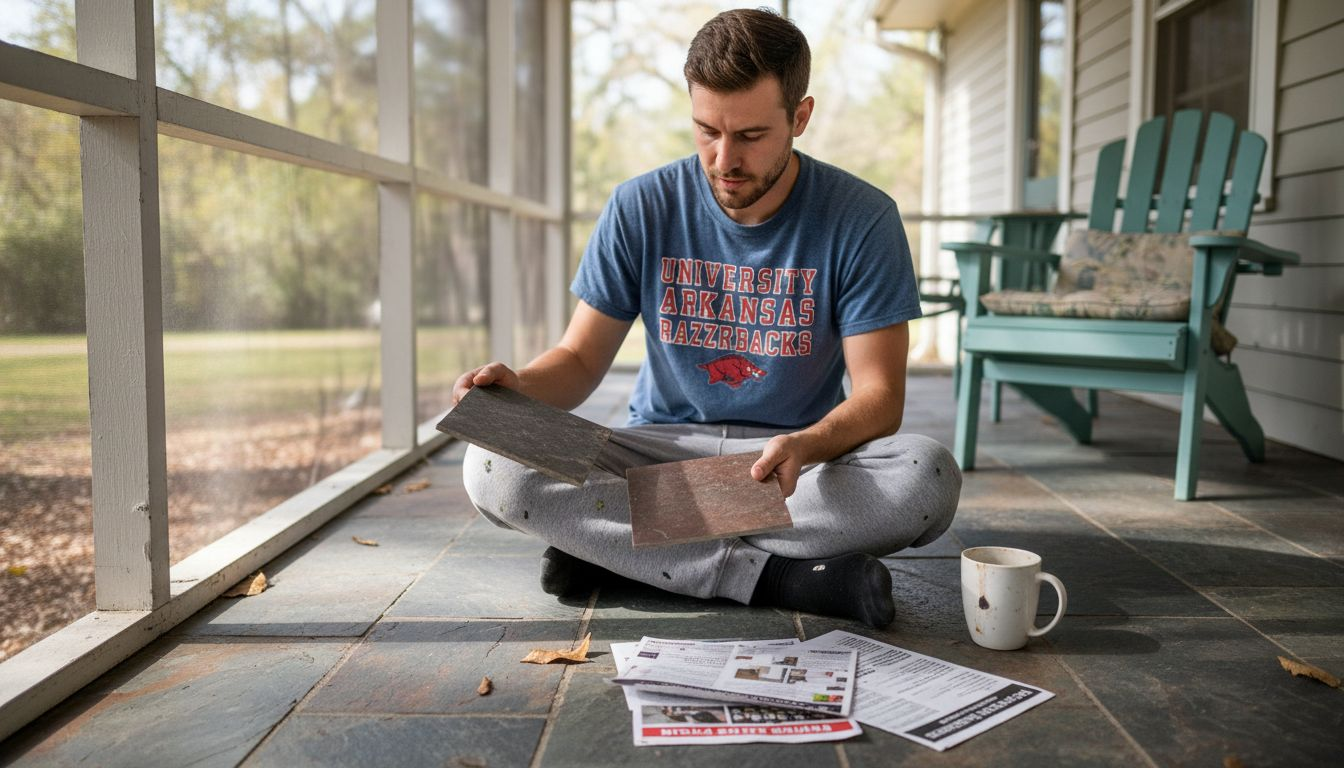
Here’s a quick comparison of common slate surface types and their typical uses:
| Slate Type | Typical Color | Best Residential Use | Distinct Visual Appeal |
|---|---|---|---|
| Blue Slate | Deep blue-gray | Roofing and flooring | Elegant, cool tones |
| Green Slate | Emerald to sage | Modern kitchens, patios | Natural, earthy look |
| Red Slate | Terracotta red | Accent walls, fireplaces | Warm, standout feature |
| Purple Slate | Deep purple shades | Decorative flooring | Dramatic, bold style |
| Black Slate | Uniform dark black | Countertops, exteriors | Sleek, classic appearance |
- Flooring
- Roofing
- Kitchen countertops
- Decorative wall cladding
- Outdoor patio surfaces
- Fireplace surrounds
Slate’s remarkable durability and aesthetic flexibility make it a premier choice for discerning homeowners seeking both beauty and long-lasting performance.
Regional preferences and local geological conditions significantly impact slate selection, with each area offering unique stone characteristics. Homeowners should consider factors like color consistency, mineral composition, and intended usage when selecting slate surfaces for their residential spaces.
Pro tip: Consult professional stone restoration experts to assess the specific qualities and maintenance requirements of your chosen slate surface before installation.
Common Slate Damage and Restoration Methods
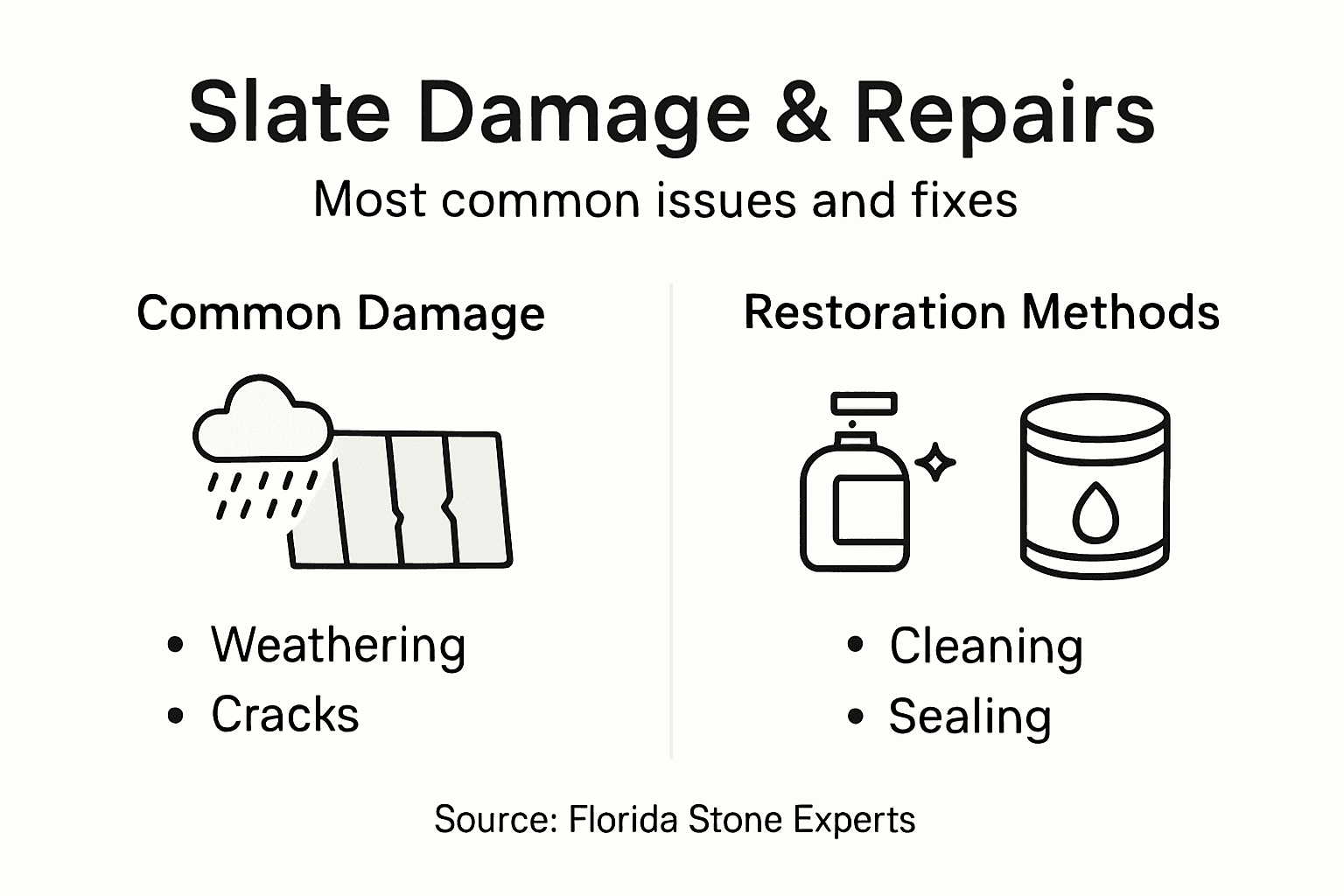
Slate surfaces in Florida homes are susceptible to various types of damage that require specialized restoration techniques. Slate damage assessment involves identifying specific issues that compromise the stone’s structural integrity and aesthetic appeal.
The most common types of slate damage include:
- Environmental Wear: Caused by extreme weather conditions
- Impact Damage: From falling tree branches or hail
- Foot Traffic Deterioration: Resulting from improper walking patterns
- Structural Stress: Caused by underlying foundation movements
- Chemical Erosion: From inappropriate cleaning products or environmental pollutants
Restoration professionals employ multiple techniques to address slate surface damage:
- Comprehensive surface inspection
- Precise damage mapping
- Careful slate removal
- Matching replacement materials
- Specialized repair techniques
- Protective sealing
Professional slate restoration requires expert knowledge of stone characteristics and precise repair methodologies.
Crucial factors influencing slate restoration include roof slope, installation quality, maintenance history, and the specific type of damage. Homeowners should understand that not all damage requires complete replacement; many issues can be addressed through targeted restoration techniques.
Pro tip: Schedule professional slate assessments annually to catch potential damage before it becomes extensive and more costly to repair.
Professional Slate Restoration Techniques Explained
Professional slate restoration is a sophisticated process that requires specialized knowledge and precise technical skills. Slate restoration techniques focus on preserving the stone’s structural integrity while maintaining its original aesthetic characteristics through meticulous repair methods.
Key professional restoration techniques include:
- Surface Preparation: Comprehensive cleaning and assessment of existing damage
- Precision Removal: Carefully extracting damaged slate sections using specialized tools
- Material Matching: Selecting replacement slates with identical color, thickness, and mineral composition
- Advanced Fastening: Using corrosion-resistant copper or stainless steel nails
- Waterproofing: Applying protective underlayments to prevent moisture penetration
The restoration process typically follows these critical steps:
- Detailed surface inspection
- Comprehensive damage documentation
- Careful slate removal
- Surface preparation
- Precise material replacement
- Final sealing and protective treatment
Successful slate restoration demands expert craftsmanship and an intimate understanding of natural stone characteristics.
Modern restoration techniques incorporate advanced technologies and materials that significantly extend the lifespan of slate surfaces. Professionals must consider factors like regional climate, specific stone composition, and underlying structural conditions to develop targeted restoration strategies.
Pro tip: Invest in periodic professional assessments to identify potential restoration needs before minor damage escalates into extensive, costly repairs.
Below is a summary of how professional techniques differ from DIY approaches in slate restoration:
| Aspect | Professional Restoration | DIY/Amateur Attempt |
|---|---|---|
| Skill Required | Expert training | Basic knowledge |
| Tools Used | Specialized, stone-safe tools | Generic home tools |
| Result Longevity | Long-lasting repairs | Temporary solutions |
| Risk of Damage | Minimized with expertise | High due to inexperience |
Risks, Costs, and Mistakes to Avoid
Slate restoration involves significant financial and structural considerations that homeowners must carefully evaluate. Restoration project risks can dramatically impact overall expenses and long-term stone surface performance.
Critical financial risks and potential cost factors include:
- Material Expenses: Specialized slate replacement costs
- Labor Complexity: Higher professional service rates
- Unexpected Damage: Hidden structural issues
- Restoration Scope: Varying project complexity
- Long-Term Maintenance: Ongoing preservation investments
Common mistakes that dramatically increase restoration expenses and risks:
- Hiring inexperienced contractors
- Neglecting comprehensive initial assessments
- Using inappropriate replacement materials
- Skipping critical protective treatments
- Postponing necessary repairs
Professional slate restoration demands precision and expertise to avoid costly long-term complications.
Homeowners should understand that slate restoration is not a one-size-fits-all process. Each project requires nuanced evaluation of stone condition, underlying structural integrity, and specific environmental challenges unique to Florida’s climate and residential settings.
Pro tip: Request detailed written estimates from multiple certified stone restoration professionals, comparing not just price but comprehensive restoration approaches and material quality.
Preserve the Timeless Beauty of Your Florida Slate Surfaces
Slate restoration requires expert care to address common challenges like environmental wear, impact damage, and structural stress identified in the article. Homeowners seeking to maintain their slate’s natural elegance and durability face key concerns such as precise damage assessment, color matching, and protective sealing. Ignoring these can lead to costly repairs and diminished aesthetic appeal over time.
At Affordable Marble Restoration, we specialize in professional stone restoration services tailored to Florida’s unique climate and residential needs. Our team uses advanced techniques in cleaning, honing, polishing, and sealing to rejuvenate slate surfaces and prevent future damage. Whether it is flooring, countertops, or exterior cladding, our customized solutions preserve the stone’s integrity and beauty.
Don’t let slate damage compromise your home’s value. Explore how our professional slate restoration services provide long-lasting results and peace of mind. Contact us today and take the first step toward restoring your slate’s stunning appearance before minor issues become major expenses.
Frequently Asked Questions
What is slate restoration?
Slate restoration involves a specialized process of preserving and rejuvenating natural slate surfaces through cleaning, repairing damage, and sealing to maintain their beauty and integrity.
How often should I have my slate surfaces professionally restored?
It’s recommended to schedule professional slate assessments at least once a year to catch potential damage early and to extend the lifespan of the slate.
What are the common damages that slate surfaces can experience?
Common damages include environmental wear, impact damage, foot traffic deterioration, structural stress from foundation movements, and chemical erosion from improper cleaning products.
Can minor cracks in slate be ignored?
No, ignoring minor cracks can lead to more significant structural issues over time. It’s essential to address small damages promptly to prevent further deterioration of the slate surface.
