

Humidity, salt air, and daily foot traffic put special demands on delicate travertine surfaces in Boca Raton and Miami homes. Understanding what makes travertine unique and porous is key for anyone who wants to keep their floors and patios both beautiful and resilient. With its intricate structure formed by mineral-rich waters, travertine requires expert care to maintain its visual appeal and extend its life in South Florida’s challenging environment.
Table of Contents
- What Makes Travertine Unique and Porous
- Types of Travertine Surfaces in South Florida
- Proper Cleaning Methods and Safe Products
- Sealing Travertine for Lasting Protection
- Common Cleaning Mistakes That Cause Damage
Key Takeaways
| Point | Details |
|---|---|
| Unique Porosity of Travertine | Travertine’s structure features large primary pores and interconnected networks, enhancing its aesthetic and functional properties. |
| Surface Variations in South Florida | Different travertine surfaces, such as Dense Crystalline and Vuggy, offer unique textures and applications influenced by local geological conditions. |
| Proper Cleaning Methods | Use pH-neutral cleaners and soft tools to maintain travertine surfaces, avoiding acidic or abrasive solutions that can cause damage. |
| Importance of Sealing | Regular sealing with breathable products is crucial for protecting travertine from moisture and stains in South Florida’s environment. |
What Makes Travertine Unique and Porous
Travertine is a fascinating natural stone with remarkable characteristics that set it apart from other building materials. Formed through complex geological processes involving mineral-rich waters, travertine develops a distinctive porous structure that gives it unique visual and functional properties.
The stone’s formation process directly influences its remarkable porosity. Distinctive petrologic features reveal that travertine originates from warm to hot hydrothermal waters, creating a well-bedded and finely laminated limestone with intricate internal characteristics.
Travertine’s porosity is characterized by several key features:
- Large primary pores called mouldic and vug porosity
- Micro-porosity throughout the stone’s structure
- Higher overall porosity compared to marine carbonates
- Complex interconnected pore networks
Physical Properties directly emerge from these porous characteristics. Acoustic studies of travertine demonstrate how the stone’s pore types and cementation contribute to its unique physical responses, creating a rigid rock frame with exceptional structural integrity.
The microscopic structure of travertine makes it both delicate and resilient. Its interconnected pore system allows for natural variations in color, texture, and appearance, which contributes to its popularity in architectural and design applications. These tiny channels not only provide visual interest but also influence the stone’s thermal and acoustic properties.
Pro tip: Always seal travertine surfaces professionally to protect its natural porosity and prevent staining or moisture penetration.
Types of Travertine Surfaces in South Florida
South Florida’s unique geological landscape produces a fascinating array of travertine surfaces, each with distinctive characteristics shaped by the region’s complex hydrogeological environment. Geological conditions in Florida create remarkable variations in travertine formation, resulting in surfaces that reflect the intricate interplay of water chemistry and mineral deposits.
Travertine surfaces in South Florida can be categorized into several primary types:
- Dense Crystalline surfaces: Compact and uniform, with minimal visible porosity
- Vuggy surfaces: Characterized by small cavities and irregular internal structures
- Laminated surfaces: Featuring distinct layered patterns and horizontal banding
- Porous Limestone variants: Showing interconnected channels and more open texture
Commercial travertine characteristics demonstrate how environmental factors directly influence the stone’s appearance and structural integrity. The variations emerge from complex interactions between water temperature, mineral concentrations, and depositional environments unique to South Florida’s carbonate formations.
Each travertine surface type presents unique aesthetic and functional properties. Dense crystalline surfaces offer exceptional durability and smooth finishes, while more porous varieties provide natural, textured appearances that capture the region’s geological complexity. These variations make travertine an incredibly versatile material for architectural and design applications throughout South Florida.
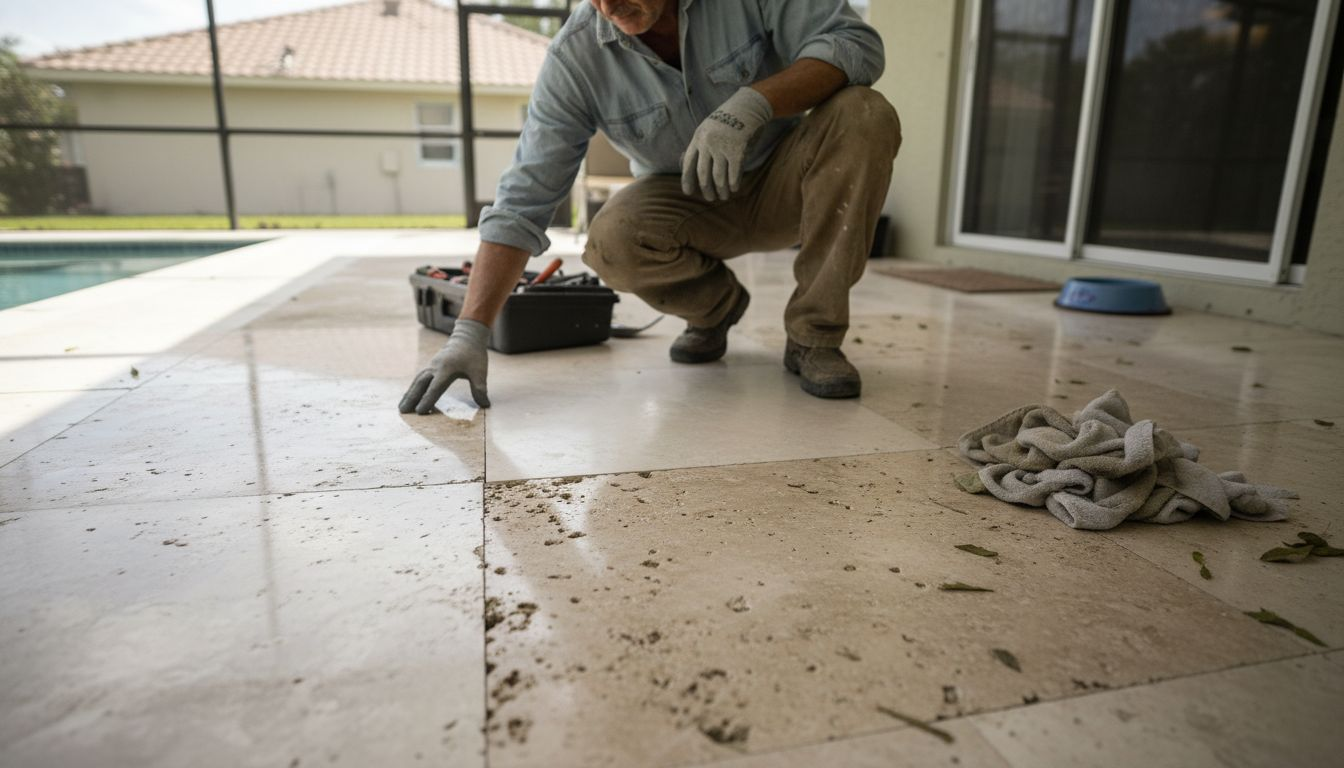
Here’s a comparison of common travertine surface types found in South Florida:
| Surface Type | Texture and Appearance | Typical Applications | Durability Level |
|---|---|---|---|
| Dense Crystalline | Smooth, minimal pores | Indoor floors, counters | High; resists heavy use |
| Vuggy | Small cavities, irregular | Decorative walls, accents | Moderate; more porous |
| Laminated | Layered, banded patterns | Feature walls, facades | Good; moderate traffic areas |
| Porous Limestone | Open, visible channels | Outdoor patios, pool decks | Fair; requires frequent care |
Pro tip: When selecting travertine surfaces, consider the specific environmental conditions of your installation area to choose the most appropriate stone type and finish.
Proper Cleaning Methods and Safe Products
Maintaining travertine surfaces in South Florida requires a delicate balance of gentle cleaning techniques and carefully selected products. Effective cleaning practices emphasize the importance of removing dirt and potential contaminants without causing damage to the stone’s sensitive surface.
Key considerations for travertine cleaning include:
- Avoiding acidic or abrasive cleaning solutions
- Using pH-neutral stone-specific cleaners
- Selecting soft, non-scratching cleaning tools
- Implementing regular but gentle cleaning routines
- Immediately wiping up spills to prevent staining
Cleaning Techniques demand a thoughtful approach. Safe cleaning methods recommend starting with basic soap and water, using minimal moisture and soft microfiber cloths to prevent water penetration and potential damage to the stone’s delicate structure.
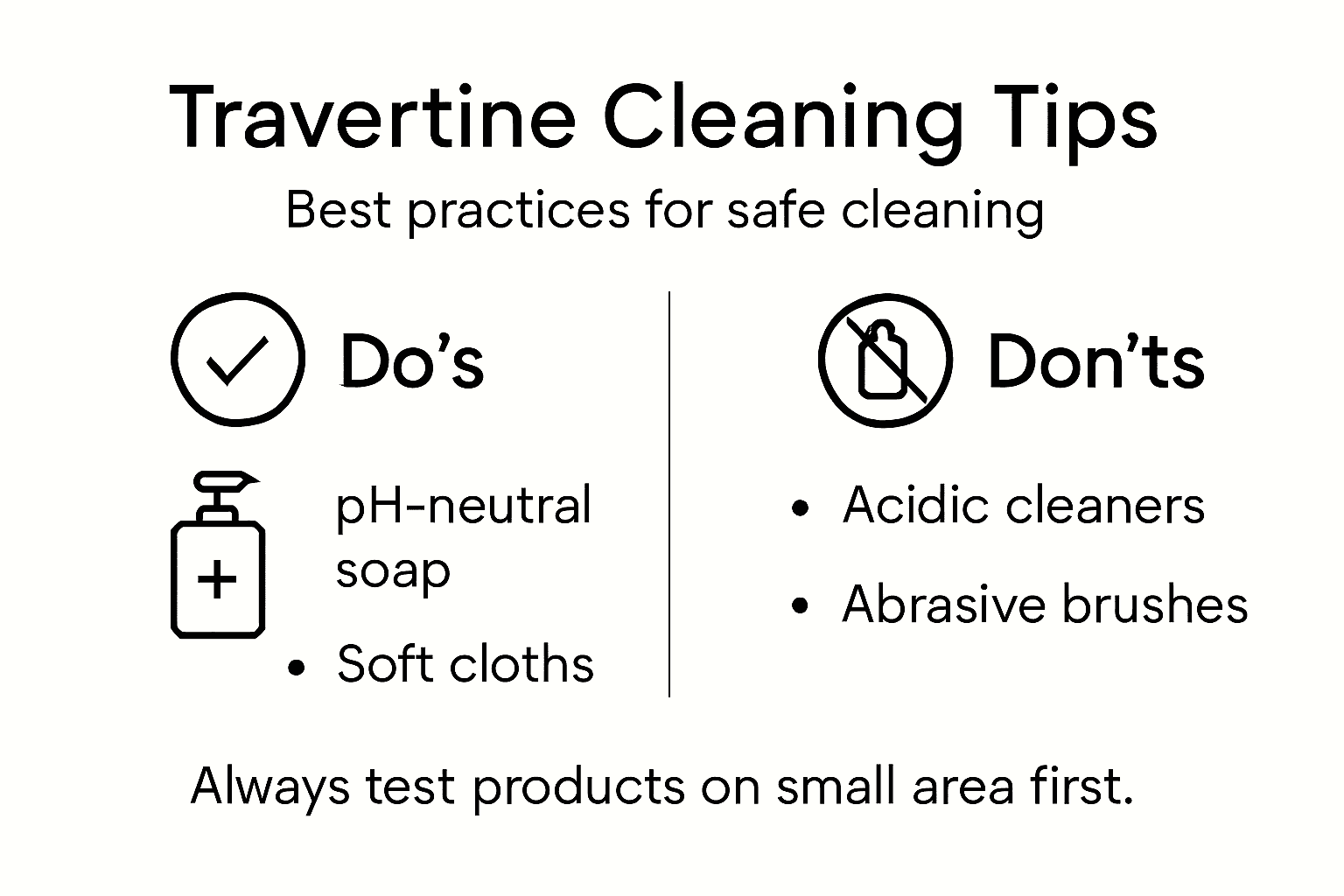
Specialized travertine cleaning requires understanding the stone’s unique composition. Homeowners should invest in cleaning products specifically designed for natural stone, avoiding household cleaners that contain vinegar, lemon, or other acidic compounds that can etch or damage the surface. Soft-bristled brushes and microfiber cloths provide the most effective and gentle cleaning approach for maintaining the stone’s natural beauty and integrity.
Pro tip: Always test new cleaning products on a small, inconspicuous area of your travertine surface to ensure compatibility and prevent potential damage.
Sealing Travertine for Lasting Protection
Travertine surfaces require strategic protection to maintain their beauty and structural integrity in South Florida’s challenging environmental conditions. Technical sealing procedures emphasize the critical importance of creating a protective barrier against moisture, stains, and potential degradation.
Key considerations for effective travertine sealing include:
- Selecting penetrating sealers compatible with stone’s natural porosity
- Applying sealants when surface is completely clean and dry
- Choosing breathable sealants that prevent moisture trapped beneath the surface
- Reapplying sealant at recommended intervals
- Using professional-grade products specifically designed for natural stone
Sealing Techniques demand precision and understanding of the stone’s unique characteristics. Hydrothermal preservation strategies highlight the importance of maintaining the stone’s natural breathability while protecting its delicate mineral structure from environmental challenges.
Professional travertine sealing involves more than simply applying a protective layer. Homeowners should carefully evaluate their specific stone type, exposure conditions, and traffic patterns to select the most appropriate sealing solution. Different areas of the home — such as high-traffic floors, outdoor patios, or kitchen countertops — may require different sealing approaches to ensure maximum protection and longevity.
Pro tip: Consult a professional stone restoration expert to assess your specific travertine surface and recommend the most effective sealing strategy for your unique environment.
Common Cleaning Mistakes That Cause Damage
Travertine surfaces in South Florida are particularly vulnerable to damage from improper cleaning techniques. Common maintenance errors can rapidly deteriorate the stone’s delicate structure, potentially causing irreversible damage that compromises both appearance and integrity.
The most destructive cleaning mistakes include:
- Using acidic cleaners like vinegar or lemon juice
- Applying abrasive scrubbing tools with hard bristles
- Employing generic household cleaners not designed for stone
- Failing to rinse surfaces thoroughly after cleaning
- Using excessive water or leaving surfaces wet
- Scrubbing with steel wool or metal brushes
Chemical Hazards pose significant risks to travertine surfaces. Cleaning product dangers reveal that many common cleaning solutions contain harsh chemicals that can etch, stain, or permanently damage natural stone. Chlorine bleach, ammonia-based cleaners, and acidic solutions can strip away the stone’s protective seal and cause microscopic surface degradation.
Homeowners often underestimate the fragility of travertine surfaces. What might seem like a simple cleaning task can quickly turn into an expensive restoration project. Professional stone restoration experts recommend using specialized pH-neutral cleaners, soft microfiber cloths, and gentle cleaning techniques that preserve the stone’s natural beauty and structural integrity.
Below is a summary of best practices and pitfalls in travertine cleaning and maintenance:
| Aspect | Best Practice Example | Common Mistake Example |
|---|---|---|
| Cleaning Product | Use pH-neutral, stone-safe cleaner | Apply vinegar-based solution |
| Tools | Soft microfiber cloth, non-abrasive brush | Scrub with steel wool |
| Rinsing | Wipe and dry surface promptly | Leave surface wet after cleaning |
| Sealing | Reapply breathable sealer per schedule | Skip or delay needed resealing |
Pro tip: Keep a log of cleaning products used on your travertine surfaces to track their performance and quickly identify any potentially damaging substances.
Preserve Your Travertine’s Beauty with Expert Care
Travertine surfaces bring natural elegance to your Florida home but require the right cleaning and sealing to protect their unique porous structure. As highlighted in the article, avoiding acidic cleaners and choosing pH-neutral, stone-safe products are crucial to prevent damage and preserve durability. Struggling with these challenges can lead to costly repairs and loss of your stone’s natural luster.
Affordable Marble Restoration understands these specific needs and specializes in restoring, sealing, and maintaining travertine across South Florida. Whether you need professional cleaning, precise polishing, or expert sealing to shield your surfaces from stains and moisture, their tailored solutions ensure lasting protection and enhanced beauty. Don’t risk your travertine with improper care—discover how trusted professionals can safeguard your investment today.
Learn more about their comprehensive Natural Stone Restoration Services. Ready to protect and revitalize your travertine floors or countertops? Visit Affordable Marble Restoration now and schedule your expert consultation.
Frequently Asked Questions
How can I effectively clean travertine surfaces?
To clean travertine surfaces effectively, use a pH-neutral stone-specific cleaner and soft microfiber cloths. Avoid excessive moisture and immediately wipe up spills to prevent staining.
What cleaning tools are safe to use on travertine?
Soft, non-scratching tools like microfiber cloths and soft-bristled brushes are safe for cleaning travertine. Avoid abrasive scrubbers or steel wool that can damage the stone’s surface.
How often should I seal my travertine surfaces?
Sealing travertine surfaces is recommended at regular intervals, typically every 1-3 years, depending on usage and exposure to moisture. Always choose a breathable penetrating sealer for best results.
What cleaning mistakes should I avoid with travertine?
Avoid using acidic cleaners (like vinegar or lemon juice), abrasive tools, and generic household cleaners. Failing to rinse surfaces thoroughly or leaving them wet can also cause damage.
