

Water stains and dull patches on marble floors can diminish the elegance of any Boca Raton or Miami home. For South Florida properties, humid air and frequent spills present daily challenges that threaten the beauty and structure of natural stone. By investing in marble sealing, homeowners and property managers protect against stains, reduce cleaning demands, and extend the life of their marble floors, preserving both their aesthetic value and property investment.
Table of Contents
- Sealing Marble Floors: Definition and Importance
- Types of Marble Sealers for Florida Homes
- How Sealing Prevents Stains and Etching
- Maintenance Benefits and Longevity for High-Traffic Areas
- Risks of Unsealed Marble in Humid Climates
Key Takeaways
| Point | Details |
|---|---|
| Importance of Marble Sealing | Sealing marble floors prevents staining, extends their lifespan, and maintains their appearance, making it essential for preservation. |
| Types of Sealers | Penetrating sealers are ideal for humid climates as they protect deep within the stone, while topical sealers enhance surface gloss but may require more frequent reapplication. |
| Maintenance Strategy | Regular professional sealing every 12-18 months can ensure optimal protection and minimize long-term restoration costs. |
| Risks of Not Sealing | Unsealed marble in humid environments is prone to mold growth, structural deterioration, and permanent staining, which can significantly reduce property value. |
Sealing Marble Floors: Definition and Importance
Marble floors represent a luxurious investment that demands specialized protection. Marble sealing is a critical maintenance process designed to shield natural stone surfaces from potential damage and deterioration. Protective treatments for stone create a defensive barrier that prevents liquids, stains, and contaminants from penetrating the stone’s delicate surface.
At its core, marble sealing involves applying a specialized protective treatment that fills the stone’s microscopic porous channels. Marble’s natural composition makes it inherently vulnerable to absorption, which can lead to permanent staining, discoloration, and structural compromises. By creating a microscopic protective layer, sealers effectively block harmful substances from penetrating deep into the stone’s internal structure.
The importance of marble floor sealing extends far beyond simple aesthetic preservation. Here are the key benefits of professional sealing:
- Prevents permanent staining from liquids and spills
- Reduces surface absorption of potentially damaging substances
- Extends the overall lifespan of marble flooring
- Maintains the stone’s original color and visual brilliance
- Minimizes maintenance requirements and restoration costs
- Protects the financial investment in high-end stone surfaces
Stone sealing technologies work through two primary mechanisms: penetrating sealers and topical sealers. Penetrating sealers chemically bond with the stone’s internal structure, creating an invisible protective shield that doesn’t alter the stone’s natural appearance. Topical sealers, in contrast, create a thin protective film on the surface that provides additional protection against wear and environmental factors.
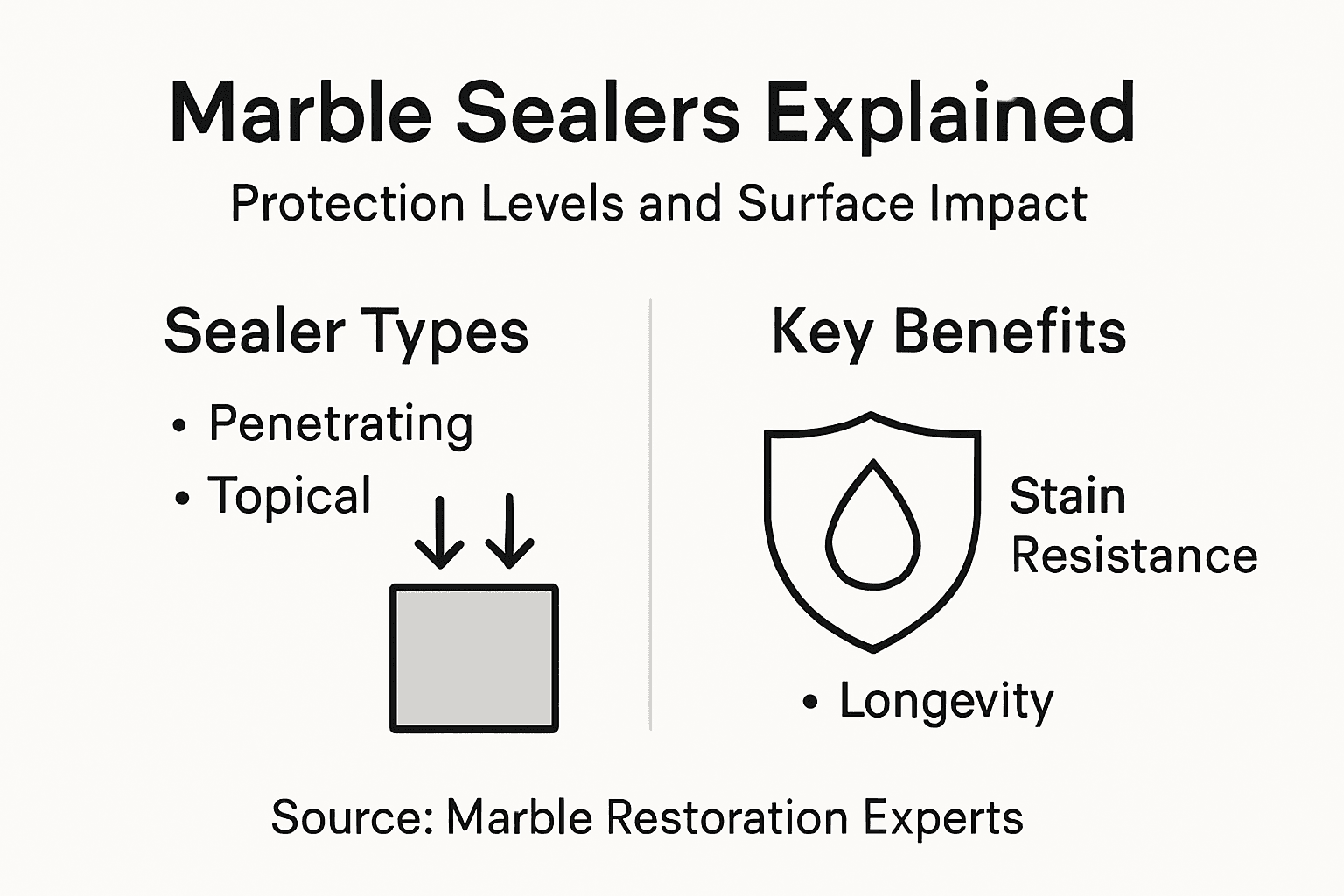
Pro tip: Schedule professional marble sealing every 12-18 months to maintain optimal protection and preserve your floor’s pristine condition.
Types of Marble Sealers for Florida Homes
Choosing the right marble sealer for Florida’s unique climate requires understanding the specific characteristics of different sealing technologies. Marble sealer types vary significantly in their application, durability, and protective capabilities, making it crucial to select the most appropriate option for your specific environment.
Impregnating sealers represent the gold standard for marble floor protection in humid regions like Florida. These advanced penetrating sealers work by soaking deep into the stone’s microscopic channels, creating an invisible protective barrier that shields against moisture, stains, and environmental damage. Unlike surface-level treatments, impregnating sealers maintain the marble’s natural appearance while providing comprehensive protection.
The primary types of marble sealers include:
- Penetrating Sealers
- Absorb directly into stone’s internal structure
- Provide long-lasting protection without altering surface appearance
- Ideal for high-humidity environments
- Topical Sealers
- Create a protective film on the marble surface
- Can enhance glossiness and shine
- Require more frequent reapplication
- Combination Sealers
- Offer both penetrating and surface-level protection
- Provide comprehensive defense against stains and wear
- Balanced approach for different marble applications
Each sealer type presents unique advantages for Florida homeowners. Topical sealers can provide an attractive glossy finish but typically have shorter lifespans in humid conditions. Combination sealers offer a balanced approach, delivering both surface protection and deep stone penetration, making them increasingly popular for marble floors in challenging subtropical environments.
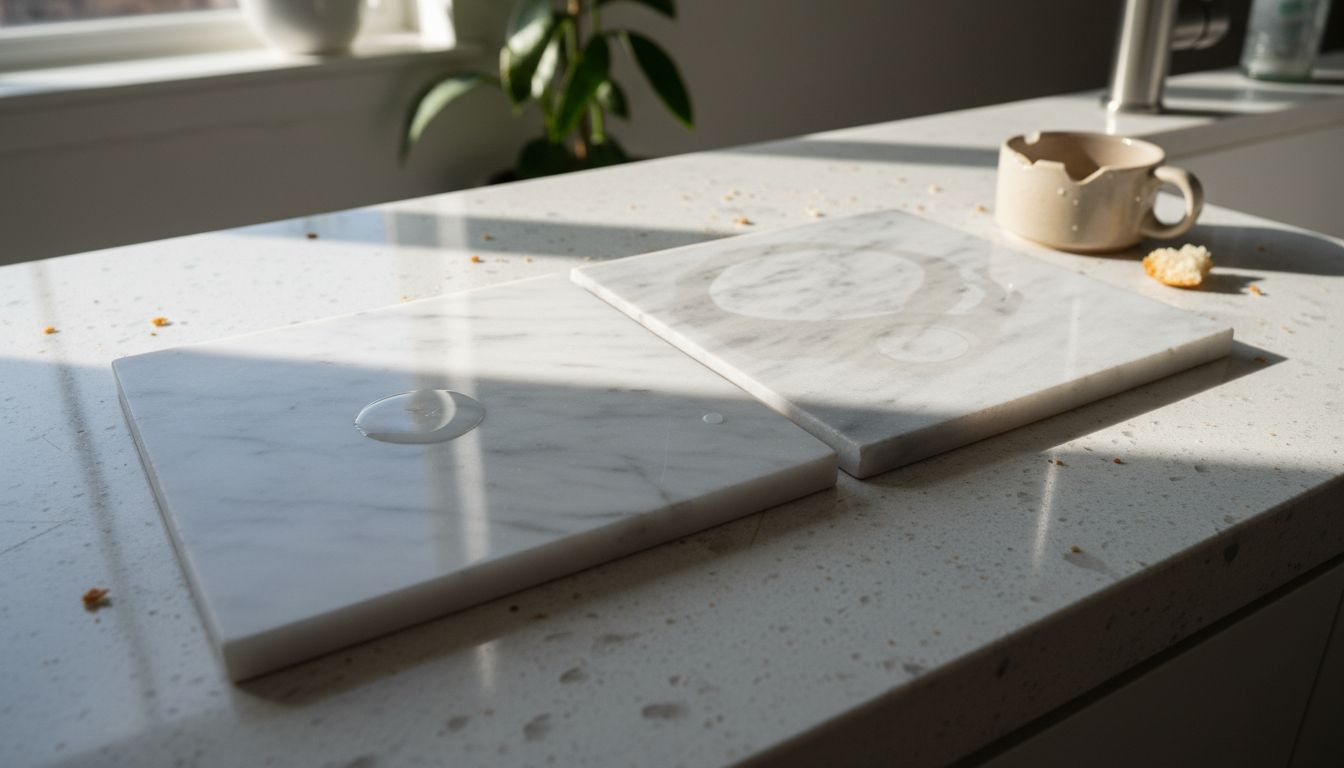
Here’s a quick comparison of marble sealer types and their typical suitability for Florida homes:
| Sealer Type | Protection Depth | Surface Impact | Recommended For |
|---|---|---|---|
| Penetrating Sealers | Deep stone channels | No change in appearance | Humid climate, high-traffic |
| Topical Sealers | Surface only | Glossy finish option | Low-traffic, aesthetic boost |
| Combination Sealers | Both deep and surface | Slight enhancement | Mixed-use, varied climates |
Pro tip: Consult a professional stone restoration expert to determine the most suitable sealer type for your specific marble floor and local climate conditions.
How Sealing Prevents Stains and Etching
Marble’s delicate composition makes it particularly vulnerable to staining and surface damage. Marble conservation research reveals the critical role of sealing in protecting this elegant natural stone from potentially permanent damage caused by everyday substances.
Chemical staining occurs when liquids penetrate marble’s microscopic porous structure, leaving behind permanent discolorations and structural alterations. Substances like red wine, coffee, oils, and acidic liquids can quickly transform a pristine marble surface into a permanently marked and degraded material. Sealing creates a microscopic barrier that dramatically reduces these substances’ ability to penetrate and cause lasting damage.
The primary mechanisms by which sealing prevents stains and etching include:
- Chemical Blocking
- Fills microscopic stone pores
- Prevents liquid absorption
- Reduces potential for permanent staining
- Surface Protection
- Creates a defensive molecular layer
- Slows chemical interaction with stone
- Provides additional reaction time for cleaning
- Structural Defense
- Minimizes internal stone degradation
- Prevents deep chemical penetration
- Maintains marble’s original integrity
Understanding the science behind stain prevention is crucial. Different types of sealers offer varying levels of protection, with penetrating sealers providing the most comprehensive defense against potential chemical interactions. Topical sealers create an additional surface barrier, while impregnating sealers work at a molecular level to protect the stone’s internal structure.
Pro tip: Immediately blot spills instead of wiping to prevent potential staining, regardless of your marble’s sealant protection.
Maintenance Benefits and Longevity for High-Traffic Areas
High-traffic marble floors demand specialized protection to maintain their pristine appearance and structural integrity. Stone floor sealing strategies provide critical defense against the continuous wear and tear that can rapidly degrade unprotected marble surfaces.
In commercial and residential spaces with frequent foot traffic, marble floors experience significant stress from daily use. Dirt, moisture, oils, and abrasive particles can quickly compromise the stone’s surface, causing microscopic scratches, dulling, and potential permanent damage. Sealing technologies create a protective barrier that dramatically reduces these destructive interactions, preserving the marble’s original beauty and structural composition.
The key maintenance benefits of sealing marble in high-traffic areas include:
- Reduced Cleaning Requirements
- Minimizes frequency of intensive cleaning
- Prevents deep-set dirt and stain penetration
- Simplifies regular maintenance routine
- Enhanced Durability
- Protects against scratches and surface wear
- Maintains marble’s structural integrity
- Extends floor’s overall lifespan
- Cost-Effective Protection
- Reduces long-term restoration expenses
- Prevents premature floor replacement
- Preserves initial investment in marble flooring
Impregnating sealers offer particularly robust protection for high-traffic environments. These advanced treatments penetrate deep into the stone, creating a molecular shield that maintains the marble’s natural appearance while providing comprehensive defense against potential damage. The result is a floor that not only looks stunning but can withstand significant daily use without rapid deterioration.
Pro tip: Schedule professional resealing every 12-18 months for marble floors in high-traffic areas to maintain optimal protection and appearance.
Risks of Unsealed Marble in Humid Climates
Florida’s subtropical environment creates unique challenges for marble flooring, with unsealed surfaces facing significant potential damage. Moisture intrusion risks can transform a beautiful marble floor into a breeding ground for destructive processes that compromise both aesthetic appeal and structural integrity.
Moisture absorption represents the primary threat to unsealed marble in humid climates. The stone’s inherently porous structure allows water vapor to penetrate deeply, creating conditions that accelerate surface degradation. This continuous moisture exposure triggers a cascade of potential problems, including permanent staining, chemical breakdown, and structural weakening that can render expensive marble flooring irreparable.
The most critical risks of leaving marble unsealed in humid environments include:
- Mold and Mildew Growth
- Promotes dangerous microbial colonies
- Creates potential health hazards
- Permanently discolors stone surfaces
- Structural Deterioration
- Weakens internal stone matrix
- Increases vulnerability to cracking
- Reduces overall floor lifespan
- Permanent Staining
- Allows deep liquid penetration
- Creates irreversible discoloration
- Diminishes property value
Microscopic damage occurs continuously in unsealed marble, with each moisture exposure creating incremental deterioration. The porous channels in marble act like tiny sponges, absorbing contaminants, minerals, and potentially harmful substances that gradually compromise the stone’s pristine appearance and structural composition.
Review common risks for unsealed marble floors in humid climates:
| Risk Factor | Consequence | Prevention Strategy |
|---|---|---|
| Mold/Mildew Growth | Health hazard, discoloration | Maintain consistent sealing |
| Structural Breakdown | Cracks, reduced lifespan | Impregnating sealer application |
| Staining | Irreversible marks | Prompt spill cleanup, resealing |
| Moisture Intrusion | Weakens stone integrity | Regular water droplet testing |
Pro tip: Conduct a simple water droplet test to assess your marble’s sealing needs: if water beads up, your seal is intact; if it absorbs quickly, immediate professional sealing is recommended.
Protect Your Marble Floors with Expert Sealing from Affordable Marble Restoration
Marble floors need specialized protection to prevent permanent staining, moisture damage, and structural deterioration especially in humid climates like Florida. The article highlights how sealing creates a microscopic barrier that stops liquids, mold growth, and chemical etching from ruining your investment. If you want to maintain your marble’s beauty, avoid costly repairs, and extend the life of your floors, professional sealing is essential.
At Affordable Marble Restoration, we specialize in tailored stone restoration services including expert marble sealing, polishing, and repair for homes and businesses throughout South Florida. Our team uses advanced penetrating sealers and techniques designed specifically for Florida’s challenging environment. Don’t wait for irreversible damage — take advantage of our quality workmanship and customized solutions today. Explore how we can protect your floors by visiting our main website or contact us now for a consultation on preserving your marble’s natural brilliance.
Frequently Asked Questions
Why is sealing marble floors important?
Sealing marble floors protects them from permanent stains, reduces surface absorption of harmful substances, and helps maintain the stone’s original color and appearance. It also minimizes maintenance requirements and extends the overall lifespan of the flooring.
How often should marble floors be sealed?
It is recommended to schedule professional marble sealing every 12-18 months to maintain optimal protection and preserve your floor’s pristine condition.
What are the different types of marble sealers?
The primary types of marble sealers are penetrating sealers, topical sealers, and combination sealers. Penetrating sealers soak deeply into the stone, topical sealers create a surface film, and combination sealers provide both types of protection for enhanced durability.
How does sealing prevent stains and etching on marble floors?
Sealing fills the microscopic pores of marble, creating a barrier that prevents liquids from penetrating the stone. This significantly reduces the likelihood of permanent staining and limits surface damage from everyday substances like oils and acidic liquids.
Recommended
- How to Maintain Marble Floors in South Florida’s Humid Climate
- Stone Floor Polishing Process for Lasting Shine
- Natural stone restoration in Miami, Boca Raton, and Pompano Beach, FL
- Stone Sealing and Restoration in Miami | Protect & Restore Stone
- 7 ключови ползи от стъклени парапети за съвременни проекти – Inoxify
