

Keeping marble floors in Boca Raton or Miami looking flawless can feel like a constant challenge, especially with Florida’s busy homes and humid climate. Marble’s soft, porous nature makes it vulnerable to scratches and stains if not cared for properly. Discover step-by-step guidance on how to protect your investment using gentle cleaning tools and safe techniques, ensuring your floors stay beautiful and resilient for years. Bold a key concept: gentle cleaning techniques.
Table of Contents
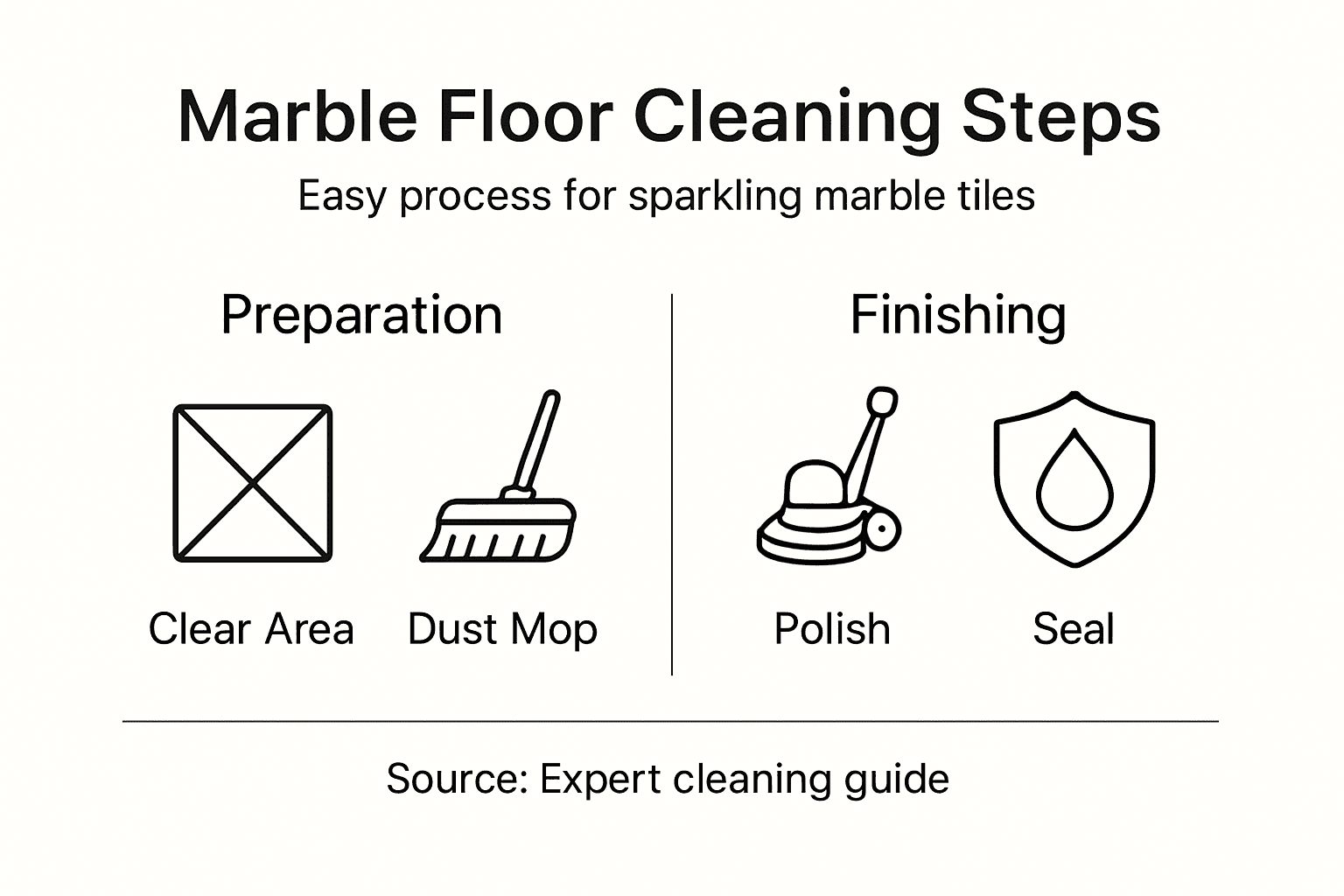
- Step 1: Prepare Marble Floors For Cleaning
- Step 2: Remove Dirt And Debris Safely
- Step 3: Apply Marble-Safe Cleaning Solution
- Step 4: Polish Marble For Enhanced Shine
- Step 5: Seal And Protect Marble Surfaces
- Step 6: Inspect Results For Quality Assurance
Quick Summary
| Key Insight | Explanation |
|---|---|
| 1. Clear the area before cleaning | Remove furniture and objects to prevent scratching and allow thorough access to the marble floors during cleaning. |
| 2. Use soft cleaning tools | Employ microfiber dust mops and vacuums with soft attachments to safely collect dirt without damaging the marble surface. |
| 3. Choose pH-neutral cleaners | Select mild, non-acidic cleaning solutions designed specifically for marble to avoid discoloration and etching during cleaning. |
| 4. Regularly seal marble surfaces | Apply a high-quality impregnating sealer periodically to protect the porous stone from stains and maintain its appearance. |
| 5. Inspect for quality assurance | Conduct a detailed inspection under various lighting to check for shine and consistency, ensuring the cleaning and polishing were effective. |
Step 1: Prepare Marble Floors for Cleaning
Preparing your marble floors for cleaning requires careful strategy to protect these delicate surfaces from potential damage. By following systematic preparation steps, you’ll ensure a thorough and safe cleaning process that maintains your marble’s natural beauty and integrity.
Start by clearing the entire floor area of furniture, rugs, and movable objects. This allows complete access and prevents accidental scratching during cleaning. Next, use a soft, clean microfiber dust mop to remove loose dirt and debris. Avoid using brooms with stiff bristles that might scratch the delicate marble surface – instead, opt for soft cleaning tools recommended by stone care experts.
- Remove all furniture and objects from the floor
- Use a microfiber dust mop for initial debris removal
- Place protective mats at entry points to minimize incoming dirt
- Inspect the floor for any visible stains or problem areas
Pay special attention to high-traffic zones where grit and dirt accumulate. If you notice any loose particles, gently sweep them away using light, sweeping motions. For areas near entryways, consider placing soft, absorbent mats to trap dirt before it reaches your marble floors.
Marble is a soft, porous stone that requires gentle handling during preparation and cleaning.
Pro tip: Keep a dedicated soft dust mop specifically for marble floors to prevent cross-contamination and potential scratching from debris picked up in other areas of your home.
Step 2: Remove Dirt and Debris Safely
Removing dirt and debris from marble floors demands a gentle approach to prevent surface damage and maintain the stone’s pristine appearance. Understanding the right techniques will help you protect your investment while keeping your marble floors looking beautiful and clean.
Start by selecting the appropriate cleaning tools. Soft cleaning methods are crucial for preserving marble’s delicate surface. Use a vacuum with a soft brush attachment or a microfiber dust mop to collect loose dirt without scratching. Move the tool in smooth, consistent motions across the entire floor surface, paying extra attention to corners and edges where debris tends to accumulate.
- Use vacuum cleaners with soft brush attachments
- Select microfiber dust mops for gentle debris removal
- Work in consistent, overlapping sweeping motions
- Clean from one side of the room to the other systematically
For stubborn dirt or hard-to-reach areas, consider using a soft-bristled brush with extremely light pressure. Always move in the same direction to prevent spreading dirt or potentially scratching the marble surface. If you encounter any sticky or embedded debris, resist the urge to scrub aggressively.
Gentle cleaning techniques are essential to preserve marble’s natural beauty and prevent surface damage.
Pro tip: Invest in two separate microfiber dust mops – one for dry dust collection and another for slightly damp cleaning to ensure maximum floor protection and cleanliness.
Step 3: Apply Marble-Safe Cleaning Solution
Applying a cleaning solution to marble floors requires precision and care to maintain the stone’s delicate surface and prevent potential damage. The right approach will help you effectively clean your marble while preserving its natural beauty and shine.
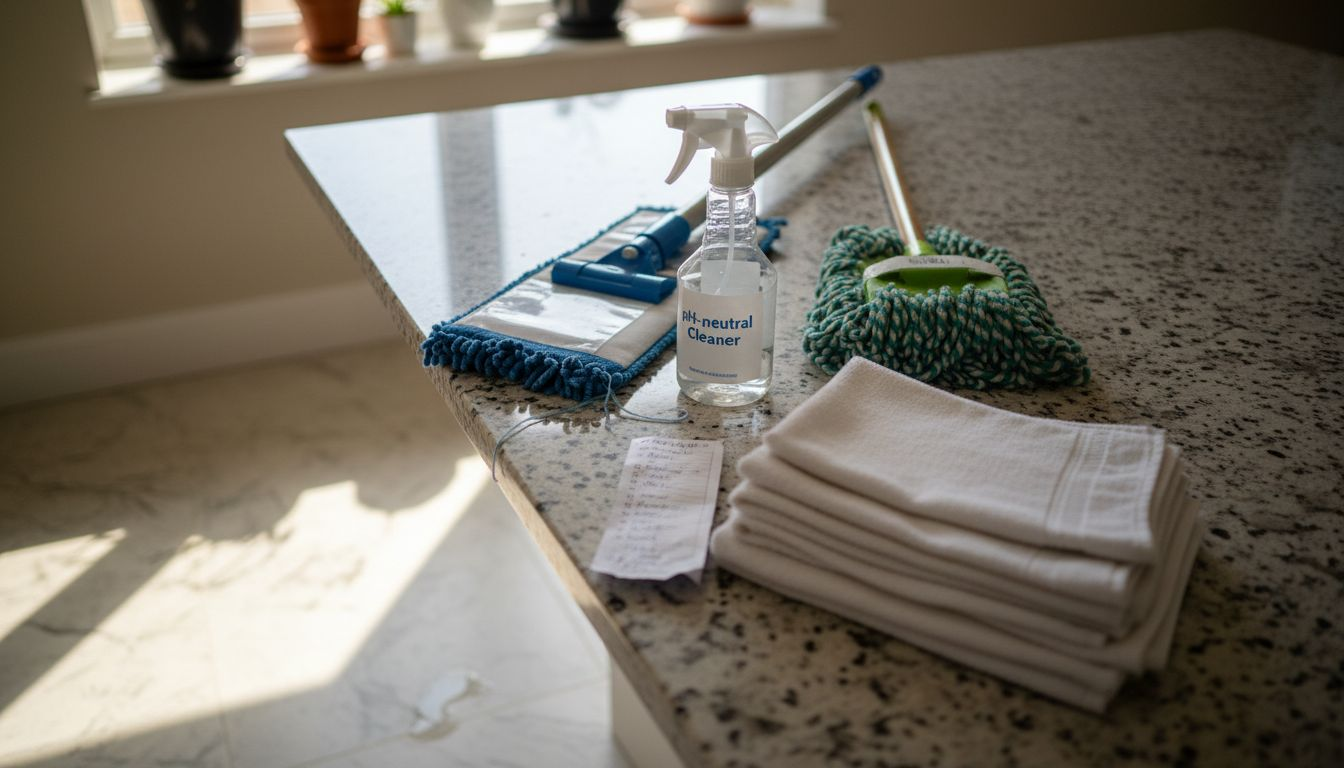
Begin by selecting a pH-neutral cleaning solution specifically designed for marble surfaces. Marble cleaning techniques emphasize the importance of using mild, non-acidic products. Dilute the cleaner according to the manufacturer’s instructions and prepare a small amount in a clean bucket. Always test the solution in an inconspicuous area first to ensure it does not discolor or etch the marble.
- Choose pH-neutral marble-specific cleaners
- Dilute cleaning solution as per manufacturer instructions
- Test solution in a small, hidden area first
- Use soft, clean microfiber mops or soft cloths for application
- Avoid saturating the marble surface with excess liquid
When applying the cleaning solution, use a soft microfiber mop or cloth and work in smooth, overlapping motions. Apply the solution sparingly – you want the surface damp, not soaking wet. Rinse thoroughly with clean water to remove any cleaning solution residue, and immediately dry the surface with a clean, soft microfiber cloth to prevent water spots or streaking.
Gentle application and thorough rinsing are key to protecting marble’s delicate surface during cleaning.
Pro tip: Keep a separate set of cleaning tools for marble floors to prevent cross-contamination and potential scratching from debris picked up in other areas of your home.
Step 4: Polish Marble for Enhanced Shine
Polishing marble floors transforms their appearance, restoring a lustrous and professional finish that highlights the stone’s natural beauty. Achieving that sought-after gleam requires precision, the right tools, and a systematic approach to bring out your marble’s maximum potential.
Marble polishing techniques demand careful execution, starting with a thoroughly cleaned and prepared surface. Choose a professional-grade marble polishing powder containing fine abrasives like tin oxide. Work with either a specialized marble buffer or a low-speed polishing machine, ensuring even and gentle application across the entire floor surface.
- Select a marble-specific polishing powder
- Use a professional marble buffer or low-speed polishing machine
- Apply polishing compound in smooth, overlapping circular motions
- Work in small sections to maintain consistent coverage
- Use light to moderate pressure during polishing
- Clean excess polishing compound immediately after application
Begin polishing in one corner of the room, moving systematically across the surface. Apply the polishing compound sparingly and use steady, consistent circular motions. Multiple gentle passes will typically produce better results than aggressive single passes. The goal is to smooth microscopic surface imperfections and restore the marble’s natural reflectivity.
Patience and technique are more important than force when achieving a high-gloss marble finish.
Pro tip: Test your polishing technique in a small, inconspicuous area first to ensure you’re comfortable with the process and achieve the desired results.
Step 5: Seal and Protect Marble Surfaces
Protecting your marble floors involves more than just cleaning – it requires strategic sealing to prevent long-term damage and maintain the stone’s pristine appearance. Understanding the right sealing techniques will help you preserve your marble’s beauty and durability for years to come.
Marble sealing techniques are essential because marble is inherently porous and vulnerable to staining. Choose a high-quality impregnating sealer that penetrates deep into the stone without altering its natural appearance. Select a sealer specifically designed for marble that offers protection against water, oil, and potential chemical damage.
- Select a marble-specific impregnating sealer
- Clean and dry the marble surface thoroughly before application
- Apply sealer evenly using a soft, lint-free cloth
- Work in small sections to ensure complete coverage
- Allow proper drying time between sealer coats
- Buff excess sealer with a clean microfiber cloth
Apply the sealer carefully, using smooth and consistent motions. Start in one corner and work methodically across the floor, ensuring complete and even coverage. Most sealers require multiple thin coats for maximum protection. Remember that sealing is not a one-time process – plan to reapply the sealer periodically to maintain optimal protection.
Here’s a quick comparison of marble floor care tools and their specific uses:
| Tool Type | Primary Use | Why It Matters |
|---|---|---|
| Microfiber dust mop | Dry dust and debris removal | Prevents scratching and damage |
| Vacuum with soft attachment | Collect loose particles | Safe for delicate surfaces |
| pH-neutral cleaner | Deep but gentle cleaning | Avoids etching and discoloration |
| Marble polishing powder | Restore shine and gloss | Removes fine surface blemishes |
| Impregnating sealer | Long-term stain protection | Shields against spills and oils |
Sealing marble is a preventative measure that significantly extends the stone’s longevity and aesthetic appeal.
Pro tip: Perform a water droplet test after sealing to verify the effectiveness of your application by observing how water beads on the surface.
Step 6: Inspect Results for Quality Assurance
Conducting a thorough quality assurance check is the final critical step in your marble floor restoration process. This careful inspection ensures that all your hard work has produced the desired pristine and professional result.
Marble surface inspection requires systematic evaluation under different lighting conditions. Begin by examining the entire floor surface from multiple angles, looking for uniform shine and consistent coloration. Use both natural and artificial light to reveal any potential imperfections that might be missed with a single perspective.
- Check for uniform shine across the entire surface
- Inspect under different lighting conditions
- Look for any remaining dirt or residue
- Verify smooth, consistent texture
- Check for any new scratches or etching
- Confirm sealer has been applied evenly
Pay close attention to high-traffic areas and edges where cleaning and polishing might have been less thorough. Run your hand gently across the surface to detect any rough spots or inconsistencies. Compare the cleaned and polished area with an untouched section to confirm significant improvement in appearance and texture.
Use this summary to identify common mistakes to avoid in marble floor maintenance:
| Mistake | Consequence | Better Approach |
|---|---|---|
| Using acidic cleaners | Surface etching, dull spots | Stick to pH-neutral products |
| Aggressive scrubbing | Scratches and scuffs | Use gentle, light motions |
| Skipping sealing steps | Increased stain risk | Reapply sealer regularly |
| Neglecting high-traffic areas | Accumulated grime, dull patches | Extra care and regular cleaning |
| Overwetting marble | Water spots, residue marks | Use sparing dampness and dry fast |
Careful and systematic inspection is the key to ensuring your marble floor restoration meets professional standards.
Pro tip: Take before and after photographs in consistent lighting to objectively evaluate your marble floor restoration results.
Restore the Natural Shine of Your Marble Floors with Expert Care
If you found the detailed steps on preparing, cleaning, polishing, and sealing marble floors helpful, you know how delicate and intricate marble maintenance can be. The challenge lies in protecting this porous, valuable stone from scratches, stains, and dullness while achieving that sparkling finish you desire. At Affordable Marble Restoration, we understand these pain points deeply and offer professional solutions that go beyond simple cleaning.
Whether you struggle with removing stubborn dirt gently, applying pH-neutral cleaning safely, or ensuring a flawless polish and seal, our experts have you covered. We specialize in restoring marble and other natural stone surfaces using advanced techniques tailored to every floor’s unique condition. Discover how our marble floor polishing and sealing services can protect your investment and bring lasting brilliance. Don’t wait until stains or wear make restoration more difficult. Visit Affordable Marble Restoration today to schedule a consultation and let us help you safeguard the beauty of your marble floors with quality workmanship you can trust.
Frequently Asked Questions
How do I prepare my marble floors for cleaning?
Start by removing all furniture and rugs to allow complete access to the floor. Next, use a soft microfiber dust mop to remove loose dirt and debris, and inspect for any visible stains before you begin cleaning.
What cleaning solution is safe for marble floors?
Use a pH-neutral cleaning solution specifically designed for marble surfaces to avoid etching or discoloration. Dilute the cleaner according to the manufacturer’s instructions, and always test it in a small, inconspicuous area first.
How can I effectively remove stubborn dirt from marble floors?
Gently vacuum the floor using a vacuum with a soft brush attachment or use a microfiber dust mop for delicate debris removal. Work in smooth, consistent motions, paying extra attention to corners and edges where dirt tends to collect.
What steps should I follow to polish my marble floors?
Select a professional-grade marble polishing powder and apply it using a marble buffer or low-speed polishing machine. Work in small sections with light pressure and consistent circular motions to restore the shine without causing damage.
How often should I seal my marble floors?
Plan to apply a sealer periodically to maintain optimal protection against stains and moisture. A common guideline is to reapply the sealer every six months to a year, depending on foot traffic and overall wear.
What should I look for when inspecting my marble floors after cleaning?
Check for uniform shine and consistent coloration across the entire surface, and inspect under various lighting conditions to reveal any imperfections. Run your hand over the surface to detect rough spots or any missed areas during cleaning.
Recommended
- Marble Floor Maintenance Tips: The Complete Guide
- Stone Floor Polishing Process for Lasting Shine
- How to Polish Marble Floor at Home | Easy DIY Guide
- Marble Restoration Made Easy: A Complete Guide
- The Ultimate Guide to Creating a Luxury Outdoor Retreat (Planning-Guide|Digital Download) – Premium Outdoor | Backyard Pyre
