

TL;DR:
- Sealing granite protects against stains, enhances color, and extends countertop lifespan.
- Porosity and type of granite determine sealing frequency, from months to years.
- Professional sealing and maintenance prevent costly repairs and keep granite looking its best.
Granite countertops look tough. They feel tough. But many South Florida homeowners discover the hard way that skipping sealing leads to stained, dull surfaces that cost far more to fix than to protect. That pristine white granite island you splurged on? Without proper care, one spilled glass of red wine or a squeeze of lemon juice can leave a mark that no amount of scrubbing will remove. This article breaks down why sealing matters, which granite types need it most, how often to reseal in our hot and humid climate, and what mistakes to avoid so your investment stays beautiful for decades.
Table of Contents
- The truth about granite: not all slabs are the same
- Why sealing granite surfaces matters
- How often should you seal granite? Making the right call for your home
- Sealing mistakes to avoid and when to call a pro
- Why the ‘set it and forget it’ mindset puts your granite at risk
- Extend your granite’s life with expert restoration
- Frequently asked questions
Key Takeaways
| Point | Details |
|---|---|
| Granite isn’t foolproof | Even premium granite needs sealing, as porosity varies widely by slab. |
| Proper sealing boosts longevity | A well-maintained seal can keep your surfaces looking new for 20 years or more. |
| Sealing frequency depends | Lighter and high-traffic granite surfaces need more frequent resealing than others. |
| DIY with care or call pros | DIY sealing is possible, but improper application is common—pros offer lasting assurance. |
The truth about granite: not all slabs are the same
Granite is a natural igneous rock, formed under intense heat and pressure deep in the earth. Because it forms from cooling magma, every slab has a unique mineral composition, and that means every slab behaves differently in your kitchen or bathroom. Some slabs are incredibly dense with almost no porosity (meaning very few tiny pores that liquid can enter). Others are surprisingly absorbent, almost like a sponge at the microscopic level.
Here is the part most granite sellers won’t volunteer: color is one of your best clues to porosity. Lighter-colored granites like Kashmir White or Colonial White tend to be more porous and need more frequent sealing. Darker granites like Absolute Black or Black Galaxy are usually denser and may rarely need sealing at all. This is not a hard rule, but it is a reliable starting point.
Myth: All granite is non-porous and maintenance-free. Reality: porosity varies by slab, and most granite benefits from sealing to extend longevity well beyond 20 years.
The types of granite available on the South Florida market range from very dense to surprisingly open-grained. Knowing where yours falls on that spectrum is the first step in caring for it properly.
Everyday hazards that can seep into unsealed stone include:
- Water and moisture from poolside kitchens or coastal humidity
- Cooking oils and greases that leave dark, stubborn patches
- Citrus juices and acidic foods like tomatoes, vinegar, and coffee
- Wine, juice, and soda that stain deeply if left to sit
- Soap residue that clouds the surface over time
Here is a quick comparison of common South Florida granite types and how often they typically need sealing:
| Granite type | Porosity level | Recommended sealing frequency |
|---|---|---|
| Kashmir White | High | Every 6 to 12 months |
| Colonial White | High | Every 6 to 12 months |
| Santa Cecilia | Medium | Every 1 to 2 years |
| Giallo Ornamental | Medium | Every 1 to 3 years |
| Black Galaxy | Low | Every 5 to 10 years |
| Absolute Black | Very low | Rarely or never |
Understanding your specific slab is far more useful than following generic granite care advice.
Why sealing granite surfaces matters
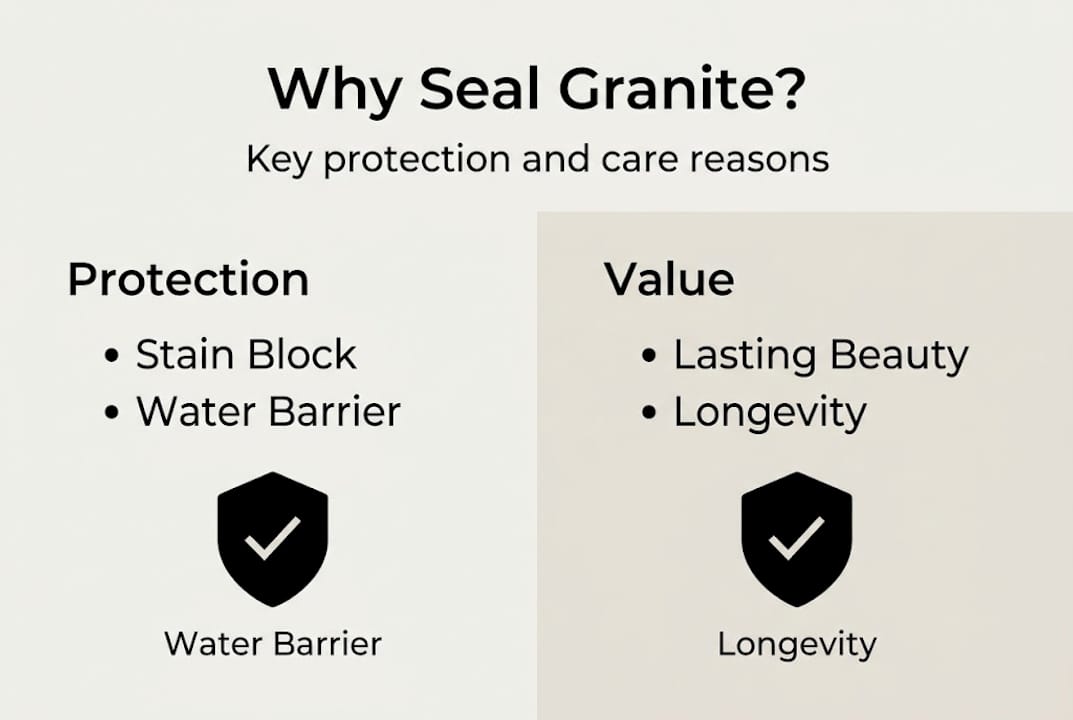
Think of a quality sealer as an invisible shield. It soaks into the stone’s pores and creates a barrier that slows down liquid absorption. That gives you time to wipe up a spill before it becomes a stain. Without it, your granite is exposed from the moment it is installed.
The stone sealing and restoration process does more than just block stains. It also makes your granite easier to clean day to day, which matters a lot in a busy South Florida household. Sealed surfaces don’t trap bacteria or mold the way unsealed ones can, and that is a real health benefit in our warm, humid climate.
The main benefits of sealing your granite regularly include:
- Stain prevention against wine, oil, coffee, and acidic foods
- Color enhancement that brings out the natural depth and beauty of the stone
- Mold and bacteria resistance in high-moisture areas like bathrooms
- Easier daily cleaning with no special products needed
- Faster resale value since well-maintained countertops add to a home’s appeal
Properly sealed granite can last well beyond 20 years, which is a significant return on your original investment. Compare that to replacing or doing a major restoration job on neglected countertops, and the math becomes obvious.
Sealing frequency depends on the stone. Porous granite typically needs attention every 6 to 12 months. Dense granite may only need resealing every 3 to 10 years, or possibly never. Matching the schedule to your specific slab is what gets results.
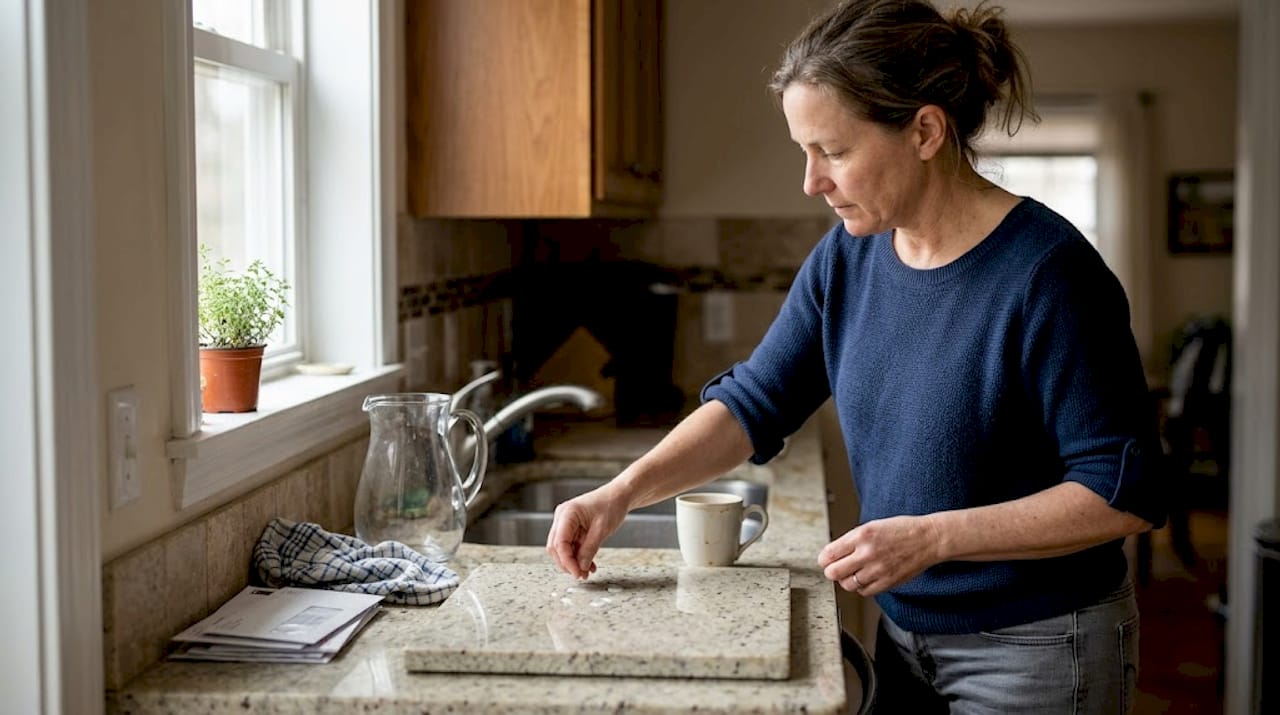
Pro Tip: Place a few drops of water on your countertop and wait three to five minutes. If the stone darkens where the water sits, your seal is wearing thin and it’s time to act. If the water beads up, you’re in good shape.
For homeowners considering full granite restoration services, sealing is just one part of a broader care plan that can include polishing, honing, and deep cleaning.
How often should you seal granite? Making the right call for your home
The honest answer is: it depends. But that doesn’t mean you have to guess. There are reliable benchmarks and simple at-home tests that make the decision straightforward.
Sealing frequency generally falls in the range of every 1 to 5 years. Light or porous granite like Kashmir White may need it every 6 to 12 months. Dense, dark granite like Absolute Black may go 3 to 10 years or more without needing any sealer at all. High-traffic kitchens with daily cooking always need more frequent attention than a rarely used guest bathroom.
Here is a quick reference for common situations:
| Scenario | Sealing frequency |
|---|---|
| Light granite, heavy daily use | Every 6 to 12 months |
| Light granite, occasional use | Every 1 to 2 years |
| Medium granite, average use | Every 2 to 3 years |
| Dark/dense granite, any use | Every 3 to 10+ years |
| Outdoor kitchen, South Florida climate | Every 6 months |
Not sure where your granite falls? Follow these steps to test it at home:
- Clean the surface thoroughly and let it dry completely.
- Place a quarter-sized drop of water on the countertop in a few different spots.
- Wait three to five minutes without touching the water.
- Check whether the stone has darkened beneath the droplets.
- If darkening appears, schedule a reseal soon. If water still beads, you’re good for now.
Factors that increase how often you need to seal include outdoor exposure, poolside or coastal kitchen environments, large families with kids or pets, and heavy cooking with acidic foods. Applying the wrong sealer or over-applying it can actually clog the stone’s pores and cause more problems than it solves.
For tough stains or unclear stone types, following best practices for sealing and reviewing green cleaning natural stone methods can help you avoid further damage while maintaining a safe home environment.
Sealing mistakes to avoid and when to call a pro
DIY sealing can work well for straightforward situations. But there are several common mistakes that can leave your granite worse off than before you started.
The most frequent problems we see include:
- Using the wrong sealer for your granite type, which leaves residue or fails to protect
- Skipping surface prep, meaning sealing over grease, soap film, or old residue
- Over-applying the sealer, which creates streaks, haziness, or a tacky feel
- Sealing too soon after installation before confirming the stone type and porosity
- Ignoring professional advice because a store-brand product promised easy results
Pro Tip: If you notice streaks or a cloudy film after sealing, you likely applied too much product or didn’t buff it off in time. This is one of the most common calls we receive, and it is 100% avoidable with proper technique.
Some situations clearly call for sealing marble floors and similar stone surfaces to be handled by a professional. The same applies to granite. If you have stains that won’t lift, etching from acid, an unknown stone type, or a high-value surface in a commercial setting, a professional assessment is worth every penny.
Professionals bring the right tools, the right products, and the knowledge of exactly how your stone will respond. They also catch problems early, as shown in real-world examples of stone restoration where early intervention prevented full countertop replacement. High-traffic surfaces especially benefit from professional-grade sealers that penetrate more deeply and last longer than consumer products.
Why the ‘set it and forget it’ mindset puts your granite at risk
After years of working with granite countertops across South Florida, from Boca Raton kitchens to Miami beachfront condos, we’ve seen the same pattern play out repeatedly. Homeowners invest significantly in beautiful stone, then treat it as if it were porcelain tile. They assume it will take care of itself.
Granite is resilient, yes. But our local environment is uniquely hard on natural stone. Coastal humidity, heat, salt air, and heavy daily use create conditions that accelerate wear faster than in drier climates. A homeowner in Phoenix might get five years out of a single seal. You might get two.
Neglected sealing doesn’t just affect appearance. Over five to ten years, unprotected granite absorbs oils, bacteria, and mineral deposits that become nearly impossible to remove without professional grinding and polishing. That repair costs many times more than a routine seal ever would.
The smarter approach is a personalized maintenance plan, not generic advice from a product label. Working with granite restoration professionals who know South Florida stone and its specific challenges means your countertops stay protected in a way that a once-a-year DIY effort simply cannot guarantee.
Extend your granite’s life with expert restoration
Now that you understand why sealing matters and how to approach it wisely, the next step is taking action before small problems become expensive ones. At Affordable Marble Restoration, we specialize in exactly this. From customized sealing schedules to full granite restoration and sealing, we assess each surface individually so you get the right treatment, not a one-size-fits-all solution. We also handle all types of natural stone through our full range of professional stone services, including marble, travertine, limestone, and more. Reach out today for a consultation and let us build a care plan that keeps your granite looking its best for years to come.
Frequently asked questions
How can I tell if my granite needs resealing?
Pour a small amount of water on the countertop. If it darkens or absorbs after a few minutes, your seal has worn thin and it’s time to reseal. Regular spot-testing is the simplest way to stay on schedule.
Can I seal granite myself or should I hire a pro?
DIY is practical for straightforward surfaces in good condition, but professionals are the better choice for high-value countertops, previously stained stone, or surfaces with unknown porosity levels.
Does sealing granite change its natural look?
Most quality impregnating sealers are invisible once cured, though some formulas enhance color depth or add a light sheen. Always test in a hidden area first to make sure you like the result.
How long should a professional granite seal last?
A high-quality professional seal typically lasts between 1 and 5 years, though duration varies significantly based on granite density, daily traffic, and exposure to moisture or acids.
Recommended
- Best practices for sealing marble: protect your stone surfaces
- Why Restore Natural Stone? Protect Value, Beauty & Longevity
- 6 Expert Commercial Stone Care Tips for Facility Managers
- Granite Restoration & Polishing – Miami, Boca Raton, Pompano Beach
- Role of Finish Coats in Flooring Protection and Beauty
