

TL;DR:
- Marble in South Florida requires gentle cleaning, sealing, and regular maintenance due to harsh environment.
- Proper restoration involves testing, careful stain removal, honing or polishing, and sealing for durability.
- DIY methods often fail; professional help ensures safe, effective, and long-lasting marble restoration.
Marble is one of the most beautiful materials you can have in a South Florida home or commercial property. But that beauty fades fast. Between the humidity, salt air, sandy foot traffic, and the occasional spilled citrus drink, marble floors and countertops take a beating here more than almost anywhere else in the country. The good news is that most worn, dulled, or etched marble can be fully restored with the right approach. This guide walks you through everything you need to know, from gathering the correct tools to maintaining your results long after the work is done.
Table of Contents
- What you need to restore marble safely
- Step-by-step marble restoration process
- Troubleshooting: Common marble restoration mistakes
- How to preserve marble’s beauty after restoration
- Why most DIY marble restorations fail—and what actually works
- Get expert help for flawless marble results
- Frequently asked questions
Key Takeaways
| Point | Details |
|---|---|
| Gentle methods first | Begin with water and soft brushes before trying stronger solutions to protect marble surfaces. |
| Step-by-step process | Follow a systematic approach from cleaning and stain removal to final polishing or honing for best results. |
| Avoid common mistakes | Prevent damage by never using acidic or abrasive cleaners and always testing small patches first. |
| Maintain regularly | Regular cleaning and periodic sealing keep your marble surfaces looking new and reduce the need for major restoration. |
What you need to restore marble safely
Before you touch a single square foot of marble, you need the right supplies. Going in with the wrong tools or products is the fastest way to make a bad situation worse. Marble is a calcium-based stone, which means it reacts chemically to acids and scratches easily under abrasives. The goal is always to be as gentle as possible.
Here is what you need:
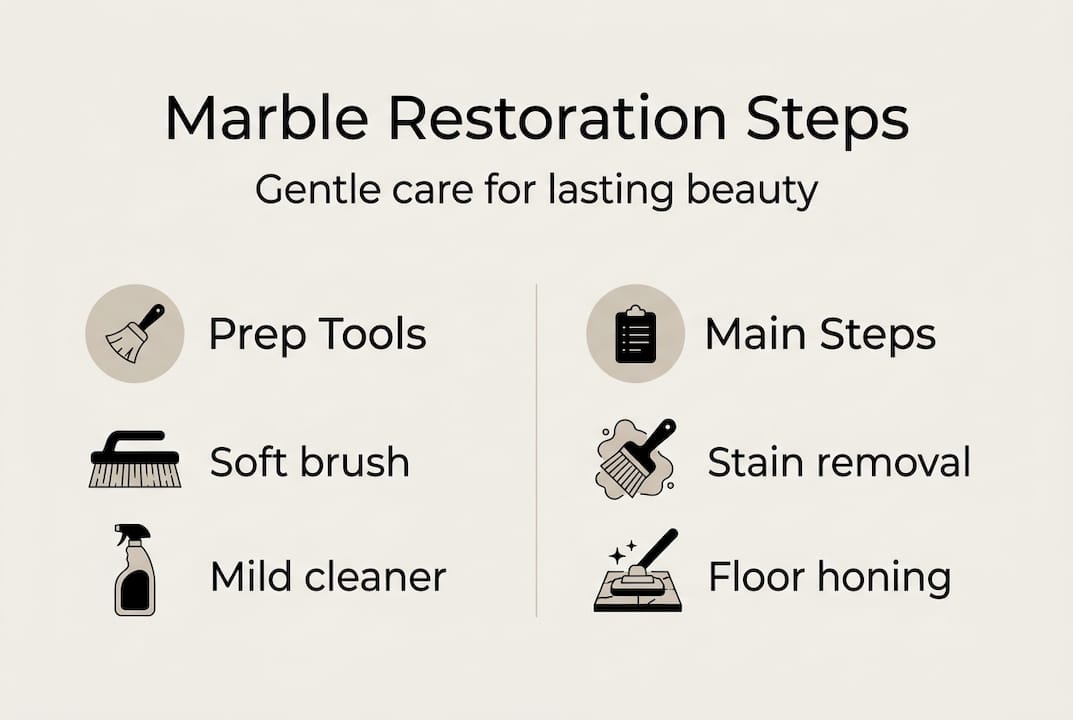
- Soft-bristle brushes for surface cleaning without scratching
- Low-pressure sprayer (below 100 psi) for rinsing without forcing water into pores
- Microfiber cloths for drying and buffing
- pH-neutral cleaner specifically formulated for natural stone
- Poultice material (commercially available or DIY with baking soda or diatomaceous earth) for drawing out stains
- Stone sealer appropriate for marble
- Nitrile gloves and safety goggles to protect yourself during cleaning and sealing
- Painter’s tape and plastic sheeting to protect adjacent surfaces
For stains and historic or delicate marble, use the gentlest methods first: water, soft brushes, and low-pressure below 100 psi, test patches, poultices for stains, and avoid abrasives at the start. That guidance applies just as much to a modern Miami condo as it does to a historic building.
| Supply | Purpose | What to avoid |
|---|---|---|
| pH-neutral cleaner | Safe daily cleaning | Vinegar, bleach, citrus cleaners |
| Soft-bristle brush | Loosening surface grime | Steel wool, scrub pads |
| Poultice material | Deep stain extraction | Harsh chemical solvents |
| Stone sealer | Post-restoration protection | Wax-based or acrylic sealers |
| Microfiber cloth | Buffing and drying | Paper towels (can scratch) |
Always test a small, hidden area of your marble before treating the full surface. A six-inch patch in a corner or inside a cabinet gives you a real preview without risk. This step is non-negotiable, especially in South Florida where some older stone has had decades of product buildup.
“The single most expensive mistake homeowners make is reaching for whatever cleaner is under the sink. That one decision can permanently etch or discolor marble that would otherwise be restorable.”
Pro Tip: Read our complete marble restoration guide before buying supplies. It can save you money by clarifying exactly what your specific stone type and condition needs. Also see our marble floor restoration steps for floor-specific prep considerations.
Step-by-step marble restoration process
With everything ready, you can now start the marble restoration, following this proven process.
-
Gentle surface cleaning. Mix your pH-neutral cleaner with warm water per the label instructions. Apply with a soft brush or mop in circular motions. Rinse with your low-pressure sprayer and dry completely with microfiber cloths. Never let water pool on marble.
-
Identify and treat stains. Different stains need different treatments. Organic stains (coffee, wine, food) respond to hydrogen peroxide poultices. Oil-based stains need acetone or mineral spirits mixed into the poultice base. Rust stains call for a commercial rust remover formulated for stone. Apply your poultice, cover with plastic wrap, and allow a dwell time of 8 to 24 hours before gently removing it.
-
Test your 6×6 inch patch. Before polishing or honing the full surface, work a test area. This shows you exactly what result to expect and helps you calibrate your technique.
-
Choose: polishing or honing. Polishing brings back a high-gloss, mirror-like shine. Honing produces a smooth matte or satin finish. Both have real advantages depending on where your marble is located.
-
Apply sealer. Once polished or honed, seal the surface with a penetrating marble sealer. This fills the pores and protects against new stains.
The polishing vs. honing decision matters more than most homeowners realize. Here is a quick comparison:
| Finish type | Appearance | Best for | Maintenance level |
|---|---|---|---|
| Polished | High gloss, reflective | Foyers, formal areas | Higher (shows every mark) |
| Honed | Matte or satin | Kitchens, bathrooms, busy areas | Lower (hides daily wear) |
For busy South Florida kitchens, honed finishes are often the smarter call. Because kitchens see constant contact with acidic foods, a matte finish hides future etching better than a high-gloss polished surface. Polished marble shows every water ring and scratch; honed marble is far more forgiving in daily use.
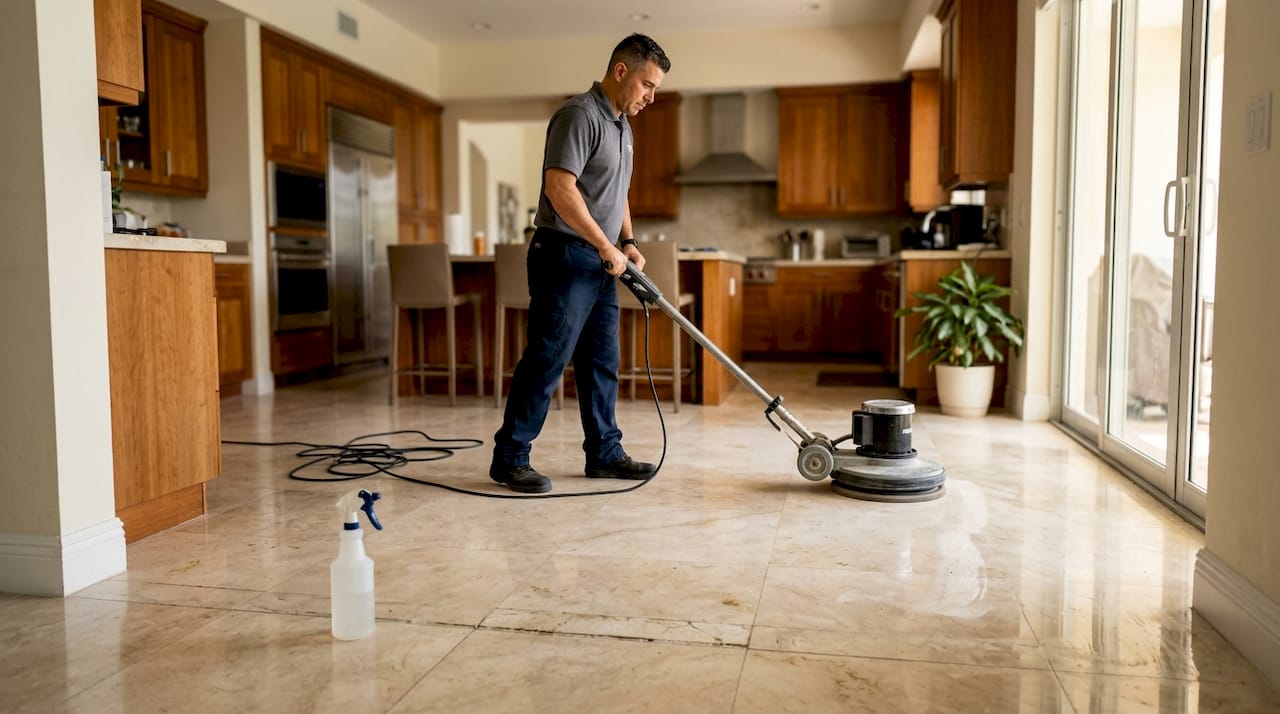
Pro Tip: If you have Miami marble floor restoration on your agenda, honing is often worth the conversation with your contractor before committing to a full high-gloss polish, especially in open-plan living areas that connect to patios.
Troubleshooting: Common marble restoration mistakes
Even with the right steps, you might encounter setbacks. Here is how to avoid the big errors.
The most common mistakes we see after homeowners attempt restoration on their own include:
- Using acidic or abrasive cleaners. Vinegar, lemon juice, and abrasive scrubbing pads all etch marble on contact. The surface looks cloudy or dull after. This is chemical damage, not just dirt, and it requires professional re-honing or re-polishing to fix. As a baseline, avoid abrasives initially on any marble surface.
- Treating the wrong stain type. Using hydrogen peroxide on an oil stain, or acetone on an organic stain, does not just fail. It can push the stain deeper into the stone. Always identify the stain source first.
- Skipping the test patch. Even professional-grade products can behave differently depending on the stone’s porosity, age, and existing finish. A quick test saves hours of repair work.
- Rushing the poultice. Pulling poultice off too soon (under 8 hours) means the stain stays in the stone. Patience here is the difference between success and a repeat job.
- Working without PPE. Stone cleaners, sealers, and chemical stain removers require gloves and eye protection. Always ventilate the space well.
“We regularly get calls from property managers in Boca Raton and Pompano Beach whose tenants used ‘natural’ vinegar-based cleaners on marble, not realizing they were etching the surface with every wipe.”
Knowing the benefits of marble restoration helps you understand what you are protecting. And if the damage is already done, a qualified professional marble restorer has the tools to reverse even significant etching in many cases.
Pro Tip: Take photos of stains before you treat them. This helps you document progress and gives a professional restorer useful context if you need to call in help later.
How to preserve marble’s beauty after restoration
Restoring marble is only the start; preserving its new look requires ongoing attention.
South Florida is a uniquely demanding environment for natural stone. High humidity accelerates staining and spotting. Sand and grit tracked in from the beach act like sandpaper underfoot. Salt air near coastal properties adds another layer of chemical stress. Here is what ongoing care looks like in practice:
- Clean regularly with a pH-neutral product. Do not wait for visible grime to build up. A light clean twice per week keeps surface contamination from working into the stone.
- Dry spills immediately. Any liquid left sitting, especially anything acidic like juice, wine, or soda, begins etching marble within minutes. Blot, do not wipe, to avoid spreading the liquid.
- Seal every 1 to 2 years in high-traffic or humid areas. Sealing schedules vary, but South Florida properties generally need sealing on the shorter end of that range. A simple water bead test tells you when the sealer is wearing thin: pour a small amount of water on the surface. If it absorbs instead of beading, it is time to reseal.
- Use stone-safe entrance mats. Placing mats at all entry points catches grit before it reaches your marble floors.
- Schedule periodic professional inspections. Annual checkups catch early signs of wear before they become expensive repairs.
The same foundational principle applies to ongoing care: use the gentlest methods first, test before treating, and address stains before they set.
Pro Tip: Set a quarterly calendar reminder to inspect your sealer, grout lines, and any high-traffic spots. Five minutes of checking can prevent a costly marble restoration services call down the road. Our team of marble experts in South Florida can also help you build a custom maintenance schedule based on your specific stone and traffic levels.
Why most DIY marble restorations fail—and what actually works
After learning how to keep your marble beautiful, it is important to understand where most restoration efforts go wrong.
We see failed DIY attempts regularly. The pattern is consistent: a homeowner notices dulling or a stain, grabs a store-bought product with vague “stone-safe” labeling, and applies it without a test patch. Sometimes it works fine. More often, it either does nothing or creates new damage, especially etching from products with hidden acidic ingredients.
The real issue is underestimating how sensitive marble is and overestimating what household-grade products can fix. A polishing compound designed for granite will not restore marble. A sealer built for ceramic tile will sit on top of marble and trap moisture underneath. These are not minor inconveniences. They are jobs that require professional re-honing to correct.
What professionals do differently is not magic. It is proper equipment (industrial diamond pads, variable-speed grinders), accurate diagnosis of the stone’s condition, and the patience to test before treating. The best candidates for confident DIY restoration are lightly soiled, recently sealed marble in low-traffic areas. For anything else, especially etching, deep stains, or cracked surfaces, contact expert stone care Miami professionals who have the tools to match the job.
Get expert help for flawless marble results
If you want guaranteed results and less hassle, here is how experts can help.
At Affordable Marble Restoration, we work with homeowners and property managers across South Florida, from Miami to Pompano Beach and Boca Raton, to restore marble, travertine, and other natural stone surfaces to their original beauty. Our team brings professional-grade equipment and years of hands-on experience to every job, whether it is a single bathroom countertop or an entire hotel lobby floor. We offer free consultations and customized quotes based on your stone’s actual condition. Reach out to our Miami marble restoration experts to get started, or explore our travertine restoration services if you have mixed stone surfaces that need attention.
Frequently asked questions
Is it safe to use vinegar or bleach on marble?
No. Both vinegar and bleach are chemically aggressive toward marble and will cause etching or permanent staining on contact. Always use a pH-neutral cleaner designed for natural stone, and avoid abrasive or acidic cleaners entirely.
How often should marble be professionally restored?
In South Florida’s high-humidity and high-traffic environments, most marble surfaces benefit from professional restoration every 2 to 3 years to address accumulated wear, etching, and sealer breakdown.
What is honing, and is it better than polishing for kitchens?
Honing removes surface material to create a smooth matte or satin finish, and because it does not reflect light the way polished marble does, it hides daily scratches and etching far better. For kitchens, a matte finish is almost always the more practical choice.
How do I remove a rust stain from marble?
Apply a stone-safe rust poultice directly to the stain, cover with plastic wrap, and allow a dwell time of 8 to 24 hours before gently removing and rinsing the area. Repeat if needed for deep stains.
Recommended
- How to restore marble floors: guide for South Florida homes
- Best practices for sealing marble: protect your stone surfaces
- Why Restore Natural Stone? Protect Value, Beauty & Longevity
- 6 Expert Commercial Stone Care Tips for Facility Managers
- How to Tackle Hardwood Floor Wax Removal Like a Pro – J.R. Hardwood Floor Refinishing & Cleaning
