

Cracked surfaces and faded color can make even the most beautiful Miami home or commercial property look tired. Travertine surfaces are especially prone to damage from South Florida’s humid climate, intense sunlight, and salt air. Travertine restoration brings new life to worn stone, addressing issues like surface soiling, cracks, and etching by carefully cleaning, repairing, and sealing this porous calcium carbonate stone. Discover how proper restoration not only improves the appearance but also extends the durability of your investment.
Table of Contents
Key Takeaways
| Point | Details |
| Travertine Restoration Process | This involves cleaning, repairing, and refinishing travertine surfaces to restore their beauty and structural integrity. It is essential in high-humidity areas like South Florida. |
| Professional Expertise is Crucial | DIY restoration can lead to irreversible damage; consult a professional to ensure the correct techniques and materials are used. |
| Restoration is Cost-effective | Compared to replacement, restoration is often more affordable and preserves the original character of the stone. |
| Regular Maintenance is Key | Schedule periodic inspections and professional cleanings to prevent minor damage from escalating into costly repairs. |
What Is Travertine Restoration?
Travertine restoration is a specialized process designed to revive and protect natural limestone surfaces that are commonly found in South Florida homes and commercial spaces. This intricate technique involves carefully cleaning, repairing, and refinishing travertine stone surfaces to restore their original beauty and structural integrity.
At its core, travertine restoration addresses the unique challenges posed by this porous calcium carbonate stone. Unlike standard maintenance, restoration goes beyond simple cleaning to comprehensively rehabilitate stone surfaces that have been damaged by environmental factors, foot traffic, and everyday wear. The process typically includes multiple sophisticated steps such as deep cleaning, grinding, honing, polishing, crack repair, and protective sealing.
The restoration process is particularly crucial in Florida’s challenging climate, where high humidity, salt air, and intense sunlight can accelerate stone surface degradation. Professionals trained in stone restoration use specialized equipment and techniques to remove accumulated debris, repair surface imperfections, and apply protective treatments that enhance the stone’s natural characteristics. Travertine restoration not only improves aesthetic appearance but also extends the functional lifespan of these beautiful natural stone surfaces.
Pro tip: Always consult a professional stone restoration specialist who understands the specific requirements of travertine surfaces before attempting any DIY restoration techniques.
Types Of Travertine And Common Damage
Travertine is a complex natural stone with multiple classifications based on geological origin and formation characteristics. Stone experts categorize travertine into distinct groups including meteogene varieties originating from atmospheric carbon dioxide and thermogene types emerging from thermal sources. These classifications reveal the stone’s intricate geological history and help professionals understand its unique structural properties.
The physical characteristics of travertine vary significantly, with different types presenting unique textures, porosities, and color variations. Common types include light beige, walnut brown, and silver-toned travertine, each with distinct visual qualities and performance attributes. These variations impact how the stone responds to environmental stressors and potential damage mechanisms such as surface etching, staining, and structural degradation.
Here is a summary of common types of travertine and their typical vulnerabilities:
| Type of Travertine | Typical Appearance | Common Vulnerability |
| Light Beige | Creamy, uniform surface | Staining from spills |
| Walnut Brown | Warm, earthy tones | Surface etching by acids |
| Silver-toned | Gray with subtle veining | Moisture penetration and erosion |
Travertine surfaces frequently experience damage from several key environmental factors. The stone’s calcium carbonate composition makes it particularly vulnerable to acid exposure, moisture penetration, and physical abrasion. Common damage types include surface pitting, crack formation, color discoloration, and erosion patterns that can compromise both the aesthetic and structural integrity of the stone. Professional restoration techniques are essential for addressing these complex damage scenarios and preserving the stone’s natural beauty.
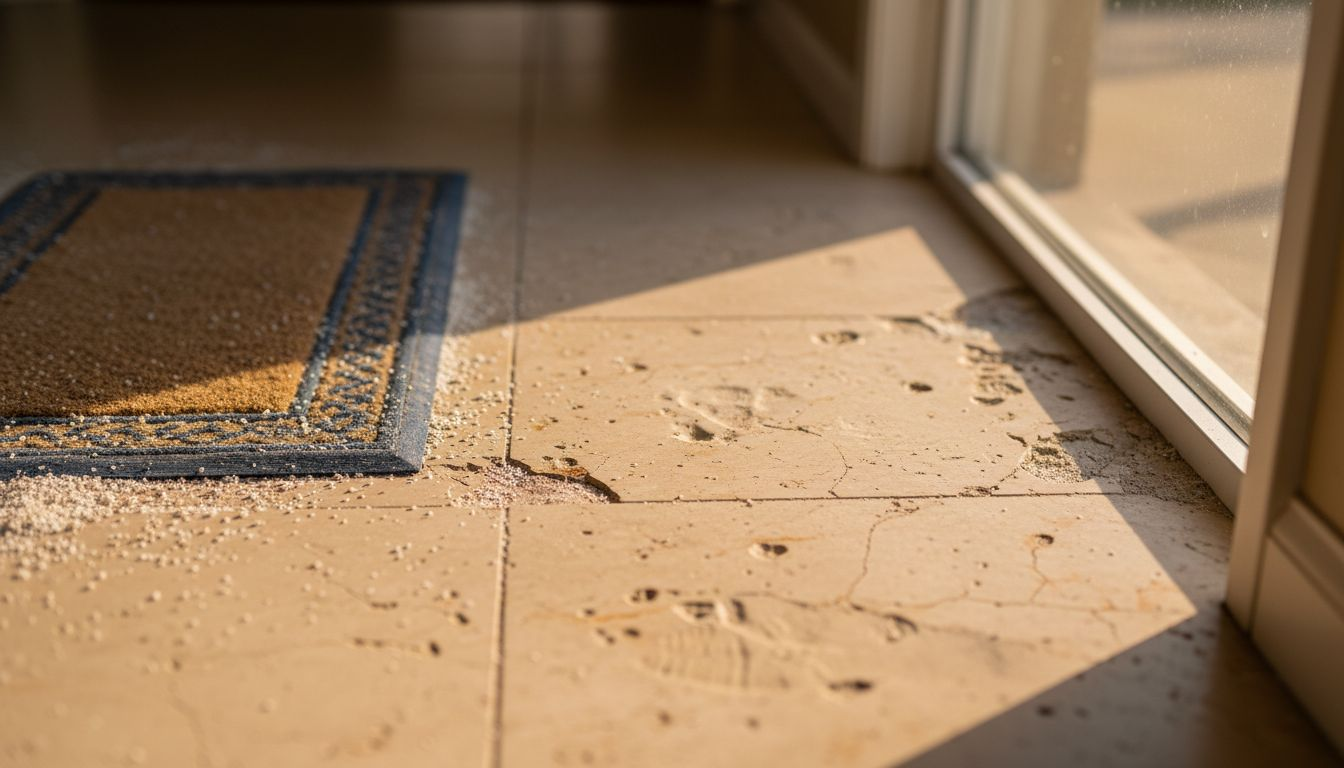
Pro tip: Conduct periodic professional inspections of your travertine surfaces to identify and address potential damage before minor issues escalate into significant restoration challenges.
Core Steps In Professional Restoration
Professional travertine restoration follows a meticulous, multi-stage process designed to comprehensively rehabilitate and protect natural stone surfaces. Restoration experts begin with detailed condition assessment, carefully evaluating the stone’s structural integrity, surface damage, and specific restoration requirements. This initial evaluation is critical for developing a targeted restoration strategy that addresses the unique characteristics of each travertine surface.
The restoration process typically involves several precise technical stages. Initial cleaning requires specialized detergents and techniques that safely remove accumulated dirt, debris, and previous inappropriate treatments without damaging the stone’s delicate calcium carbonate structure. Professionals then focus on structural repair, which may include filling microscopic cracks, addressing surface pitting, and stabilizing areas of potential future degradation. Advanced grinding and honing techniques help smooth uneven surfaces and restore the stone’s original luster.
The final stages of professional restoration concentrate on protection and long-term preservation. Specialized sealants are applied to create a protective barrier against moisture, staining, and environmental damage. These advanced treatments not only enhance the stone’s aesthetic appearance but also significantly extend its functional lifespan. Technicians carefully select restoration materials and techniques compatible with the specific type of travertine, ensuring minimal intervention while maximizing the stone’s natural beauty and structural integrity.
Pro tip: Request before and after documentation from your restoration professional to track the precise improvements made to your travertine surfaces and maintain a record for future maintenance planning.
Key Benefits Of Restoring Travertine
Travertine restoration offers homeowners and property managers in South Florida a comprehensive solution for protecting and enhancing their natural stone surfaces. Restoration provides multiple strategic advantages for maintaining the aesthetic and structural integrity of travertine installations. By addressing surface imperfections and implementing protective treatments, professionals can dramatically improve both the appearance and longevity of these beautiful stone surfaces.
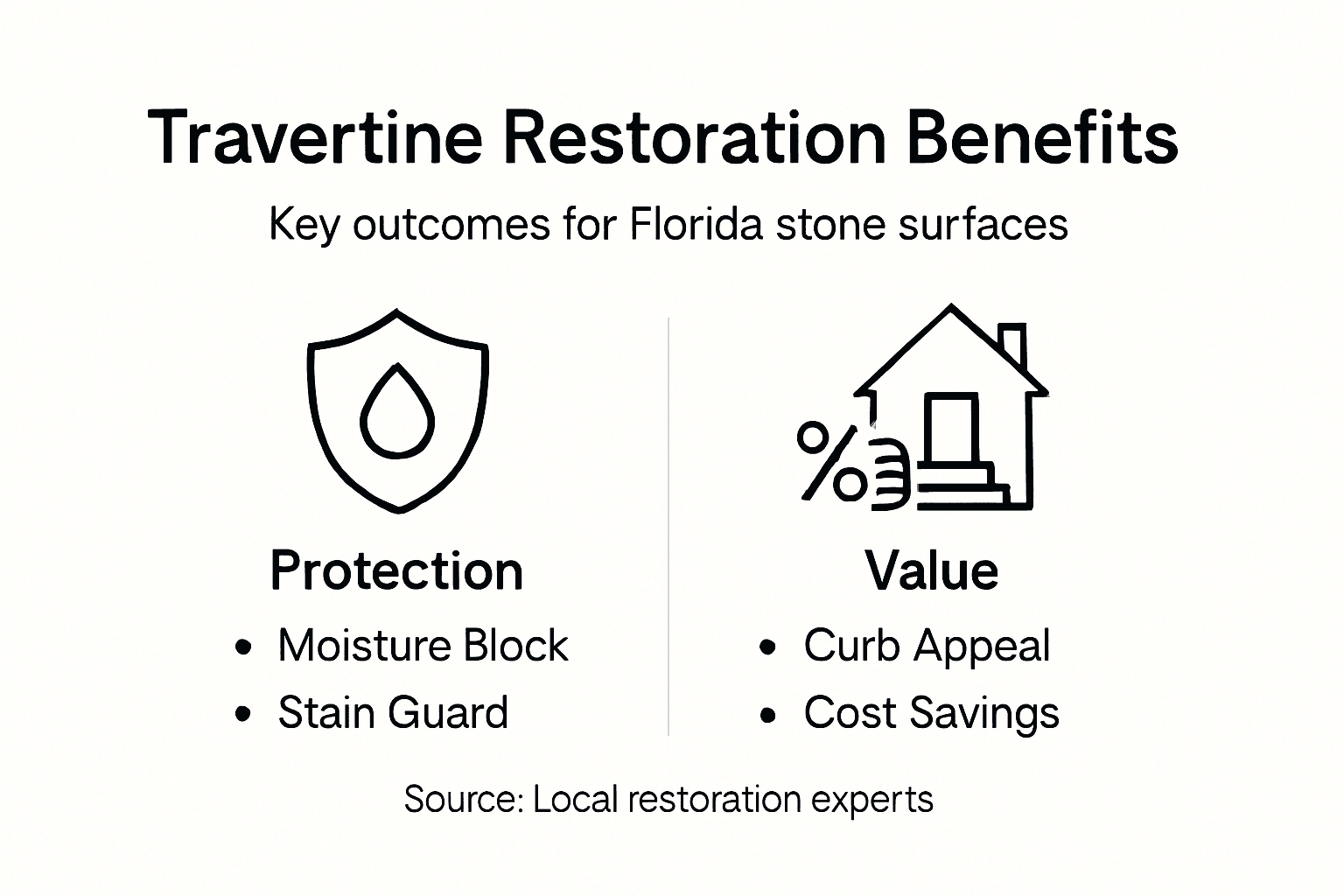
One of the most significant benefits is the prevention of progressive damage. Travertine surfaces are particularly vulnerable to environmental stressors in Florida’s challenging climate, including high humidity, intense sunlight, and salt air. Professional restoration techniques stop minor surface issues from developing into extensive structural problems, effectively reducing long-term repair costs. The process involves carefully removing surface stains, filling microscopic cracks, and applying specialized sealants that protect against future deterioration.
Beyond immediate visual improvements, travertine restoration delivers substantial economic value for property owners. Restored surfaces maintain higher property values, reduce the need for complete stone replacement, and preserve the original architectural character of spaces. The meticulous restoration process not only revitalizes the stone’s natural beauty but also reinforces its structural integrity, ensuring that travertine surfaces continue to provide elegant, durable flooring and design elements for years to come.
Pro tip: Schedule annual professional inspections to catch and address potential travertine surface issues before they become expensive, extensive restoration projects.
Risks And Mistakes With DIY Restoration
Do-it-yourself travertine restoration can quickly turn into an expensive nightmare for unsuspecting homeowners. DIY restoration risks include irreversible stone damage from using inappropriate cleaning techniques and chemicals that can permanently compromise the stone’s delicate structure. Travertine’s unique calcium carbonate composition makes it extremely vulnerable to improper treatment, meaning even well-intentioned efforts can result in costly mistakes that professional restoration experts would easily avoid.
The most common DIY errors involve using aggressive cleaning methods that destroy the stone’s natural characteristics. Homeowners often mistakenly use acidic cleaners, abrasive scrubbing tools, or harsh chemical treatments that etch, scratch, or chemically damage the travertine surface. These mistakes can cause permanent discoloration, surface roughness, and structural weakening that cannot be reversed. Inexperienced individuals might also apply sealants incorrectly, trapping moisture within the stone or creating uneven protective layers that accelerate deterioration instead of preventing it.
Professional restoration specialists understand the nuanced requirements of travertine surfaces in South Florida’s challenging environment. They recognize that each stone surface has unique characteristics requiring specialized treatment. Amateur restoration attempts frequently fail to account for factors like surface porosity, existing damage, environmental exposure, and the specific chemical composition needed for effective cleaning and sealing. This lack of expertise can transform a simple maintenance project into an expensive replacement scenario, ultimately costing significantly more than professional intervention would have.
Pro tip: Always consult a professional stone restoration expert before attempting any DIY treatments to avoid potentially irreversible and expensive damage to your travertine surfaces.
Comparing Restoration Versus Replacement
Travertine surfaces present property owners with a critical decision between restoration and complete replacement. Restoration techniques prioritize preserving original materials while maintaining the stone’s historical integrity and aesthetic value. This approach not only represents a more sustainable solution but also typically proves more cost-effective for homeowners seeking to maintain their travertine surfaces in South Florida’s challenging environmental conditions.
The financial implications of restoration versus replacement are significant. Complete stone replacement can cost several times more than professional restoration, involving extensive labor for removing existing surfaces, purchasing new materials, and installing replacement stone. Restoration, by contrast, focuses on repairing and enhancing existing surfaces, addressing specific damage areas while preserving the original stone’s unique character and structural foundation. This targeted approach allows property owners to extend the travertine’s functional lifespan without the substantial expense and disruption of total replacement.
Beyond financial considerations, restoration offers environmental and preservation advantages. Replacing travertine generates substantial waste and requires extracting new stone materials, whereas restoration minimizes environmental impact by working with existing surfaces. Professional restoration techniques can effectively address most surface damage, including cracks, stains, and structural weakening, returning travertine to its original beauty and functionality. The key is identifying the precise point where restoration becomes impractical and replacement becomes necessary a determination best made by experienced stone restoration professionals.
Compare restoration and replacement for travertine surfaces below:
| Factor | Restoration | Replacement |
| Cost | Moderate, cost-effective | High, due to labor and materials |
| Environmental Impact | Low, reuses existing stone | High, generates significant waste |
| Time Required | Shorter project duration | Prolonged, due to removal and install |
| Outcome | Preserves original character | New appearance, less historic value |
Pro tip: Request a comprehensive assessment from a stone restoration specialist to determine the most cost-effective and sustainable approach for your specific travertine surface condition.
Restore and Protect Your Travertine Surfaces with Trusted South Florida Experts
Travertine restoration requires specialized knowledge to tackle issues like surface etching, staining, and moisture damage without risking costly mistakes. If you are seeking to preserve your stone’s natural beauty and structural integrity in South Florida’s harsh climate, partnering with professionals is essential. Affordable Marble Restoration offers expert cleaning, grinding, honing, polishing, sealing, and repair services tailored specifically for travertine and other natural stones.
Don’t let minor surface damage turn into expensive replacement projects. Discover how our customized restoration solutions can extend the life of your travertine and enhance its elegance in any residential or commercial setting. Contact Affordable Marble Restoration today to schedule a detailed assessment and experience the difference of quality workmanship and customer satisfaction. Visit Affordable Marble Restoration now to learn more and get started. See why South Florida property owners trust us for durable and beautiful stone restoration.
Frequently Asked Questions
What is the process of travertine restoration?
The process of travertine restoration involves cleaning, repairing, and refinishing stone surfaces to restore their original beauty and structural integrity. Key steps include deep cleaning, grinding, honing, polishing, crack repair, and applying protective sealants.
How can I identify damage on travertine surfaces?
Common signs of damage on travertine surfaces include surface pitting, discoloration, crack formation, and erosion patterns. Regular inspections can help identify these issues before they escalate.
What are the benefits of professional travertine restoration?
Professional travertine restoration improves the aesthetic appearance of stone surfaces, prolongs their functional lifespan, prevents further damage, and can be more cost-effective than complete replacement.
Why shouldn’t I attempt DIY restoration on my travertine surfaces?
DIY restoration can lead to irreversible damage due to improper techniques or chemical use. Professional restoration specialists have the expertise to treat travertine correctly, preserving its natural beauty and structural integrity.
