

Granite and marble floors shine brightest when their natural beauty is maintained with expert care. For homeowners and property managers in Boca Raton, keeping stone surfaces flawless goes beyond daily cleaning. Professional stone floor polishing reveals stunning colors, increases resilience, and preserves your investment in every room. This guide walks you through each step, highlighting how thorough assessment, cleaning, and surface preparation set the stage for a polished, long-lasting finish.
Table of Contents
- Step 1: Assess And Prepare Stone Floors
- Step 2: Clean And Remove Surface Debris
- Step 3: Grind And Hone Uneven Areas
- Step 4: Polish Stone To Desired Gloss
- Step 5: Seal And Protect The Surface
- Step 6: Inspect And Maintain The Finish
Quick Summary
| Key Takeaway | Explanation |
|---|---|
| 1. Thoroughly Assess Your Floors | Inspect for cracks, stains, and moisture issues before polishing. Addressing these prevents costly mistakes. |
| 2. Use Proper Cleaning Techniques | Clean with pH-neutral products specific to each stone type to avoid damage and reveal true condition. |
| 3. Ensure Even Grinding and Honing | Use progressively finer diamond grits to achieve a level surface, essential for effective polishing results. |
| 4. Apply a Suitable Sealer | Choose a high-quality penetrating sealer to protect polished stone from stains and moisture for lasting beauty. |
| 5. Implement Regular Inspections | Conduct routine checks for wear and spills; maintain a log to catch and escalate issues before they worsen. |
Step 1: Assess and Prepare Stone Floors
Before any polishing work begins, you need to thoroughly evaluate your stone floors and get them ready for the restoration process. This step determines whether your marble, granite, or other natural stone can handle professional polishing and identifies any issues that need addressing first. Taking time here prevents costly mistakes later and ensures your floors finish beautifully.
Start by examining your entire floor surface under good lighting. Look for visible cracks, chips, stains, and areas where the stone might be lifting or separating from the substrate below. Walk across different sections and feel the floor with your hand to detect uneven spots or rough patches. Pay attention to grout lines between tiles or seams in larger slabs, as these areas often reveal structural problems. If you notice significant movement in the floor when you walk on it, or if water seems to pool in certain spots rather than drying evenly, that indicates moisture or base problems that need professional evaluation before polishing begins.
Once you’ve identified any structural concerns, move to surface assessment. Determine what type of stone you actually have. Marble, granite, limestone, and travertine each respond differently to polishing techniques and cleaning methods. If you’re unsure, touch the surface and note its characteristics, then verify with your installer or building records. Next, assess the current condition of your stone. Is it sealed or unsealed? Does it have a honed or polished finish already? Understanding your stone’s existing treatment helps technicians choose the right polishing grit progression. Substrate preparation and moisture testing are critical components of readying floors for professional restoration, as improper base conditions can compromise the entire polishing outcome.
Now tackle the cleaning phase. Remove all loose debris, dirt, and dust from your floors using a soft broom or vacuum with a brush attachment. Never use a standard household vacuum, as it might scratch the stone. Once the surface is clear, perform a deeper clean appropriate for your stone type. For marble and limestone, use pH-neutral cleaners specifically formulated for natural stone, as acidic or alkaline products etch these softer stones. Granite and other igneous stones are more forgiving but still benefit from stone-specific cleaners. Mop thoroughly with minimal water, then dry completely with microfiber cloths. Any remaining moisture can interfere with the assessment of stains and surface defects.
Address any pre-existing damage before the polishing crew arrives. Small chips can often be repaired with color-matched epoxy or resin during the restoration process, but larger damage needs evaluation. Stains should be identified and their type noted, as different stains require different removal approaches during polishing. Water rings, rust marks, and organic stains like food or wine respond to specific treatments. Burn marks or deep scratches might require more aggressive grinding before polishing can begin. Document everything with photos from multiple angles and lighting conditions. These images help your restoration technician plan the approach and explain what work will be necessary.
Also check for any protective measures you need to take. Remove area rugs, loose furniture, or decorative items from the work zone. You’ll want to ensure proper ventilation because polishing equipment generates dust. If you have HVAC vents in the space, discuss whether they should be sealed during the project. Ask your restoration team about access requirements, water needs, and whether they’ll bring their own equipment or use in-place utilities.
Pro tip: Take detailed photos of your stone floors before restoration begins, then keep them in a folder with any documentation about your stone type, previous treatments, and known sensitivities. These records become invaluable if issues arise after polishing or when you need maintenance guidance down the road.
Here’s a quick comparison of common stone floor types and their unique care needs:
| Stone Type | Sensitivity to Cleaners | Typical Polishing Finish | Sealing Frequency |
|---|---|---|---|
| Marble | Highly sensitive to acids | High-gloss or satin | Every 1-2 years |
| Granite | Tolerates most cleaners | Satin or semi-gloss | Every 2-3 years |
| Limestone | Easily etched by chemicals | Honed or matte | Yearly |
| Travertine | Prone to staining and pitting | Matte or low-gloss | Yearly |
Step 2: Clean and Remove Surface Debris
With your stone floors assessed, it’s time to remove all the loose debris and dirt that’s accumulated on the surface. This cleaning phase is essential because any particles left behind can scratch your stone during the polishing process. A thorough debris removal also reveals the true condition of your floor and prepares the surface for the restoration work ahead.
Start with dry cleaning, which removes the bulk of debris without introducing moisture. Use a soft-bristled broom or a vacuum equipped with a brush attachment to sweep across your entire floor. Move systematically from one corner toward the exit, working in sections so you don’t miss any areas. If you’re vacuuming, make sure the machine has a soft brush setting and avoid those with beater bars that can scratch stone surfaces. Pay special attention to corners, baseboards, and areas where walls meet the floor, as dirt tends to accumulate there. For textured stones like travertine or some granite finishes, use a soft brush to work into the pits and grooves where debris hides. This initial dry pass should capture dust, dirt, sand, and loose particles that would otherwise interfere with your assessment and polishing.
Once you’ve removed the loose debris, it’s time for a deeper clean. The key here is using the right cleaning product for your specific stone type. Dust mopping frequently with non-abrasive cleaning agents appropriate for your stone prevents damage while maintaining cleanliness. For marble, limestone, or travertine, use only pH-neutral stone cleaners, as acidic products like vinegar or lemon juice will etch these softer materials. Granite, basalt, and other igneous stones are more resilient but still benefit from stone-specific formulations that won’t leave residue. Mix your cleaner according to product instructions, typically diluting it significantly in water. Use a microfiber mop rather than traditional cotton or sponge mops, as these materials are gentler on stone and won’t leave lint or fibers behind.
Mop your floors with minimal water. You want the mop damp, not wet. Work the same systematic pattern you used when dry cleaning, breaking the floor into manageable sections. Immediately wipe up any excess water with clean, dry microfiber cloths as you go. This prevents water from pooling or seeping into grout lines and substrate areas, which could cause problems later. If your stone has a sealed surface, the water will bead up slightly. If it’s unsealed, the water may absorb more readily, which is why working in sections helps you keep everything under control. Pay particular attention to stains and problem spots. Don’t scrub aggressively. Instead, let the cleaner sit for a moment to loosen the dirt, then gently work the mop over the area.
After mopping, perform a final dry pass. This removes any remaining moisture and ensures your floors are completely ready for assessment. Dry each section thoroughly with clean microfiber cloths. Check for any missed spots or dried residue from the cleaner, which appears as a slight haze or film on the surface. If you find residue, dampen your cloth slightly and wipe again, then dry immediately. Your floors should feel dry to the touch and look fresh without any wet spots or streaks. This is the point where the true condition of your stone becomes visible. You’ll see the actual color and finish, which helps in identifying any remaining stains, scratches, or areas needing special attention before polishing begins.
Pro tip: Keep your damp mop slightly cooler than room temperature by using cool water in your cleaning bucket, as this helps prevent mineral deposits from hard water from drying on your stone surface.
Step 3: Grind and Hone Uneven Areas
Now that your floors are clean and assessed, it’s time to address any unevenness in the stone surface. Grinding and honing flatten high spots, fill low areas, and create a uniform surface that will shine beautifully once polished. This step is critical because even small variations in height become visible once polishing begins, and they affect how light reflects off your floors.
The grinding and honing process uses progressively finer diamond abrasives to systematically reshape your stone. Think of it like using sandpaper on wood, but with much more aggressive tools and a specific strategy. You’ll start with coarse grits to remove high spots and flatten the overall surface, then move to medium grits to refine the texture, and finally to fine grits for the smooth finish. Grinding with progressively finer diamond abrasives removes high spots and creates surface uniformity before the final polishing stage begins. Your restoration technician will evaluate your specific floor and create a grit progression plan based on how uneven your stone is and what finish you want to achieve. For most residential floors in Boca Raton with minor unevenness, this might involve grinding with 60 or 80 grit, then honing with 200 and 400 grit stones before moving to polishing.
During grinding, the equipment removes stone material aggressively to eliminate lippage, which is the uneven height between adjacent tiles or areas of stone. You’ll see dust generation increase significantly during this phase, which is why ventilation and dust containment become important. The grinder creates small passes across the floor, overlapping slightly to ensure consistent coverage. The operator works deliberately, spending more time on high spots that need aggressive leveling and less time on areas already at the proper height. As the grit progression moves finer, the passes become smoother and the dust finer. By the time you reach 400 grit honing, you’re refining the surface texture rather than removing significant material. The stone begins to show its natural colors and patterns more clearly as the grinding progresses. This is where you start seeing the true beauty of your marble or granite emerge.
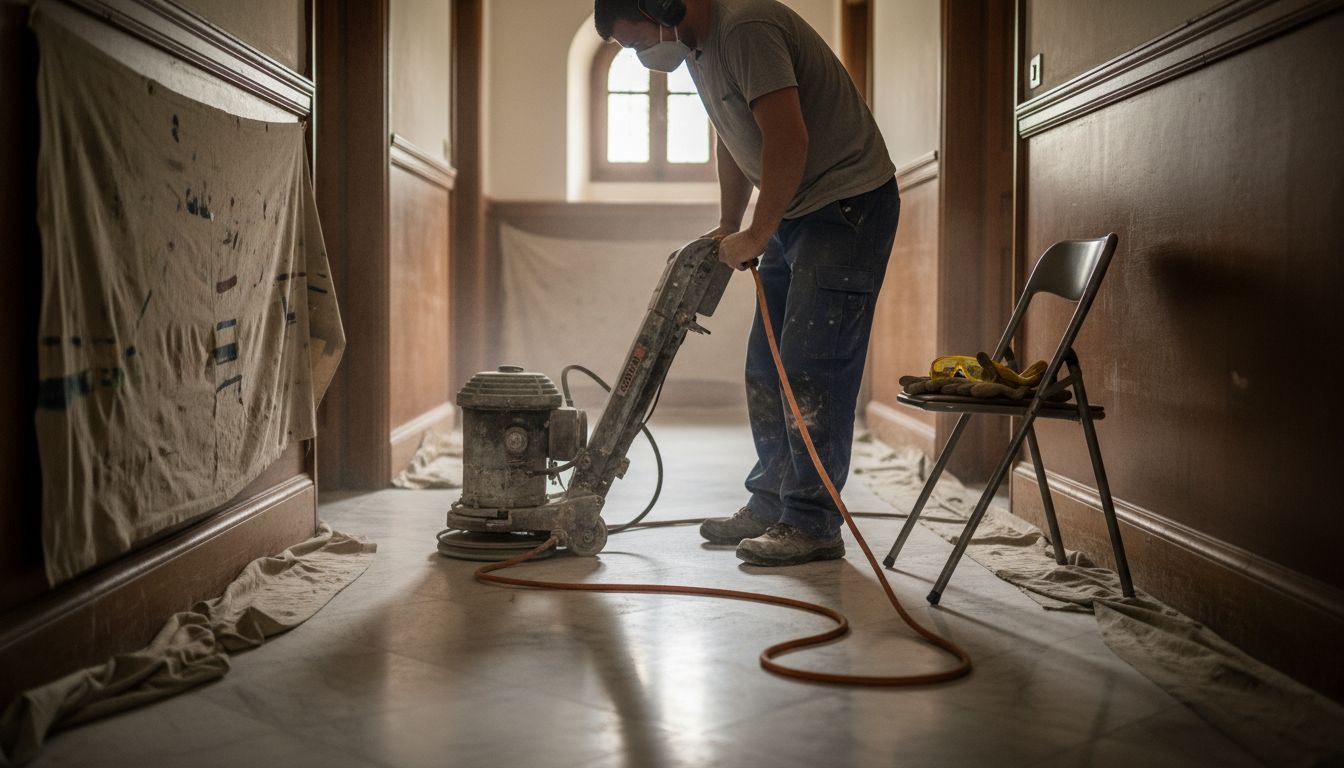
Honing differs from grinding primarily in pressure and aggressiveness. While grinding flattens and levels, honing smooths and refines. Honing with abrasive stones creates a smooth surface that improves the stone’s appearance and prepares it for sealing and polishing. The honing process may create a characteristic texture depending on the grit used and technique applied. Limestone and some granite varieties show a subtle crosshatch pattern from honing that many homeowners find attractive. This honed finish also improves the adhesion for sealers, which you’ll apply later, ensuring the sealer bonds properly to the stone rather than sitting on a slick surface.
Throughout grinding and honing, your technician monitors progress carefully. They check the floor frequently with a straightedge to confirm even coverage and flatness. Problem areas receive extra attention. Any patches or repairs made during preparation become part of this overall flattening process, so they blend seamlessly with the surrounding stone. Once honing is complete, the floor should feel smooth when you run your hand across it, look uniform in color and finish, and show no visible lippage or uneven spots. The surface is now ready for densifying, which fills any small pores in the stone before the final polishing stage.
Pro tip: Ask your restoration technician to use progressively finer grits without skipping stages, as this creates a more uniform and durable finish than jumping directly from coarse to fine grit, which can leave scratches that show through the polish.
Step 4: Polish Stone to Desired Gloss
Your floors are now honed and ready for the polishing stage, where they transform from a smooth matte surface into the gleaming finish you want. Polishing takes the stone refinement one step further by using increasingly fine abrasives to create the specific gloss level you prefer, whether that’s a subtle satin sheen or a mirror-like high-gloss finish. This step is where your stone floor truly reveals its beauty and depth.
Polishing works differently than honing because it focuses on creating reflectivity rather than removing material. After the honing stage at 400 grit, your technician moves to much finer grits that densify the stone surface while polishing it smooth. The progression typically continues through 800 grit, 1200 grit, and often up to 3000 grit or higher for marble seeking that pristine mirror finish. Polishing with increasingly fine abrasives achieves the desired gloss level while enhancing the stone’s reflectivity and visual depth. Each grit level removes the scratches left by the previous grit, creating a progressively smoother and shinier surface. With granite and other dense igneous stones, you might stop at a lower grit to achieve a satin or semi-gloss finish. With marble and limestone, continuing to higher grits creates that luxurious polished look that Boca Raton homeowners typically desire.
The polishing process also densifies your stone, which is a significant benefit often overlooked. As the finer abrasives work across the surface, they compress the top layer of stone, filling tiny pores and making the material denser and more resistant to staining. This densification preparation makes your stone ready to receive sealer, which bonds better to the densified surface than it would to untreated stone. You’ll notice during polishing that the stone changes appearance as you progress through finer grits. Early in polishing, the floor might still look somewhat matte with occasional shiny spots. By mid-process around 1200 grit, the shine becomes more uniform and visible. By final polishing grits, the surface reflects light clearly and shows the natural colors and veining of your stone in their best light.
The technician controls the final appearance by choosing where to stop in the grit progression. Matte finishes stop earlier, around 400 to 600 grit. Satin and semi-gloss finishes typically reach 800 to 1200 grit. High-gloss finishes continue to 2000 grit and beyond. The choice depends on your preferences, the type of stone, and how much light you want reflected. Higher gloss finishes make spaces appear brighter and more spacious but show footprints and dust more readily. Lower gloss finishes hide imperfections better but provide less dramatic visual impact. The mechanical polishing process creates varied finish types including matte, satin, semi-gloss, and high-gloss depending on the degree of abrasion and polish applied.
During polishing, water is typically used to cool the equipment and control dust. This water carries away fine stone particles and polishing residue. Your technician continuously monitors the floor, checking gloss levels and ensuring even progress across all areas. Lippage or previous inconsistencies should be invisible by this point because grinding and honing already addressed them. The floor begins to show its true character, with natural patterns and coloration becoming prominent. Darker stones like black granite become rich and deep. Lighter marbles become luminous. Any veining shows with stunning clarity. Once polishing is complete and the floor has dried, you’ll see the full transformation. The stone feels smooth and looks reflective, and walking across it becomes a pleasure rather than a mundane task.
Pro tip: If you want a long-lasting polished finish, discuss with your technician whether to use marble restoration techniques tailored to your stone type, as different stones may benefit from slightly different polishing strategies to maintain their shine over time.
Step 5: Seal and Protect the Surface
Your beautifully polished floors need protection to maintain their shine and resist staining. Sealing creates an invisible barrier that shields your stone from spills, dust, and daily wear while keeping the natural appearance you worked so hard to achieve. This final step is what transforms your polished floor from stunning but vulnerable into a durable, long-lasting surface.
Sealing works by penetrating the stone and creating a protective layer that repels liquids and prevents stains from setting. Think of it like applying sunscreen to your skin, except this barrier protects your stone from water, wine, oil, and dirt. The type of sealer your technician chooses depends on your stone type, the location of your floors, and your desired maintenance level. Marble and limestone require penetrating sealers that work deep within the stone without changing its appearance. Granite and other dense igneous stones can use either penetrating or surface sealers depending on your preference. Choosing sealers compatible with your stone type and applying them to clean, dry surfaces ensures maximum effectiveness and protection. Your restoration technician will recommend the best sealer for your specific situation based on whether you have residential or commercial traffic, whether pets or children use the space, and your lifestyle.
Before sealing begins, the floor must be completely clean and dry. Any dust, debris, or moisture left on the surface will interfere with sealer adhesion and create uneven protection. Your technician performs a final cleaning with appropriate stone cleaner and allows the floor to dry thoroughly. In humid Florida conditions, this means waiting long enough for all moisture to evaporate from pores within the stone, not just from the surface. Once the floor is ready, the sealer is applied according to manufacturer instructions. Most penetrating sealers are applied with a mop, sprayer, or brush in thin, even coats. The sealer is allowed to penetrate for a specific time, usually 10 to 15 minutes, then any excess is wiped away with clean cloths. Multiple coats are often applied to ensure consistent protection, with drying time between each coat.
The sealing process protects your investment in several important ways. Stain resistance becomes immediate, so spills sitting on your floor are less likely to leave permanent marks. Water resistance prevents moisture from entering the stone, which is particularly important for areas prone to humidity like bathrooms and kitchens in South Florida homes. Improved durability means your polished finish resists daily foot traffic and wear better. Ease of maintenance increases dramatically because sealed floors clean more easily and require less frequent intensive cleaning. Over time, you’ll notice your sealed floor stays cleaner longer and shines more consistently.
It’s important to understand that sealing is not permanent. Sealing stone floors requires periodic reapplication to maintain effectiveness and preserve protection. The frequency depends on foot traffic, how well you maintain your floors, and the type of sealer used. Residential marble in a low traffic area might need resealing every two to three years, while high traffic areas might need it annually. Your technician will discuss a maintenance schedule and provide guidance on how to recognize when your sealer is wearing down. Signs include water no longer beading on the surface or stains appearing despite immediate cleanup. The good news is that resealing is faster and simpler than the initial restoration process.
After sealing, your floors need minimal curing time before normal use. Most sealers are fully cured within 24 to 48 hours, though some may cure faster or slower depending on the product. Your technician will provide specific guidance about when you can walk on the floor, place furniture back, and resume normal activity. During curing, avoid excessive moisture and traffic. Once cured, your sealed and polished stone floor is ready to beautify your Boca Raton home for years to come.
Pro tip: Ask your technician for a written sealer maintenance schedule and recommendations for the specific cleaning products to use, as using incompatible cleaners can degrade the sealer and force you to reseal sooner than necessary.
Step 6: Inspect and Maintain the Finish
Your polished and sealed stone floor is now complete, but keeping it looking beautiful requires regular inspection and maintenance. This step involves developing simple habits that preserve your investment and keep your floors shining for years to come. Catching problems early through regular inspection also prevents small issues from becoming expensive repairs.
Begin with a routine that keeps dust and debris from accumulating. Frequent dust mopping with a soft microfiber cloth removes loose particles before they can scratch your polished surface. Dust mopping works better than vacuuming because it captures fine particles without the risk of a vacuum beater bar damaging the stone. Do this at least weekly in high traffic areas and less frequently in spaces you use less often. When you dust mop, work systematically from one corner toward the exit, just as you did during the initial cleaning phase. Pay attention to corners and baseboards where dust collects. This simple habit dramatically reduces the buildup of abrasive particles that can dull your finish over time.
When cleaning spills or washing your floors, use only products formulated specifically for stone. Frequent cleaning with neutral pH products preserves your finish and protects against staining and degradation. Avoid acidic cleaners like vinegar or lemon juice, which etch marble and limestone. Avoid alkaline cleaners that strip sealers. Avoid abrasive scrubbing tools or harsh chemicals that damage both the stone and protective coatings. Most stone cleaning can be accomplished with pH-neutral cleaners diluted in water applied with a microfiber mop. For stubborn spills, let the cleaner sit for a moment to loosen the mess, then gently work over the area without scrubbing aggressively. Dry immediately after cleaning to prevent water spots and mineral deposits, especially important in Boca Raton’s humid climate.
Regular inspection helps you catch problems before they require professional intervention. Walk your floors periodically and look for changes in appearance or texture. Notice whether water still beads on the surface or if it’s absorbing more readily, which indicates sealer wear. Watch for dull spots that suggest the polish is diminishing. Check for new stains that didn’t respond to your normal cleaning routine. Look for chips, cracks, or areas where the stone seems to be separating from the substrate. Listen as you walk for any unusual sounds like creaking or movement. Periodic inspection for stains, chips, or surface wear helps determine when professional restoration or resealing might be needed. Document what you notice with photos so you can discuss findings with your restoration technician if professional attention becomes necessary.
Spill management is critical for maintaining your sealed floor. Promptly address spills by blotting them with clean cloths rather than wiping across the surface. This prevents the liquid from spreading and potentially seeping into seams or substrate. For food or organic spills, clean the area with your stone cleaner and dry thoroughly. For oil spills, you might need a specialized degreaser appropriate for stone. For red wine or dark colored spills, time matters because some stains set quickly. The good news is that sealed stone resists staining much better than unsealed stone, so most spills clean up easily if addressed promptly.
Monitor your floor’s shine and performance to recognize when resealing is needed. Most residential stone floors in moderate traffic areas need resealing every two to three years. Higher traffic areas or commercial spaces might need it annually. When you notice water no longer beading on the surface or stains appearing despite immediate cleanup, those are signs your sealer has worn down. At that point, contact your restoration technician to discuss resealing options. The resealing process is faster and simpler than the initial restoration since your floor is already polished and prepared.
Understanding your stone type helps you maintain it appropriately. Marble and limestone are softer and more delicate, requiring gentler care and more frequent attention to spills. Granite and other igneous stones are more durable but still benefit from consistent maintenance. Travertine has natural pits that can trap dirt, requiring more frequent dust mopping. Different stone types may benefit from different care approaches, so reference the documentation from your restoration technician about your specific floors.
Pro tip: Keep a log of your floor maintenance, noting when you dust mop, when you clean, and when you notice changes like dull spots or reduced water beading, as this information helps your technician determine if resealing is needed and tracks how well your current maintenance routine is working.
This table summarizes each restoration stage and what it accomplishes:
| Step | Main Purpose | Resulting Benefit |
|---|---|---|
| Assessment & Preparation | Find structural and surface issues | Prevents damage, plans workflow |
| Cleaning | Remove debris and reveal stone | Avoids scratches, shows defects |
| Grinding & Honing | Flatten and smooth surface | Eliminates lippage, improves look |
| Polishing | Increase gloss and densify surface | Enhances shine, resists staining |
| Sealing | Apply protective barrier | Shields against stains, easier care |
| Inspection & Maintenance | Ongoing cleaning and checks | Maintains appearance, longevity |
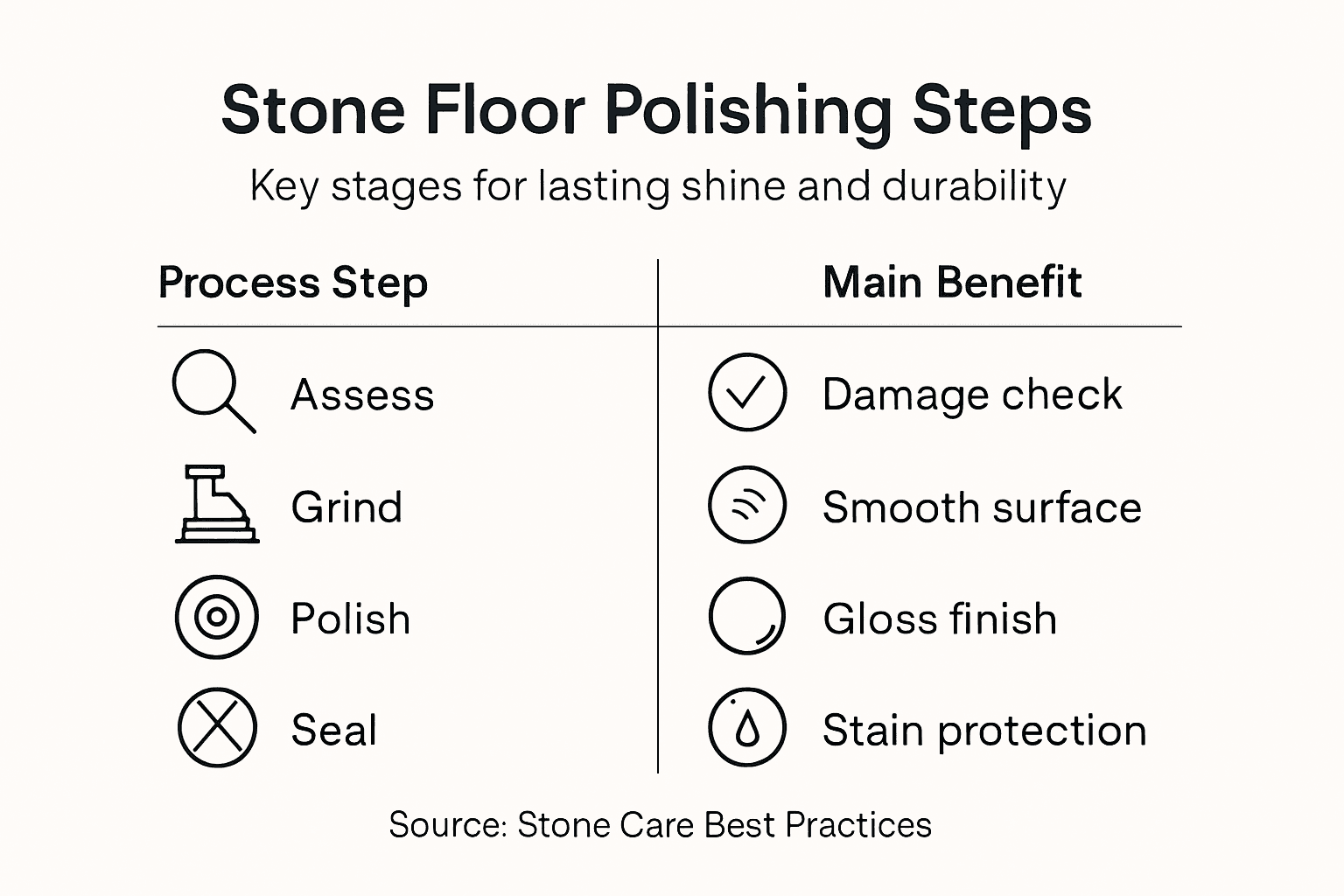
Restore Your Stone Floor to Stunning Perfection Today
The detailed stone floor polishing process outlined in this guide highlights common challenges such as addressing uneven surfaces, removing deep stains, and selecting the right sealers to protect your investment. If you want the lasting shine and durability described here but feel overwhelmed by the steps, Affordable Marble Restoration offers expert solutions tailored specifically for your marble, granite, limestone, or travertine floors. We understand how critical proper assessment, cleaning, grinding, honing, polishing, and sealing are to achieving a flawless finish that enhances your home’s beauty and longevity.
Don’t settle for less when it comes to restoring your natural stone surfaces. Take action now by visiting Affordable Marble Restoration to schedule your consultation and learn more about our customized restoration services. We proudly serve Boca Raton, Miami, Pompano Beach, and surrounding South Florida areas. Discover how our professional team combines advanced techniques with quality workmanship to revitalize your floors, countertops, stairs, patios, and more. Ready to transform your stone surfaces with expert care? Contact us today to bring out the shine and protection your home deserves.
Frequently Asked Questions
What is the first step in the stone floor polishing process?
The first step is to assess and prepare the stone floors. Examine for visible damage or uneven areas and address any structural concerns before polishing begins.
How do I clean my stone floors before polishing?
To clean your stone floors, start by removing loose debris with a soft broom or a vacuum with a brush attachment. Follow this by mopping with a pH-neutral cleaner suitable for your specific stone type, and dry immediately with microfiber cloths.
What is the purpose of grinding and honing in the polishing process?
Grinding and honing flatten uneven areas and create a smooth surface for better light reflection. This step is essential for eliminating lippage and ensuring the final polish appears uniform and flawless.
How do I choose the right level of gloss for my polished floors?
The desired level of gloss is determined by the grit progression used during polishing. Discuss your preferences with your technician, who will guide you on achieving either a satin sheen or a high-gloss finish based on stone type and personal taste.
How often should I seal my polished stone floors?
The sealing frequency depends on foot traffic and stone type but generally ranges from every one to three years. Monitor for signs of wear, such as water not beading, to determine when resealing is necessary.
What maintenance is required after polishing and sealing my stone floors?
Regular maintenance includes dust mopping to remove debris and using only pH-neutral cleaning products to preserve the finish. Inspect your floors regularly for stains and wear, addressing spills promptly to maintain their beautiful appearance.
