

Streaks, dull patches, and worn spots can make even the most beautiful South Florida travertine look tired and neglected. Regular foot traffic, household spills, and Florida’s humid climate all take a toll on these natural stone surfaces. Homeowners and property managers searching for affordable, expert solutions can expect practical advice and trusted techniques for restoring travertine’s shine and protecting its longevity without breaking the bank.
Table of Contents
- What Travertine Polishing Involves
- Polishing Methods And Key Differences
- Essential Equipment And Process Steps
- Benefits Of Professional Travertine Restoration
- Common Mistakes And Cost Considerations
Key Takeaways
| Point | Details |
|---|---|
| Professional Polishing is Essential | Engaging experienced professionals for travertine polishing ensures optimal restoration and protection. They customize approaches based on the unique conditions of the stone. |
| Understanding Polishing Methods | Different polishing methods (mechanical, chemical, hybrid) suit various surface conditions and desired outcomes. Knowing when to use each can enhance results. |
| Invest in Quality Equipment | High-quality tools and materials are crucial for achieving a pristine finish. Regular maintenance and proper techniques help prevent damage during restoration. |
| Avoid Common Mistakes | Inadequate preparation and improper techniques can lead to costly repairs. Hiring certified professionals can mitigate risks associated with DIY attempts. |
What Travertine Polishing Involves
Travertine polishing transforms natural stone surfaces through a precise, multi-step process designed to restore their original beauty and protect their structural integrity. By systematically removing surface imperfections and applying specialized techniques, professionals can revive travertine’s natural elegance and enhance its durability.
The polishing process begins with thorough surface preparation, which involves carefully examining the travertine for existing damage, cracks, or uneven areas. Professionals use specialized grinding equipment with diamond-embedded tools to methodically smooth out rough patches and eliminate surface inconsistencies. This initial grinding stage is critical because it creates a uniform base for subsequent polishing stages. Mechanical polishing techniques allow technicians to progressively refine the stone’s surface using increasingly fine abrasives.
After the initial grinding, professionals transition to honing and polishing stages that gradually increase the stone’s shine and smoothness. This involves using progressively finer diamond pads and specialized polishing compounds that bring out travertine’s natural color and texture. The final stage focuses on applying a protective sealant that helps prevent future staining, etching, and moisture penetration, thereby extending the stone’s longevity and maintaining its restored appearance.
Pro tip: Always hire experienced stone restoration professionals who understand the unique characteristics of travertine and can customize their approach based on the specific condition and age of your stone surfaces.
Polishing Methods and Key Differences
Travertine stone restoration involves several distinct polishing methods, each designed to address specific surface conditions and achieve optimal aesthetic results. Understanding these techniques helps homeowners and professionals select the most appropriate approach for their unique stone surfaces.
Mechanical polishing techniques represent the primary method for travertine restoration, utilizing specialized equipment with diamond-embedded tools and progressively finer abrasive surfaces. These techniques typically involve multiple stages, starting with coarse diamond pads to remove significant surface imperfections and transitioning to finer pads that gradually create a smoother, more reflective finish. Professionals carefully adjust grinding and polishing equipment to match the specific characteristics of travertine, ensuring minimal material removal while maximizing surface restoration.
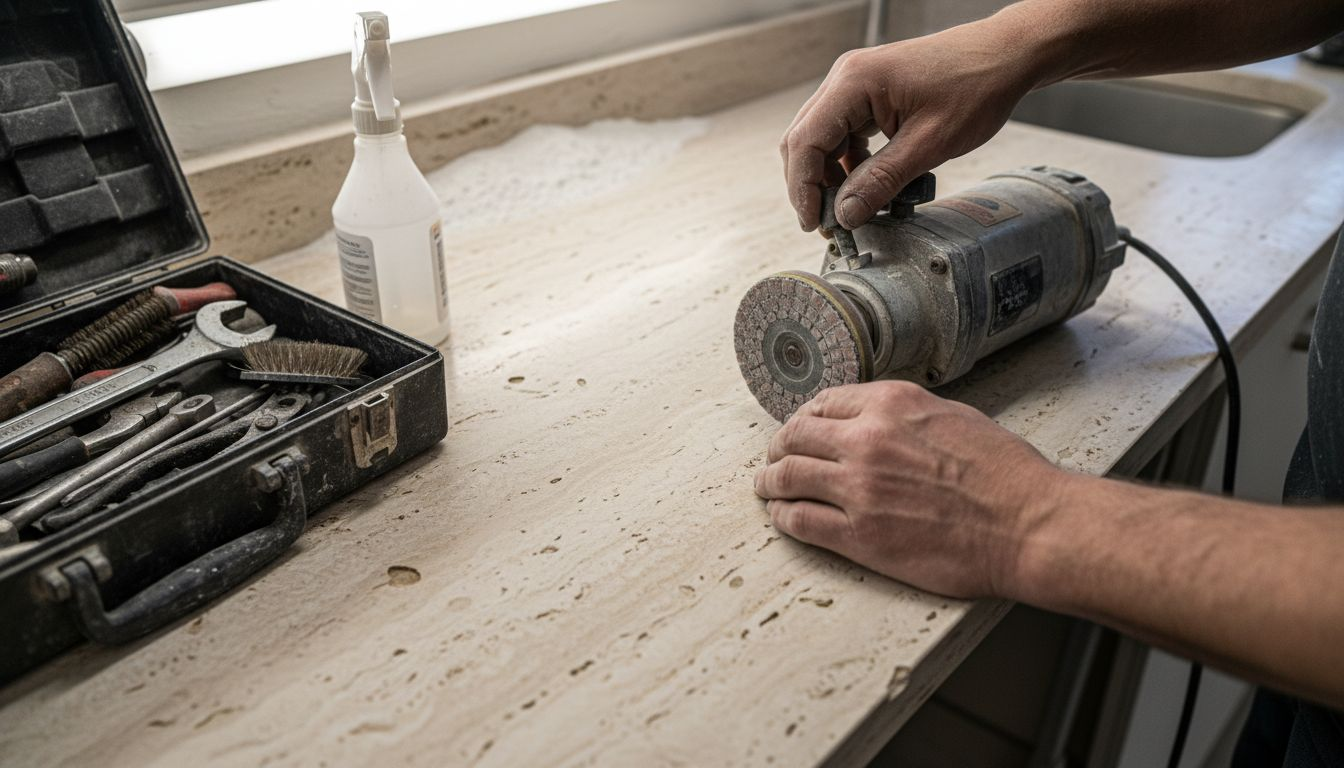
Chemical polishing methods offer an alternative approach, particularly useful for delicate or heavily damaged travertine surfaces. Polishing laps and techniques demonstrate that chemical treatments can effectively smooth and enhance stone surfaces by using specialized acid solutions or chemical compounds. These methods are especially beneficial for stones with intricate textures or those prone to mechanical damage, allowing for a gentler restoration process that can penetrate and refinish surface layers without aggressive abrasion.
Hybrid approaches often combine mechanical and chemical techniques to achieve the most comprehensive restoration. Professionals might use mechanical grinding to address major surface irregularities, followed by chemical treatments to refine and enhance the stone’s natural luster. This multi-stage process ensures that travertine surfaces not only look pristine but also receive comprehensive protection against future wear and environmental damage.
Pro tip: Always conduct a small test area first to verify the polishing method’s compatibility with your specific travertine surface and prevent potential unintended damage.
Here’s how the main travertine polishing methods compare:
| Method | Surface Impact | Best Use Case | Durability Effect |
|---|---|---|---|
| Mechanical | Removes imperfections | General restoration and deep scratches | High, with proper sealing |
| Chemical | Penetrates and smooths | Delicate, textured, or damaged surfaces | Moderate, improves appearance |
| Hybrid | Both penetrates and refines | Mixed or complex surface conditions | Maximum, combines strengths |
Essential Equipment and Process Steps
Travertine polishing requires a sophisticated array of specialized equipment and a meticulously planned approach to achieve optimal restoration results. Professionals invest in high-quality tools designed specifically for natural stone surface refinement, understanding that each piece of equipment plays a critical role in the transformation process.
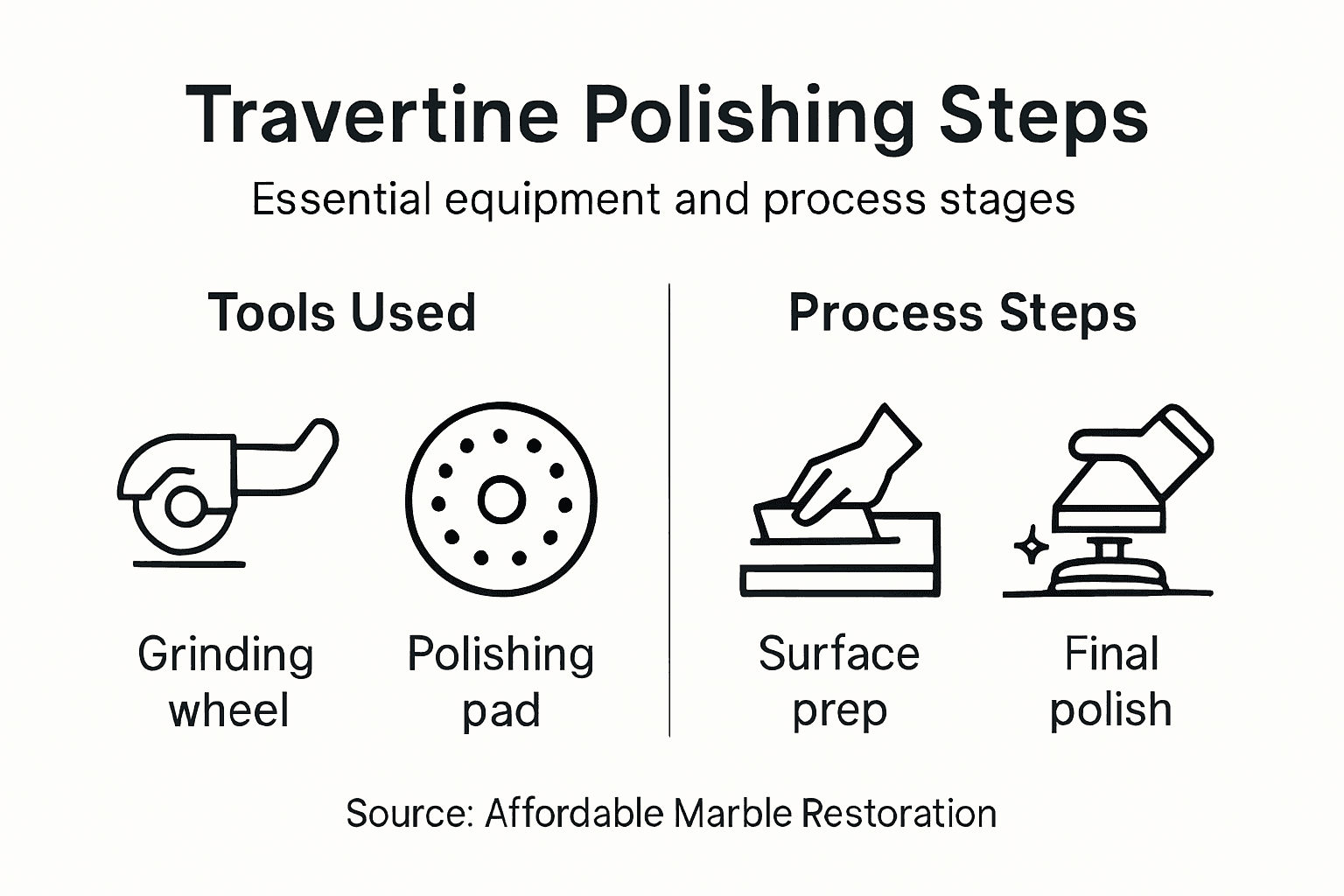
Essential polishing equipment includes diamond-embedded grinding wheels, variable speed polishing machines, and a comprehensive set of diamond-grit pads ranging from coarse to ultra-fine. The primary toolset typically consists of industrial-grade grinders with adjustable water feed systems, ensuring consistent moisture during the grinding process to prevent heat damage and maintain stone integrity. Professionals use diamond pads with progressively decreasing grit sizes – starting from 50-grit for heavy surface corrections and advancing to 3000-grit for achieving a mirror-like finish.
Lapidary technology and polishing techniques reveal that successful travertine restoration involves a systematic multi-stage process. The typical workflow includes initial rough grinding to eliminate deep scratches and surface imperfections, followed by intermediate honing to smooth the stone, and concluding with fine polishing to enhance natural color and create a lustrous finish. Specialized hand tools like microfiber polishing cloths, chemical applicators, and precision edge tools complement the mechanical equipment, allowing technicians to address intricate areas and complex surface details that larger machines cannot reach.
Additional essential equipment includes protective gear such as diamond-rated respirator masks, safety glasses, water-resistant gloves, and dust collection systems. Stone restoration professionals also utilize moisture meters to assess travertine’s current condition, digital thickness gauges to monitor material removal, and specialized cleaning solutions designed to prepare surfaces before polishing begins.
Pro tip: Invest in high-quality diamond polishing pads and replace them regularly to maintain optimal performance and prevent potential surface damage during restoration.
Benefits of Professional Travertine Restoration
Professional travertine restoration goes far beyond simple surface cleaning, offering comprehensive protection and enhancement that preserves the stone’s natural beauty and structural integrity. Homeowners who invest in professional services can significantly extend their travertine’s lifespan and maintain its original aesthetic appeal through expert-level care and precision techniques.
Limestone restoration expertise ensures that travertine surfaces receive specialized treatment addressing their unique vulnerabilities. Professional technicians understand the stone’s inherent porosity and employ advanced sealing techniques that protect against moisture penetration, chemical damage, and environmental wear. These experts use industry-specific methods to patch minor imperfections, eliminate etching, and restore the stone’s natural color and texture without compromising its structural composition.
The benefits of professional restoration extend beyond immediate visual improvements. Specialized treatments help prevent long-term degradation by creating a protective barrier that resists staining, reduces friction-related wear, and maintains the stone’s natural variations. Professionals utilize precision tools and techniques that average homeowners cannot replicate, including specialized diamond polishing equipment, custom chemical treatments, and advanced sealing technologies that penetrate deep into the stone’s microscopic structure.
Additional advantages include comprehensive surface analysis, customized restoration plans, and long-term maintenance recommendations. Professional stone restoration experts can identify potential issues before they become significant problems, recommend appropriate care strategies, and provide warranties that protect the homeowner’s investment. This level of expertise ensures that travertine surfaces not only look stunning but also remain structurally sound and resistant to future damage.
Pro tip: Schedule an annual professional inspection to catch and address minor travertine surface issues before they develop into costly restoration challenges.
Common Mistakes and Cost Considerations
Travertine restoration is a nuanced process where seemingly minor errors can lead to significant financial and aesthetic consequences. Homeowners and property managers must understand the potential pitfalls that can dramatically increase restoration costs and compromise the stone’s long-term beauty.
Polishing mistakes in stone restoration often stem from inadequate preparation and improper technique. Common errors include using incorrect abrasive materials, applying uneven pressure during grinding, and failing to progressively transition between different grit levels. These mistakes can create permanent scratches, uneven surfaces, and structural weaknesses that require complete resurfacing, potentially multiplying initial restoration expenses by several times. DIY attempts frequently underestimate the precision required, leading to costly repairs that far exceed professional restoration expenses.
Travertine finishing complexities reveal that cost considerations extend beyond immediate restoration expenses. Improper sealing, inconsistent polishing, and neglecting to address underlying structural issues can lead to accelerated stone degradation. Professional restoration might seem expensive initially, but it prevents long-term damage that could necessitate complete stone replacement. Factors influencing restoration costs include the stone’s age, existing damage extent, desired finish quality, and the specific restoration techniques required.
Cost variations can range significantly, typically between $10 to $35 per square foot, depending on the restoration complexity. Factors like surface area, damage severity, desired finish, and regional labor rates contribute to price fluctuations. Homeowners should obtain multiple professional assessments, compare detailed quotes, and understand the specific techniques and guarantees offered by different restoration services.
Here is a summary of common travertine restoration errors and their typical financial impact:
| Mistake Type | Example Error | Typical Result | Cost Impact |
|---|---|---|---|
| Improper technique | Skipping grit stages | Uneven, scratched surface | Major repairs needed |
| Inadequate sealing | Wrong or missed sealant | Increased staining and damage | Future restoration costs |
| DIY inexperience | Using household cleaners | Permanent stone discoloration | Stone replacement may be needed |
| Incomplete prep | Ignoring hidden cracks | Structural weaknesses emerge | Increased repair expense |
Pro tip: Request detailed written estimates that break down specific restoration stages and always verify a professional’s stone restoration certification before committing to service.
Restore Your Travertine’s Beauty and Strength with Expert Care
Travertine surfaces require careful polishing and sealing to prevent damage such as scratches, staining, and structural wear that the article highlights. If you’re facing issues like uneven finishes or faded natural color, you need a trusted partner who understands the delicate balance between mechanical and chemical polishing methods. At Affordable Marble Restoration, we specialize in precisely that. Our professional team uses industry-leading diamond polishing equipment and customized restoration techniques to bring out the best in your travertine while protecting its longevity.
Don’t let common polishing mistakes or improper sealing shorten the life of your stone. Our natural stone restoration services are designed to address the unique needs of travertine surfaces found in homes and businesses throughout South Florida. Whether your travertine floors, countertops, or outdoor patios need deep grinding or gentle chemical refinishing, we tailor solutions for lasting shine and durability. Experience a hassle-free process focused on quality workmanship and customer satisfaction.
Take the first step toward flawless travertine surfaces by contacting Affordable Marble Restoration today. Visit our main site to schedule a consultation and discover how expert restoration can protect your investment now.
Frequently Asked Questions
What is involved in the travertine polishing process?
The travertine polishing process includes surface preparation, initial grinding to remove imperfections, honing with progressively finer diamond pads, and applying a protective sealant to enhance durability and appearance.
How do different polishing methods compare for travertine restoration?
Mechanical polishing uses diamond-embedded tools to remove surface imperfections, chemical polishing employs specialized acid solutions for delicate surfaces, and hybrid methods combine both techniques for comprehensive restoration.
What equipment is necessary for effective travertine polishing?
Essential equipment includes diamond-embedded grinding wheels, variable speed polishing machines, a range of diamond-grit pads, as well as safety gear like respirators and protective glasses to ensure both safety and effective restoration.
Why should I hire a professional for travertine polishing instead of doing it myself?
Professionals have the expertise, specialized equipment, and advanced techniques to effectively address different surface conditions, prevent damage, and extend the lifespan of your travertine, ultimately saving you from costly repairs in the future.
