

Restoring the natural beauty of marble and terrazzo in South Florida goes beyond a basic cleaning routine. The humid climate in places like Boca Raton and Miami means your surfaces face constant threats from moisture, salt air, and everyday wear. Choosing professional restoration services helps you address deep stains, structural cracks, and the fading of that classic shine. Discover how expert care and tailored techniques can revive your investment and deliver a durable, visually stunning finish for years to come.
Table of Contents
- What Marble And Terrazzo Restoration Involves
- Types Of Stone Surfaces And Common Issues
- Restoration Process: Cleaning, Grinding, And Polishing
- Risks, Costs, And Choosing The Right Service
- Long-Term Care And Mistakes To Avoid
Key Takeaways
| Point | Details |
|---|---|
| Comprehensive Restoration | Marble and terrazzo restoration requires specialized techniques tailored to each type of stone and the specific damage present. |
| Importance of Professional Assessment | A thorough assessment by a professional before restoration is crucial to avoid DIY damage and ensure the correct methods are used. |
| Regular Maintenance is Essential | Routine cleaning and resealing are necessary to protect restored surfaces and prevent future damage. |
| Choose Experienced Professionals | Selecting a qualified restoration service with proper credentials and experience can prevent costly mistakes and ensure high-quality results. |
What Marble And Terrazzo Restoration Involves
Marble and terrazzo restoration is far more than just cleaning and polishing. It’s a comprehensive process that addresses the structural and aesthetic challenges these natural stone surfaces face over time. Whether you’re dealing with a marble countertop that’s lost its luster or terrazzo floors showing signs of wear, restoration involves multiple specialized techniques tailored to your specific surface and the damage present.
The Core Components of Restoration
At its foundation, marble and terrazzo restoration begins with a thorough assessment of your surface. The restoration professional needs to understand what they’re working with before moving forward. For terrazzo specifically, understanding the historical composition of terrazzo is crucial because these surfaces typically consist of marble or stone chips set in either cementitious or resinous matrices, and the restoration approach varies significantly depending on which type you have.
Once the composition is identified, the restoration process typically includes:
- Grinding and leveling to remove surface imperfections, stains, and old sealers that have built up over the years
- Honing using progressively finer diamond pads to create the desired finish and texture
- Polishing to restore that signature shine and depth that makes marble and terrazzo so visually stunning
- Repairing damage such as cracks, chips, or spalling through filling and resurfacing techniques
- Sealing to protect the restored surface from future staining and deterioration
What makes this process complex is that each stone type responds differently to these techniques. The hardness of the stone, its porosity, and the type of damage all influence which methods work best and in what order they should be applied.
Addressing Deterioration and Damage
Marble and terrazzo surfaces deteriorate for various reasons. Acidic substances etch marble, moisture penetrates and causes structural breakdown, heavy foot traffic wears away the protective sealant, and time simply takes its toll. Restoration specialists address these sources of deterioration by repairing, resurfacing, or in some cases replacing damaged sections entirely. For homeowners in South Florida where humidity and salt air accelerate deterioration, understanding these damage mechanisms helps explain why professional marble restoration services are worth the investment.
The goal throughout the entire restoration process is preserving the original aesthetic and structural integrity of your surface. This means working carefully to maintain the character and appearance of your stone while ensuring it’s protected against future damage. Think of it as bringing your surface back to life while giving it better defenses for the years ahead.
Pro tip: Get a professional assessment before attempting any restoration work yourself, as DIY methods on natural stone often cause more damage than they repair and can dramatically increase the final restoration cost.
Types Of Stone Surfaces And Common Issues
Not all stone surfaces are created equal. The different types of natural stone and composite materials found in South Florida homes and businesses have distinct characteristics that determine how they age, what damages them, and how to restore them properly. Understanding what you’re dealing with is the first step toward effective restoration.
Natural Stone Surfaces
Marble is perhaps the most recognizable stone in luxury homes, prized for its elegance and distinctive veining. However, marble is relatively soft compared to other stones and highly vulnerable to acidic substances. Spilled juice, wine, vinegar, or even the mild acids in some cleaners can etch the surface, leaving dull spots that catch light differently than the surrounding polished areas. Marble also stains easily because it’s porous, allowing liquids to penetrate beneath the surface where they’re nearly impossible to remove without professional intervention.
Granite offers greater durability than marble and resists etching better, but it’s not immune to damage. Extremely hard and dense, granite still requires sealing to prevent moisture from penetrating through microscopic pores. Limestone and travertine are softer stones with higher porosity, making them even more susceptible to staining, moisture damage, and surface wear. Each of these natural stones has different firing temperatures and porosity levels that affect their susceptibility to cracking, chipping, and moisture penetration.
Onyx is another luxurious natural stone sometimes used for decorative walls and countertops. Its translucent quality makes it stunning when properly maintained, but onyx is extremely delicate and scratches easily. It requires careful handling and professional care to maintain its beauty over time.
Here’s a quick comparison of stone surface types and their main vulnerabilities:
| Stone Type | Durability | Major Vulnerability | Restoration Challenge |
|---|---|---|---|
| Marble | Moderate | Acid etching, staining | Requires gentle techniques |
| Granite | Very high | Minor staining | Needs powerful sealers |
| Limestone | Low | Water, staining | Prone to surface wear |
| Onyx | Very low | Scratching, dullness | Extremely delicate to restore |
| Terrazzo | High (varies) | Substrate movement | Complex repairs, uneven wear |
Terrazzo and Composite Surfaces
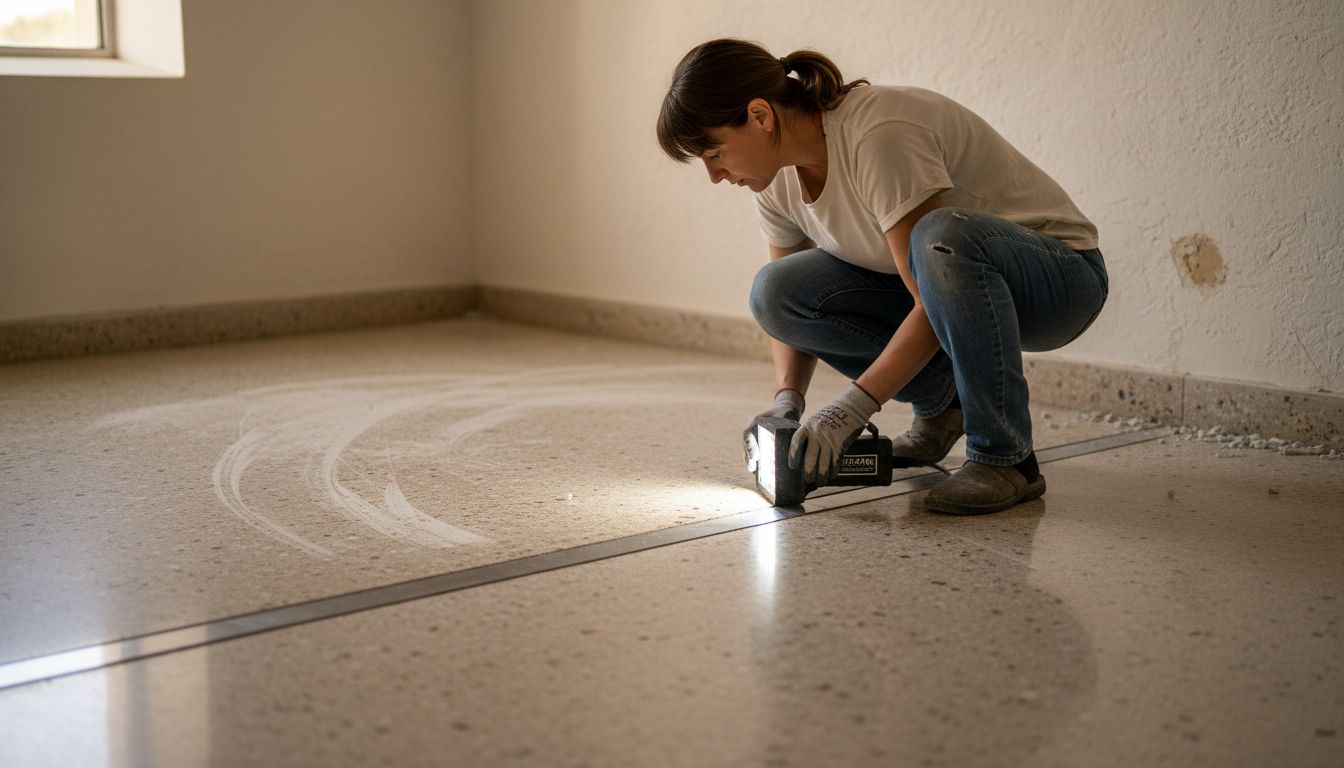
Terrazzo is fundamentally different from natural stone because it’s a composite material. Rather than being quarried as a single block, terrazzo consists of marble chips, granite pieces, or other aggregates combined with either a cementitious or resinous binder. This composition makes terrazzo incredibly durable and customizable, but it creates unique challenges. The biggest issue with terrazzo isn’t the aggregate pieces themselves but the bond between the surface material and the substrate beneath. Terrazzo can crack from substrate movement, even if the terrazzo layer itself is undamaged. Additionally, wear patterns show differently on terrazzo because the composite doesn’t wear uniformly like natural stone.
Common Issues Across All Stone Types
While each stone type has specific vulnerabilities, several problems appear across all surfaces. Staining happens when liquids penetrate the porous structure. Surface etching occurs when acidic substances chemically alter the stone’s finish. Chips and cracks develop from impact or settling of the building structure. Dullness accumulates as the protective sealant breaks down under foot traffic and UV exposure. In South Florida’s humid, salty environment, moisture and salt air accelerate all these deterioration processes.
The key takeaway is that restoration methods must match the specific stone type and the nature of the damage. What works beautifully for granite restoration might damage delicate marble, and terrazzo requires completely different techniques than natural stone.
Pro tip: Identify your stone type before calling for restoration, and mention any recent damage or changes you’ve noticed, as this information helps professionals determine the best restoration approach and timeline.
Restoration Process: Cleaning, Grinding, And Polishing
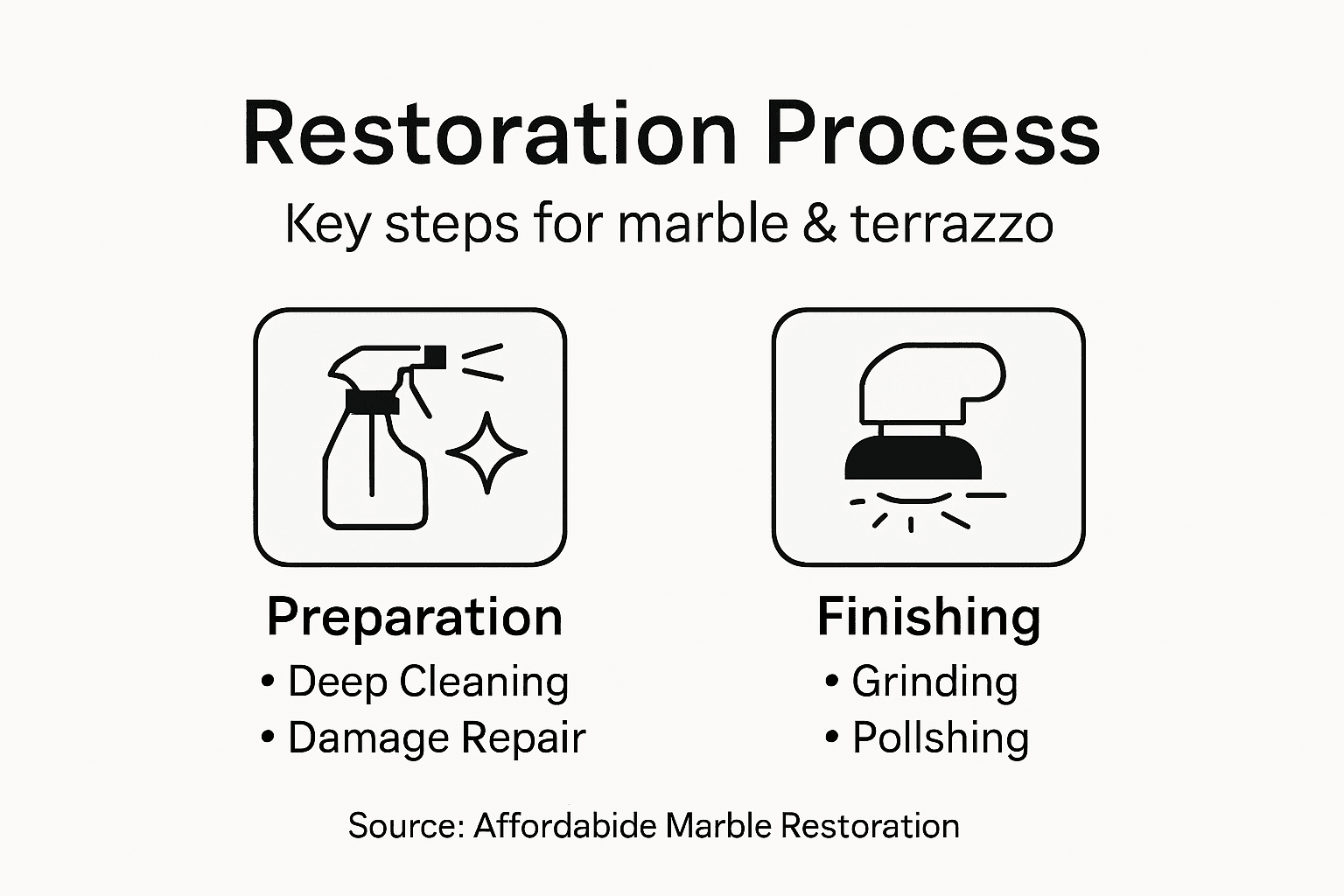
Restoration of marble and terrazzo surfaces follows a carefully structured sequence of steps, each building on the previous one to reveal the stone’s original beauty. This isn’t a one-size-fits-all process, but the fundamental stages remain consistent across most projects. Understanding what happens at each phase helps you appreciate why professional restoration takes time and expertise.
Step One: Deep Cleaning
Before any grinding or polishing begins, the surface must be thoroughly cleaned. This step removes dirt, debris, old sealers that have accumulated over years, and any contaminants that could interfere with later stages. Professionals use specialized cleaning solutions tailored to your stone type. Using the wrong cleaner can actually cause more damage, which is why this foundational step matters so much. The cleaning phase also allows restoration specialists to assess the full extent of damage beneath the grime and old finishes.
Step Two: Grinding with Diamond Abrasives
This is where the real transformation begins. Grinding uses progressively coarser diamond abrasives to remove damaged surface layers, level uneven areas, and eliminate stains, etch marks, or chips. Think of it like sanding wood, except much more precise and controlled. The process starts with very coarse grit diamonds and gradually progresses to finer grits. This controlled approach removes damage while preserving as much of the original stone as possible.
For terrazzo specifically, grinding is critical because it exposes the fresh aggregate while removing worn sections. The key is that grinding with diamond abrasives removes surface damage and levels the floor, creating a uniform surface for the next stage. This stage can take several hours depending on the damage severity and surface size.
Step Three: Fine Polishing
Once grinding is complete, polishing begins the process of restoring shine and luster. Using progressively finer diamond pads, polishing smooths the surface and brings out the stone’s natural colors and patterns. Each pass with a finer grit reveals more depth and clarity. The final polishing creates that signature glossy finish that makes marble and terrazzo so visually stunning. For terrazzo floors specifically, proper polishing highlights the beautiful aggregate pieces and creates that distinctive reflective quality.
The entire sequence from cleaning through final polishing preserves the historic look of your surface while maximizing its lifespan. This methodical approach is why rushed restoration often fails, and why hiring experienced professionals matters. The time invested at each stage directly impacts how long your restored surface will maintain its beauty.
Pro tip: Schedule your restoration during a time when the restored surface can cure and remain undisturbed for at least 48 hours, as this allows sealers to properly bond and protects your newly polished finish.
Risks, Costs, And Choosing The Right Service
Restoration work on marble and terrazzo isn’t cheap, and cutting corners on pricing often leads to expensive problems down the road. Understanding the real risks involved and what drives costs helps you make informed decisions about your stone surfaces. The cheapest option rarely delivers the best results, and sometimes causes damage that costs far more to fix than the original restoration would have.
Common Risks in Restoration
Incorrect restoration techniques create serious problems. Over-grinding is one of the most common mistakes, where too much surface material gets removed, permanently reducing the stone’s thickness and structural integrity. This can’t be undone. Improper chemical use causes etching, discoloration, or even degradation of the stone itself. Moisture issues represent another significant risk, particularly in South Florida’s humid climate. If moisture penetrates beneath the surface during restoration and isn’t properly dried, delamination occurs, where layers of terrazzo or stone begin separating from the substrate. These risks aren’t theoretical, they’re real consequences of inadequate workmanship.
Beyond the work itself, risks in restoration include over-grinding, improper chemicals, and moisture issues that can compromise your surface for years. This is precisely why hiring experienced professionals matters more than finding the lowest price.
Understanding Restoration Costs
Costs vary dramatically based on several factors. The extent of damage plays a major role, as heavily damaged surfaces require more grinding and repair work. Surface size directly impacts costs because larger areas take more time and equipment use. Surface type matters too, since delicate marble requires different techniques and more careful handling than durable granite or terrazzo. Your location in South Florida affects pricing based on travel time and local market conditions.
Most importantly, costs reflect the need for skilled labor and specialized equipment. Professional restoration requires diamond grinding equipment, industrial polishing machines, proper ventilation systems, and quality sealing products. These tools represent significant investments that trained professionals must justify through their pricing. Budget restoration shops cutting corners on equipment and expertise inevitably deliver poor results.
Below is an overview of key risks, cost drivers, and what to ask when choosing a restoration service:
| Factor | Impact on Project | Questions to Ask | Why It Matters |
|---|---|---|---|
| Over-grinding | Permanent thickness loss | How do you prevent it? | Preserves structural strength |
| Incorrect chemicals | Surface etching, discoloration | Which products are used? | Protects original finish |
| Moisture management | Delamination, hidden damage | How is drying handled? | Prevents long-term deterioration |
| Damage severity | Increases time and costs | How is damage assessed? | Accurate scope and pricing |
Choosing Qualified Professionals
When selecting a restoration service, verify credentials and experience. Ask about certifications in stone restoration and how long the company has operated. Request references from previous clients and follow up with them. Look for companies that specialize in your specific stone type rather than those claiming expertise in everything. Get detailed written estimates that specify what work will be done, materials used, and timelines.
Ask critical questions about their process. How do they handle the specific damage on your surface? What happens if problems emerge during restoration? What guarantees do they offer on their work? A legitimate professional answers these questions thoroughly and confidently. Companies hesitant to explain their methods or provide written estimates should raise red flags. The right service invests time understanding your surface and customizing their approach rather than applying a generic process to every job.
Pro tip: Get multiple detailed estimates and compare not just price, but the specific services included, timeline, and warranty offered, as the lowest bid often reflects shortcuts that compromise your results.
Long-Term Care And Mistakes To Avoid
Restoration brings your marble and terrazzo surfaces back to life, but that beauty doesn’t stay without proper maintenance. The work professionals do during restoration is only half the equation. What happens after restoration determines whether your surfaces remain stunning for years or quickly deteriorate back to their previous condition. Long-term care is surprisingly straightforward, but small mistakes can undo months of professional work.
Essential Maintenance Practices
Routine cleaning forms the foundation of long-term stone care. Use only pH-neutral cleaners specifically formulated for natural stone and terrazzo surfaces. These gentle cleaners remove dirt and grime without attacking the stone’s surface like acidic or alkaline products do. Regular cleaning prevents buildup that can eventually become permanent staining. Establish a simple routine, even weekly light cleaning makes a dramatic difference in preserving your surface’s appearance.
Beyond cleaning, resealing is critical for protection. Sealers create a protective barrier that prevents liquids from penetrating into the porous structure where they cause staining and damage. Marble and terrazzo typically need resealing every one to three years, depending on traffic levels and the specific sealer applied. High-traffic areas like kitchen countertops or commercial floors require more frequent resealing than lightly used surfaces. Think of sealing like renewing your stone’s immune system, giving it ongoing protection against the daily threats it faces.
Moisture control deserves special attention in South Florida’s humid environment. Ensure proper ventilation, especially in bathrooms and kitchens where steam accumulates. Wipe up spills immediately rather than letting them sit, as this prevents moisture from penetrating beneath the surface. Standing water is your stone’s enemy, so address any drainage issues quickly. Water damage isn’t always visible immediately, but delamination from moisture can develop silently over months.
Mistakes That Damage Your Surfaces
The most common error is using the wrong cleaning products. Acidic cleaners like vinegar or lemon juice etch marble, leaving dull spots. Alkaline cleaners can strip sealers and degrade terrazzo binders. Abrasive scrubbing with rough materials scratches the polished finish you paid to restore. Even commercial floor waxes, while fine for tile, trap dirt on stone surfaces and are difficult to remove without professional stripping.
Neglecting minor damage ranks as another major mistake. Small chips or cracks seem insignificant until water seeps into them, freezes, and expands during South Florida’s temperature fluctuations. That small crack becomes a large one. Ignoring dull spots where the sealer has worn away leads to staining in those exact areas. Proper cleaning combined with periodic polishing and resealing helps maintain durability, which means addressing issues as they appear rather than waiting until damage becomes severe.
Pro tip: Keep a simple maintenance log noting when you clean, seal, or notice any changes in your surface, as this helps you identify patterns and catch problems before they become costly.
Restore Your South Florida Marble and Terrazzo with Expert Care
If you have marble or terrazzo surfaces showing signs of wear, acid etching, or dullness, you understand how frustrating it is to see your beautiful floors, countertops, or walls lose their original shine and structural integrity. From stubborn stains to cracks and uneven wear caused by South Florida’s humidity and salt air, these natural stone surfaces need more than just a simple cleaning. They require tailored restoration that respects the unique vulnerabilities and composition of each stone type.
At Affordable Marble Restoration, we specialize in delivering professional marble and terrazzo restoration services designed to bring your surfaces back to life. Our skilled team uses advanced grinding, honing, polishing, sealing, and repair techniques to protect and preserve your investment. Whether it is delicate marble prone to acid etching or terrazzo affected by substrate movement, we offer customized solutions with an emphasis on quality workmanship and customer satisfaction.
Don’t wait until minor damage becomes costly to fix. Experience the difference that expert restoration can make for your home or business in Miami, Boca Raton, or Pompano Beach. Learn how our comprehensive stone restoration services can revive your surfaces today by visiting Affordable Marble Restoration. Take the first step towards a stunning, durable finish that withstands South Florida’s challenges.
Frequently Asked Questions
What does marble and terrazzo restoration involve?
Restoration involves a comprehensive process that includes cleaning, grinding, honing, polishing, repairing damage, and sealing to address both aesthetic and structural issues with these stone surfaces.
How can I identify the type of stone I have for restoration?
It’s essential to assess the composition of the stone. For terrazzo, it’s crucial to understand whether it consists of cementitious or resinous matrices, while marble, granite, limestone, and onyx each have unique characteristics that affect restoration techniques.
How often should I reseal my marble or terrazzo surfaces?
Typically, marble and terrazzo should be resealed every one to three years, depending on usage and the specific sealant applied, with high-traffic areas requiring more frequent resealing to protect against staining and moisture damage.
What maintenance practices should I follow after restoration?
Routine maintenance should include using pH-neutral cleaners specifically designed for stone surfaces, resealing according to a schedule, and promptly addressing spills to prevent moisture penetration and damage.
Recommended
- Terrazzo Restoration, Polishing & Repair | Miami, Boca Raton & Pompano Beach
- Terrazzo Floor Restoration: Repair, Polishing & Maintenance Guide
- Residential Marble Restoration Miami | Restore Marble Floors
- Types of Terrazzo Explained | Durable, Stylish, and Customizable Designs
- How to Upholster Dining Chairs for a Fresh Custom Look – fabric fabric
