

TL;DR:
- Polishing strengthens stone surfaces by reducing porosity and enhancing durability in humid environments.
- Professional polishing involves a multi-stage process using diamond pads to achieve high gloss and smoothness.
- Proper care and regular maintenance extend the lifespan and appearance of polished stone floors.
Cleaning your stone floors feels productive. You mop, you wipe, you rinse, and the surface looks decent. But if polishing is not part of your routine, you are only doing half the job. Natural stone like marble and granite develops microscopic scratches, dulling pores, and surface fatigue over time, especially in South Florida’s humid, high-traffic environments. Polishing is the step that actually restores a stone’s structural surface, not just its appearance. This guide walks you through the technology, the science, and the real-world benefits behind professional stone polishing, so you can make smarter decisions about your home or property.
Table of Contents
- Why polishing matters in stone care
- The science and steps behind professional stone polishing
- Stone types and tailored approaches: marble vs. granite vs. others
- Common pitfalls and troubleshooting in stone polishing
- Aftercare and maximizing your stone’s lifespan post-polish
- Our perspective: What most stone owners get wrong about polishing
- Get professional stone polishing results that last
- Frequently asked questions
Key Takeaways
| Point | Details |
|---|---|
| Polishing enhances durability | Proper stone polishing reduces micro-pores, boosting your surface’s resistance to stains, wear, and water. |
| Technique depends on stone type | Marble, granite, and other stones require different polishing methods for optimal appearance and longevity. |
| Quality shows in the details | A mirror-like finish, free of dull spots and swirls, is achieved by methodical, stepwise polishing and proper maintenance. |
| Ongoing care is essential | Regular cleaning and scheduled maintenance keep polished stone beautiful and functional for years. |
Why polishing matters in stone care
Most homeowners think of polishing as a cosmetic upgrade, something you do when the floor looks dull. The reality is much more practical. Polishing reduces porosity and seals micro-pores at the surface level, which directly limits how much moisture and staining agents can penetrate the stone. That is not a cosmetic benefit. That is structural protection.
In South Florida, where humidity rarely drops and foot traffic in homes and commercial spaces stays high year-round, unpolished stone absorbs moisture constantly. Over time, that leads to discoloration, surface erosion, and costly repairs. Polished stone resists this cycle. It lasts longer, looks better, and requires less intensive cleaning between professional visits. If you are already investing in restoring stone floors, polishing is the step that protects that investment.
Here is what professional polishing actually delivers beyond shine:
- Gloss levels above 80 GU (gloss units): This is the industry benchmark for a high-quality finish that reflects light uniformly across the surface.
- Light reflectance above 70%: Surfaces at this level look vibrant and clean even in low lighting conditions.
- Reduced surface roughness below 0.2 μm (micrometers): A smoother surface means fewer places for dirt, bacteria, and moisture to hide.
- Color vibrancy: Polishing brings out the natural veining and depth of marble and granite in ways that cleaning alone never can.
- Extended surface life: Polished surfaces in humid climates show significantly less wear over a five to ten year period compared to unpolished counterparts.
“Polishing is not just cosmetic. The mechanics of the process actively reduce porosity and micro-pores, which empirically boosts longevity in high-traffic and humid environments.” — Stone Polishing Process
The difference between a polished and unpolished floor in a Miami home is not subtle. It is the difference between a surface that ages gracefully and one that slowly deteriorates despite regular cleaning.
The science and steps behind professional stone polishing
Understanding what actually happens during a professional polishing visit helps you evaluate the quality of the work and ask the right questions. The process is not a single step. It is a carefully sequenced series of abrasive stages, each one refining what the previous step left behind.
Professional stone polishing uses diamond-impregnated pads that move through progressively finer grits, removing microscopic scratches and smoothing the surface until it achieves uniform light reflection. Here is the typical sequence:
- Coarse grit (50 to 120): Removes deep scratches, lippage (uneven tile edges), and heavy surface damage. This stage is aggressive and reshapes the surface.
- Medium grit (200 to 400): Refines what the coarse stage left behind. Removes swirl marks and begins to even out the surface texture.
- Fine grit (800 to 1500): Starts building the actual shine. Surface roughness drops significantly at this stage, and the stone begins to reflect light.
- Polishing grit (3000 and above): Achieves the final gloss. At this level, the surface reaches above 80 GU gloss and reflectance above 70%, with surface roughness below 0.2 μm.
Between each grit stage, the surface must be thoroughly cleaned. Skipping this step drags coarser particles into the finer stages, creating swirl marks and uneven results. This is one of the most common mistakes in DIY attempts.
| Grit stage | Primary action | Surface roughness result |
|---|---|---|
| 50 to 120 | Remove deep scratches | High (above 1.0 μm) |
| 200 to 400 | Smooth swirls and marks | Moderate (0.5 to 1.0 μm) |
| 800 to 1500 | Build reflectance | Low (0.2 to 0.5 μm) |
| 3000+ | Final gloss and polish | Ideal (below 0.2 μm) |
Pro Tip: If your stone only needs a refresh rather than a full restoration, a technician may start at the 800 grit stage and work up. Knowing the floor polishing process in advance helps you have a more informed conversation before work begins. And if you are curious about DIY marble floor polishing, understanding these stages will help you know exactly where professional work ends and DIY capability begins.
Stone types and tailored approaches: marble vs. granite vs. others
Not all stone is the same, and treating it as if it were is one of the fastest ways to cause permanent damage. The Mohs hardness scale is the starting point for understanding why.
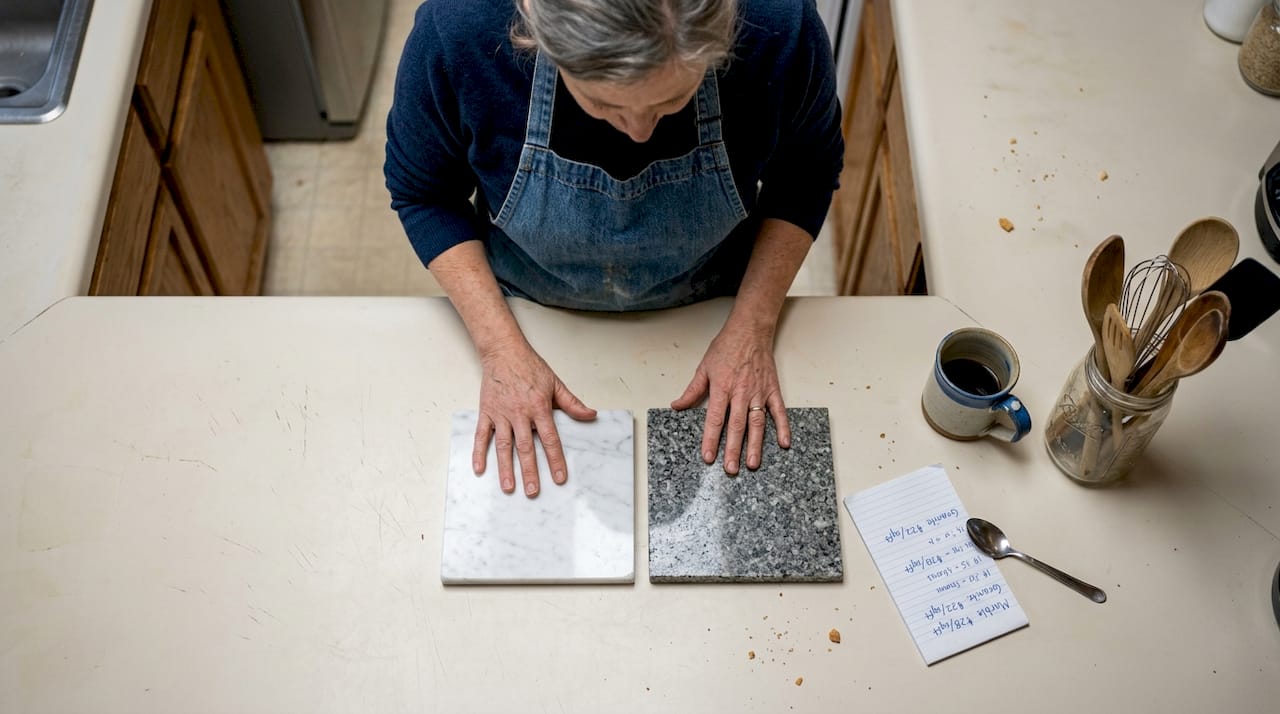
Marble rates between 3 and 4 on the Mohs scale, which means it is relatively soft and easily scratched. It is also calcite-based, making it chemically sensitive to acids. Granite and quartzite, by contrast, rate between 6 and 7, making them far harder and more resistant to both physical abrasion and chemical exposure.
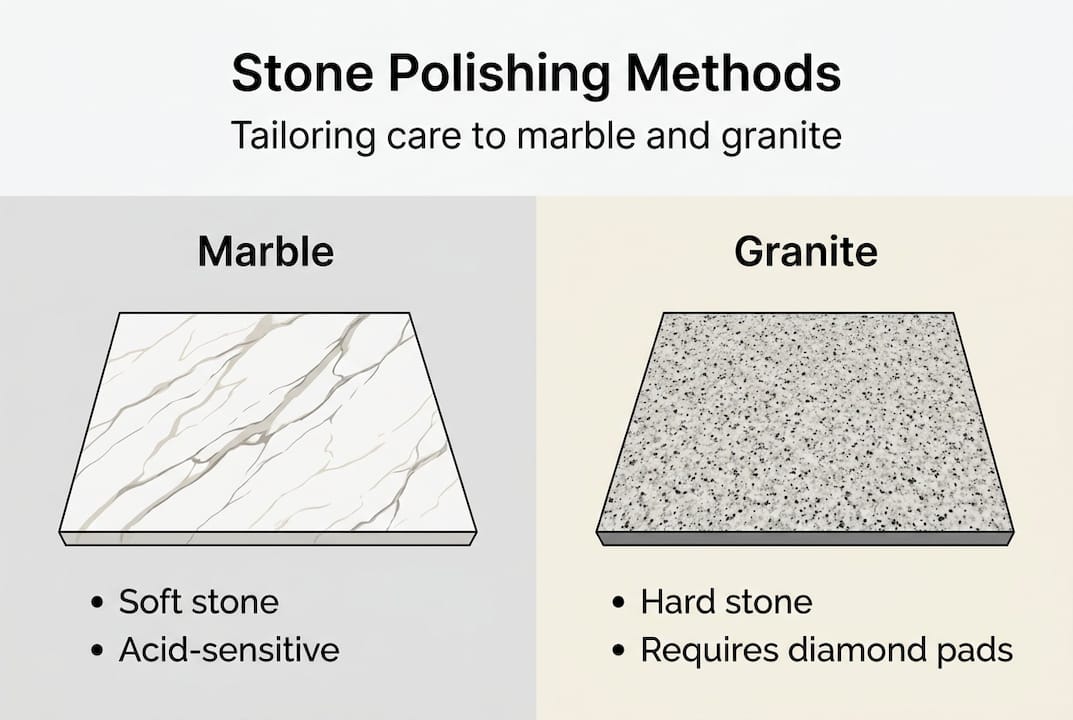
Here is how that translates to polishing practice:
| Stone type | Mohs hardness | Polishing method | Key sensitivity |
|---|---|---|---|
| Marble | 3 to 4 | Crystallization compounds, gentle pads | Acid, scratching |
| Granite | 6 to 7 | Diamond pads, oxide powders | Heat, improper sealers |
| Travertine | 3 to 4 | Similar to marble, fill voids first | Porosity, acid |
| Quartzite | 6 to 7 | Aggressive diamond pads | Misidentification |
A quick field test for calcite-based stones: place a drop of white vinegar on an inconspicuous area. If it fizzes, the stone is acid-sensitive and requires special care during polishing. This matters because acidic compounds used on granite would etch marble instantly.
Pro Tip: Many homeowners confuse quartzite with marble because of similar veining patterns. Quartzite is dramatically harder and requires completely different polishing compounds. Misidentifying your stone leads to either under-polishing or surface damage. Always confirm the stone type before any treatment begins.
Common risks from using the wrong approach:
- Etching on marble: Caused by acidic compounds or even acidic cleaning products used before polishing.
- Micro-scratching on granite: Caused by pads that are too coarse for the finish stage.
- Residue buildup on travertine: Caused by skipping the void-filling step before polishing.
For marble floor restoration or granite polishing, the right technique is not optional. It is the difference between a surface that lasts decades and one that needs replacement.
Common pitfalls and troubleshooting in stone polishing
Even experienced technicians encounter challenges. Knowing what can go wrong helps you identify problems early and avoid expensive corrections.
The most frequent issues after polishing include:
- Dull spots: Often caused by surface contamination before polishing, such as wax residue or cleaning product buildup that prevents the pads from making proper contact.
- Swirl marks: Almost always the result of skipping a grit stage or using worn-out pads that no longer cut evenly.
- Uneven shine: Typically caused by inconsistent pressure or speed during the polishing pass, leaving some areas more refined than others.
- Streaks or haze: Usually from insufficient cleaning between grit stages, where coarser particles contaminate the finer stages.
Resin-filled marble presents a specific challenge. The resin resists polishing compounds, meaning the surface will not reach the same gloss level as unfilled marble. In these cases, stopping at the hone stage (400 to 800 grit) often produces a better, more consistent result than pushing for a mirror finish.
Over-honing is another real risk. Spending too long at a coarser grit removes more material than necessary, which shortens the stone’s overall lifespan. Most high-end residential finishes target above 70% light reflectance, but getting there requires knowing when to move forward in the grit sequence, not when to press harder at the same stage.
Understanding polishing cost factors also helps here. Surfaces that require troubleshooting or corrective work cost more to restore, which is why prevention through proper technique matters so much from the start.
Aftercare and maximizing your stone’s lifespan post-polish
A freshly polished surface is an investment. How you care for it in the weeks and months that follow determines how long it stays that way.
Here is a practical aftercare sequence for South Florida homeowners:
- Use pH-neutral cleaners only. Acidic or alkaline products break down the polished surface over time. Avoid vinegar, bleach, and ammonia-based cleaners entirely.
- Dry the surface after mopping. Standing water, especially in humid climates, can seep into even polished stone over time. A quick dry pass with a microfiber cloth makes a real difference.
- Place mats at entry points and high-traffic zones. Grit tracked in from outside acts like sandpaper on polished stone. Mats at doors reduce this dramatically.
- Clean spills immediately. Even on polished stone, acidic liquids like citrus juice or wine can etch the surface if left to sit.
- Schedule professional repolishing every 1 to 2 years. In South Florida’s climate, humidity and traffic accelerate surface wear. Annual or biannual professional visits keep the surface in peak condition.
Polishing reduces porosity, which makes day-to-day cleaning faster and more effective. But that benefit only holds if you maintain the surface correctly between professional visits.
Pro Tip: For commercial properties or high-traffic residential spaces, consider a maintenance program that includes quarterly inspections. Catching early signs of wear before they become full restoration jobs saves significant time and money. Explore commercial stone care tips and marble maintenance tips for a deeper look at long-term care strategies.
Our perspective: What most stone owners get wrong about polishing
After working with stone surfaces across South Florida for years, one pattern stands out clearly. Homeowners tend to think more shine equals better care. It does not.
Over-polishing removes material from the stone surface every single time. Done too frequently or too aggressively, it thins the stone, reduces its structural integrity, and eventually creates a surface that cannot hold a finish at all. Shine is a result of good technique, not a goal to chase at any cost.
We also see residents consistently underestimate what South Florida’s humidity does to stone over time. The combination of heat, moisture, and salt air creates conditions that accelerate surface degradation faster than in most other climates. A polishing schedule that works in a dry climate simply does not translate here. Routine professional polishing is not a luxury in this region. It is maintenance.
The effects of regular polishing on longevity show clearly that consistent, properly timed care outperforms aggressive, infrequent restoration every time. Cutting corners or skipping steps does not save money. It defers costs until the repair bill is far larger than the maintenance would have been.
Get professional stone polishing results that last
Now that you understand what polishing actually does for your stone, the next step is making sure your specific surfaces get the right treatment. Every stone is different, and a professional evaluation ensures the correct grit sequence, compounds, and finishing approach for your marble, granite, travertine, or other surfaces.
At Affordable Marble Restoration, we provide stone care services tailored to South Florida homes and properties, including free quotes and customized maintenance plans. Whether you need granite restoration services or full residential stone restoration, our team brings the expertise to deliver results that hold up in this climate. Reach out today and protect the stone you have already invested in.
Frequently asked questions
How often should I have my stone floors polished in South Florida?
Most residential stone floors benefit from professional polishing every 1 to 2 years, though high-traffic areas or homes near the coast may need attention more frequently due to humidity’s impact on longevity.
Does polishing stone also help prevent stains and water damage?
Yes. Professional polishing smooths the surface and reduces micro-pores, creating a more resistant barrier against stains, moisture, and everyday spills.
How do I know if my marble needs a different polishing method than my granite?
Marble is softer and acid-sensitive, requiring gentler compounds, while granite needs diamond pads and more aggressive abrasives. A quick vinegar test on a hidden spot can help confirm which category your stone falls into.
What are signs that my stone surface was improperly polished?
Look for dull spots, swirl marks, uneven shine, or a hazy film on the surface. These are classic signs of skipped grit stages or worn pads during the polishing process.
