

Scuffed marble entryways and dull granite kitchen floors are a common sight in many Boca Raton homes. Natural stone floors hold timeless appeal and elevated property value, but their unique surfaces demand specialized care to stay beautiful and resilient. From understanding the distinct needs of granite, marble, and limestone to avoiding costly restoration mistakes, discover actionable strategies that help your South Florida property maintain its shine and integrity for years to come.
Table of Contents
- What Is Stone Floor Restoration?
- Types Of Stone Floors And Their Needs
- Core Restoration Processes Explained
- Costs, Benefits, And Risks To Consider
- Avoiding Common Stone Floor Mistakes
Key Takeaways
| Point | Details |
|---|---|
| Stone Floor Restoration is Essential | This process revitalizes natural stone surfaces, enhancing their beauty and protecting their structural integrity. |
| Different Stone Types Require Specific Care | Each type of stone, such as granite or marble, has unique restoration challenges and maintenance needs. |
| Professional Restoration Techniques are Key | Effective restoration includes assessment, cleaning, repairing, and sealing tailored to the specific stone type. |
| Prevent Common Maintenance Mistakes | Avoid using inappropriate cleaning products and attempts at DIY repairs to preserve the stone’s integrity. |
What Is Stone Floor Restoration?
Stone floor restoration is a specialized process of revitalizing and preserving natural stone surfaces to their original beauty and structural integrity. This comprehensive approach involves carefully treating historic stone properties to maintain their architectural significance and aesthetic appeal.
At its core, stone floor restoration goes beyond basic cleaning, encompassing a range of professional techniques designed to repair, polish, and protect various types of natural stone surfaces. Whether you have marble, granite, travertine, or limestone floors, restoration helps address common issues like:
- Scratches and surface wear
- Dull or etched finish
- Cracks and structural damage
- Staining and discoloration
- Loss of original shine and texture
Professional restoration techniques typically involve multiple strategic steps, including deep cleaning, grinding, honing, polishing, and sealing. Each process is carefully tailored to the specific stone type and its current condition, ensuring that the unique characteristics of the material are preserved while enhancing its overall appearance and durability.
Stone restoration is not just about aesthetics—it’s about protecting your investment. Natural stone surfaces represent a significant financial and architectural value in homes and commercial spaces. By professionally restoring these surfaces, property owners can extend the lifespan of their floors, prevent further deterioration, and maintain the original beauty of their stone installations.
Stone restoration returns floors to their most pristine state, bridging the gap between historical preservation and modern design requirements.
Pro tip: Always consult with a professional stone restoration expert who can assess your specific floor’s condition and recommend the most appropriate restoration approach.
Types Of Stone Floors And Their Needs
Natural stone floors offer remarkable diversity, with each type presenting unique characteristics and specific maintenance requirements. Stone floors are classified into geological categories that significantly impact their durability, appearance, and restoration needs.
The primary stone floor types include:
- Granite: A hard, igneous stone known for exceptional durability
- Marble: A metamorphic stone prized for its elegant appearance
- Limestone: A sedimentary stone with soft, natural tones
- Travertine: A calcium-based stone with distinctive textural patterns
- Slate: A metamorphic stone with rustic, layered characteristics
- Quartzite: An extremely hard, dense natural stone
Each stone type demands specialized care based on its inherent properties. Igneous stones like granite are incredibly resilient and resistant to scratches, making them ideal for high-traffic areas. In contrast, sedimentary stones such as limestone and sandstone are more porous and require gentler treatment.
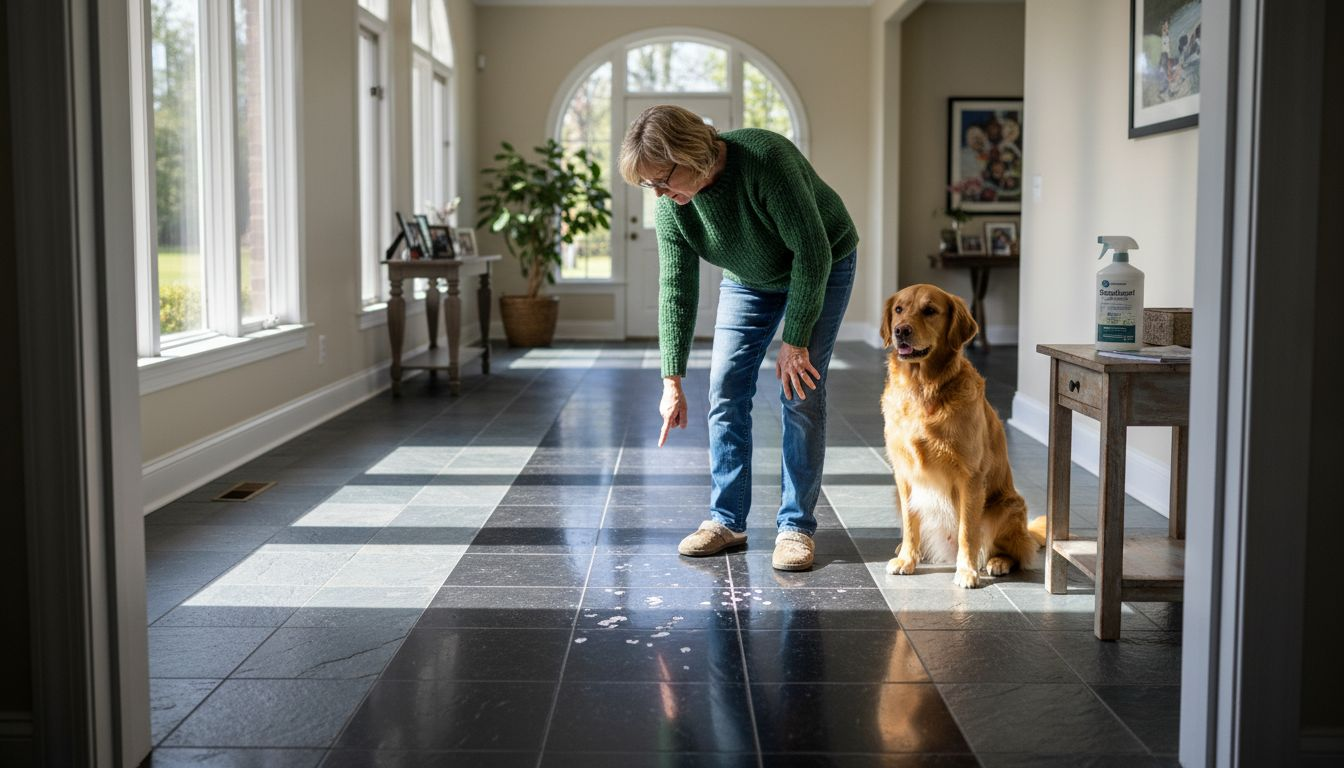
Metamorphic stones like marble and slate present unique restoration challenges. These stones are more sensitive to acids, scratches, and environmental factors, necessitating careful maintenance and specialized cleaning techniques. Professional stone restoration experts understand these nuanced differences and can develop targeted approaches to preserve each stone’s natural beauty and structural integrity.
Here’s a summary comparing common stone floor types and their unique qualities:
| Stone Type | Durability Level | Typical Restoration Challenge | Recommended Application |
|---|---|---|---|
| Granite | Exceptionally high | Surface stains, minor scratches | Kitchens, hallways |
| Marble | Moderate | Etching, surface dulling | Bathrooms, entryways |
| Limestone | Low to moderate | Porosity, structural wear | Foyers, living spaces |
| Travertine | Moderate | Textural pitting, discoloration | Patios, bathrooms |
| Slate | High | Layer separation, edge chipping | Outdoor areas, mudrooms |
| Quartzite | Very high | Surface dullness, occasional cracks | Busy floors, commercial |
Different stone types require unique restoration strategies to maintain their original aesthetic and structural qualities.
Pro tip: Always identify your specific stone type before applying any cleaning or restoration method to prevent potential damage and ensure optimal preservation.
Core Restoration Processes Explained
Stone floor restoration involves a comprehensive, multidisciplinary approach that transforms damaged or worn surfaces into their original beautiful state. Professional restoration is far more than simple cleaning—it’s a carefully orchestrated series of technical interventions designed to address specific stone surface challenges.
The core restoration processes typically include:
- Assessment: Detailed evaluation of stone condition
- Cleaning: Removing dirt, stains, and contaminants
- Repair: Fixing cracks, chips, and structural damage
- Grinding: Leveling uneven surfaces
- Honing: Creating a smooth, matte finish
- Polishing: Restoring natural shine and luster
- Sealing: Protecting against future damage
Each restoration stage requires specialized techniques tailored to the specific stone type. Professional technicians use advanced machinery and precision tools to carefully remove damaged layers, smooth out imperfections, and gradually rebuild the stone’s surface. The process demands extensive knowledge of stone composition, wear patterns, and restoration chemistry.
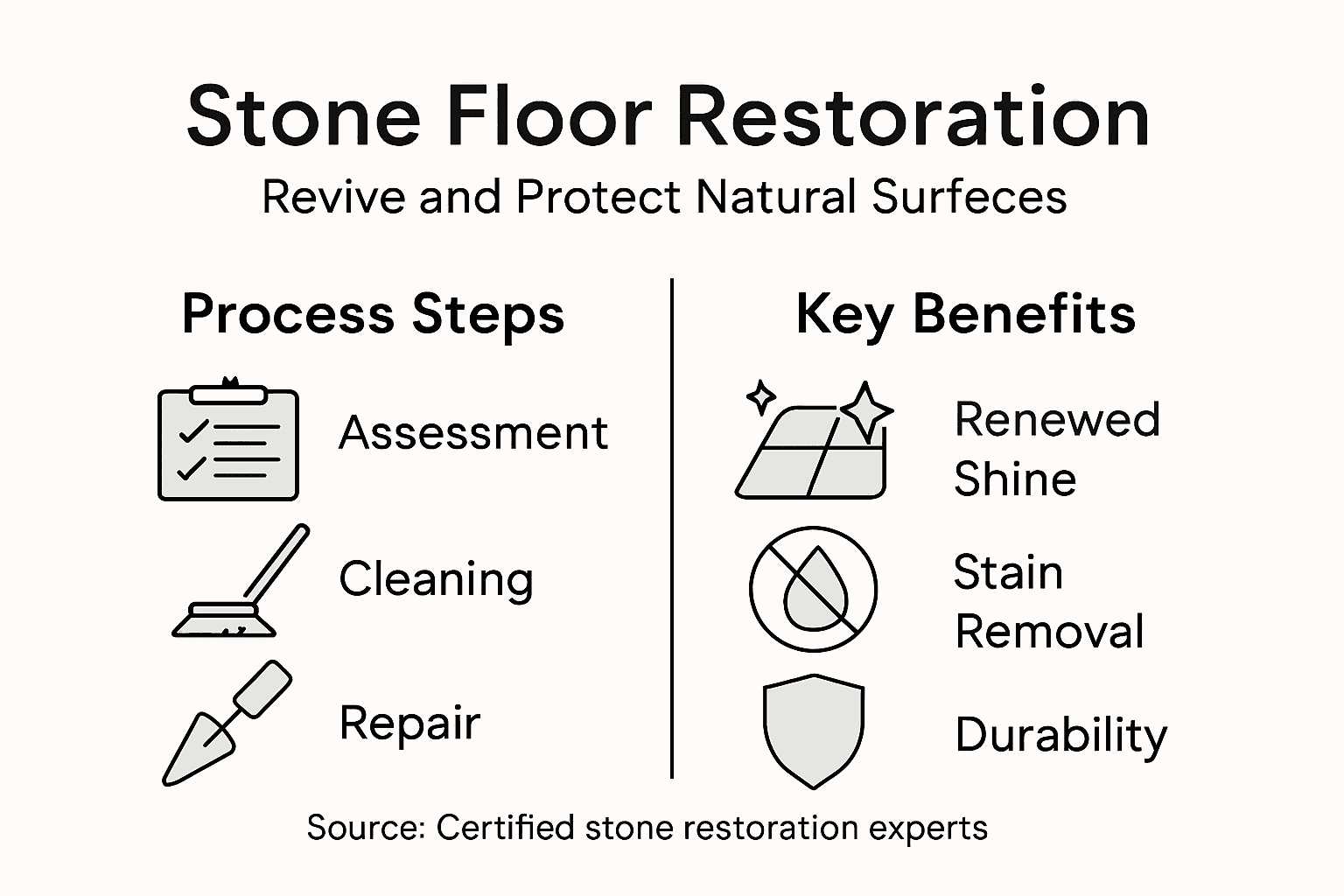
The most critical aspect of stone restoration is understanding that every stone surface is unique. Granite requires different treatment compared to marble, and travertine needs a completely different approach from slate. Skilled restoration professionals develop customized strategies that consider the stone’s geological origin, current condition, and desired aesthetic outcome.
This table provides a quick comparison of core stone floor restoration processes and their main objectives:
| Restoration Step | Purpose | Typical Result |
|---|---|---|
| Assessment | Evaluate stone condition | Customized restoration plan |
| Cleaning | Remove surface contaminants | Enhanced clarity and hygiene |
| Repair | Address physical damage | Structural integrity restored |
| Grinding | Level uneven sections | Smooth, even surface |
| Honing | Refine texture and finish | Matte, refined look |
| Polishing | Restore shine and luster | Glossy, vibrant appearance |
| Sealing | Protect from future stains/damage | Long-term surface resilience |
Successful stone restoration is an art form that combines technical expertise with a deep respect for the stone’s natural characteristics.
Pro tip: Always hire professionals with documented experience in your specific stone type to ensure the most effective and least invasive restoration process.
Costs, Benefits, And Risks To Consider
Stone floor restoration involves carefully balancing costs, potential benefits, and inherent risks that homeowners must thoroughly evaluate before undertaking a professional restoration project. Understanding these factors helps make an informed decision about investing in your stone flooring’s long-term preservation and aesthetic appeal.
The key financial and strategic considerations include:
Potential Costs:
- Professional assessment fees
- Labor and equipment expenses
- Material costs for cleaning and sealing
- Potential structural repair needs
- Additional maintenance requirements
Significant Benefits:
- Increased property value
- Restored original stone appearance
- Extended floor lifespan
- Improved aesthetic appeal
- Prevention of further deterioration
Critical Risks to Evaluate:
- Potential damage from improper restoration techniques
- High expense without guaranteed results
- Risk of inappropriate chemical treatments
- Possible structural complications
- Long-term maintenance challenges
Professional stone restoration requires substantial expertise. Certified professionals understand the nuanced techniques needed to address different stone types, ensuring minimal risk and maximum restoration quality. The investment goes beyond simple cosmetic improvements—it’s about preserving your property’s architectural integrity and long-term value.
Successful stone restoration balances technical precision with a deep understanding of the material’s unique characteristics.
Pro tip: Request detailed written estimates from multiple certified restoration specialists, comparing their proposed techniques, expected outcomes, and comprehensive cost breakdowns before making a final decision.
Avoiding Common Stone Floor Mistakes
Stone floor maintenance requires careful attention to prevent common costly errors that can permanently damage your valuable flooring investment. Understanding these potential pitfalls is crucial for preserving the beauty and integrity of your natural stone surfaces.
The most frequent mistakes homeowners make include:
Cleaning Errors:
- Using acidic or abrasive cleaning products
- Neglecting regular dust mopping
- Allowing spills to set and create permanent stains
- Applying inappropriate chemical treatments
- Using generic cleaning solutions not designed for stone
Restoration Missteps:
- Attempting DIY repairs without professional expertise
- Over-polishing which can thin the stone surface
- Improper sealing techniques
- Ignoring manufacturer-specific care instructions
- Failing to address minor damages quickly
Each stone type presents unique challenges. Marble, granite, and travertine require different maintenance approaches, and what works for one can be destructive to another. Professional stone restoration experts understand these nuanced differences and can develop tailored care strategies that protect your specific flooring type.
Environmental factors like humidity, foot traffic, and temperature fluctuations also significantly impact stone floor longevity. Consistent, knowledgeable maintenance is the key to preventing irreversible damage and maintaining your floor’s original aesthetic appeal.
Preventive care and professional guidance are the most effective strategies for preserving stone floor beauty.
Pro tip: Create a dedicated stone floor maintenance log to track cleaning, sealing, and professional assessment dates, helping you stay proactive about your floor’s long-term care.
Restore and Protect Your Stone Floors with Trusted Experts
If your stone floors are showing signs of wear like scratches, dullness, or stains discussed in the article “Stone Floor Restoration How It Revives Your Home” you are not alone. Many homeowners face the challenge of preserving natural stone surfaces while maintaining their original beauty and durability. At Affordable Marble Restoration we understand the unique needs of different stone types such as marble granite travertine and limestone and provide specialized solutions including cleaning grinding honing polishing sealing and repair tailored to your floor’s condition.
Don’t let improper care cause permanent damage or expensive replacements. With our expert services you gain professional assessment customized restoration plans and long-lasting results that protect your investment and revive your home’s elegance. Experience the difference that advanced techniques and dedicated craftsmanship make by visiting Affordable Marble Restoration and learn more about our full range of stone restoration services. Act now to schedule your consultation and get your floors looking their best again.
Frequently Asked Questions
What is stone floor restoration?
Stone floor restoration is a specialized process that revitalizes and preserves natural stone surfaces, addressing issues like scratches, dull finishes, and structural damage to restore their original beauty and integrity.
What types of stone floors can be restored?
Common types of stone floors that can be restored include granite, marble, limestone, travertine, slate, and quartzite. Each type has unique characteristics and restoration needs.
What are the key steps involved in the stone restoration process?
The core restoration steps typically include assessment, cleaning, repair, grinding, honing, polishing, and sealing. Each step is tailored to the specific type of stone and its current condition.
What are the potential benefits of stone floor restoration?
Restoring stone floors can increase property value, enhance the floor’s aesthetic appeal, extend its lifespan, and prevent further deterioration, ensuring long-term beauty and structural integrity.
