

Restoring dull or scratched travertine in your Boca Raton or Miami property can feel daunting, especially with the effects of humidity and daily wear showing up too soon. Yet, a truly radiant, polished finish begins with a solid foundation. Preparing and evaluating the stone thoroughly means you set yourself up for stunning, professional-looking results. This guide walks South Florida homeowners and property managers through every phase, making your DIY travertine polishing project smoother and more rewarding.
Table of Contents
- Step 1: Assess and Prepare the Travertine Surface
- Step 2: Clean and Remove Old Sealant
- Step 3: Hone the Surface for Smoothness
- Step 4: Polish Travertine for Lasting Shine
- Step 5: Seal and Inspect the Finished Surface
Quick Summary
| Key Insight | Explanation |
|---|---|
| 1. Thoroughly assess your travertine surface | Examine for cracks, chips, and flatness to understand potential issues before polishing begins. |
| 2. Clean surface thoroughly before starting | Use a vacuum and damp cloth to remove dust and debris, ensuring a clean working area for effective polishing. |
| 3. Hone with graded abrasive pads | Progress from coarser to finer grits to create a smooth surface, essential for achieving a reflective polish later. |
| 4. Use appropriate polishing techniques | Apply polishing pads systematically, using consistent pressure for an even, glossy finish that highlights the stone’s beauty. |
| 5. Seal the surface after polishing | Choose a compatible impregnating sealer to protect the polished stone and prevent staining, ensuring long-lasting results. |
Step 1: Assess and Prepare the Travertine Surface
Before you can achieve that brilliant, polished finish you’re after, you need to truly understand what you’re working with. This step is about examining your travertine surface thoroughly and getting it ready for the polishing process ahead. Think of this as a foundation check before building a house, except your foundation is stone and your goal is a gleaming floor or countertop.
Start by taking a close look at your travertine from multiple angles and lighting conditions. You’ll want to assess the surface’s porosity and texture, which directly impact how the stone will respond to polishing. Travertine naturally contains small holes and pits, and some pieces may have varying finishes. Don’t let this worry you, but do note where these variations exist. Run your hand across the surface to feel for rough spots, cracks, or areas where the stone feels unstable. In South Florida’s humid climate, travertine can sometimes develop soft spots or deterioration, especially if it’s been exposed to salt air or inconsistent maintenance.
Next, examine the overall flatness and structure of your travertine. Look for dips, raised edges, or uneven sections that might affect your polishing work. Pay special attention to the edges and corners, as these areas often show wear first. If you notice significant damage, deep cracks, or structural concerns, that’s information worth having before you start. Understanding these conditions helps you adjust your approach and set realistic expectations for the final result.
Cleanliness is your next priority. Your travertine needs to be completely free of dirt, dust, and debris before polishing begins. Start with a dry sweep or vacuum to remove surface dust and loose particles. Then use a damp cloth or mop with warm water to clean the entire surface thoroughly. For stuck-on dirt or stains, you may need a gentle natural stone cleaner, but avoid acidic cleaners like vinegar or lemon juice, which can damage travertine. Let the surface dry completely. In the humid Boca Raton and Miami climate, this might take longer than you expect, so be patient. A damp stone surface will interfere with your assessment and later polishing work.
Here’s what you should evaluate during this preparation phase:
- Flatness: Use a straightedge or long level to check for high or low spots
- Surface condition: Note cracks, chips, holes, and areas of deterioration
- Porosity and texture: Assess whether the stone is honed, filled, or has natural pits
- Moisture content: Ensure the surface is completely dry before proceeding
- Stains and discoloration: Identify problem areas that may need special attention
- Traffic patterns: Notice where wear is most visible, typically in high-traffic zones
A clean, dry, properly assessed travertine surface is the difference between a mediocre polish and a brilliant, long-lasting finish that your guests will notice the moment they walk in.
One more thing before moving forward, your travertine should be stable and structurally sound in the area you’re planning to polish. If the stone feels loose, hollow underneath, or shifts when you walk on it, that’s a red flag. Addressing these structural issues first prevents problems later. Once you’ve completed your assessment, you’ll have a clear picture of what you’re working with and can move confidently into the next phase of restoration.
Here’s a quick comparison of common travertine surface issues and how they impact the restoration process:
| Surface Issue | Effect on Polishing | Recommended Approach |
|---|---|---|
| Cracks or Chips | Creates uneven finish | Fill or repair before polish |
| Natural Pits/Holes | Inconsistent sheen | Fill for smooth result |
| Stains | Shows under polish | Treat stains before honing |
| High/Low Spots | Uneven gloss | Level with additional honing |
| Residual Moisture | Affects polish quality | Allow extra drying time |
Pro tip: Document your assessment with photos or notes of problem areas before you start polishing, so you can track how much improvement the restoration achieves and catch any issues that need professional attention.
Step 2: Clean and Remove Old Sealant
If your travertine has been sealed before, that old sealant needs to come off before you can polish effectively. This step removes the protective barrier that’s no longer doing its job, revealing the stone underneath and preparing it for a fresh polish and seal. Think of it like removing old paint before repainting, except you’re working with stone that’s been protecting itself for years.
Start by identifying whether your travertine actually has sealant on it. Sealed travertine will have a slightly slick or glossy appearance, while unsealed stone looks more matte and porous. If you’re not sure, pour a small amount of water on an inconspicuous area. If the water beads up and sits on top, you have sealant. If it soaks in quickly, the sealant is either missing or very worn. Once you’ve confirmed you’re dealing with sealed travertine, gather your tools. You’ll need a utility knife or plastic scraper, denatured alcohol, clean cloths, and protective gloves.
Begin the mechanical removal process by using a utility knife or scraper to loosen the old sealant. Work carefully and methodically, holding your tool at a low angle to avoid gouging the stone beneath. This isn’t about speed, it’s about precision. Start at a corner or edge and work the blade underneath the sealant layer, gently lifting it away. You may hear crackling or see flakes peeling up, which is exactly what you want. Work in small sections rather than trying to strip the entire floor at once. The more patient you are during this phase, the less damage you’ll do to the travertine itself.
As you remove the sealant, you’ll likely encounter stubborn spots that resist your scraper. Don’t force it. Instead, stop and reassess. Some sealed areas may require a different angle or lighter pressure. If a section is particularly resistant, you can carefully apply a small amount of denatured alcohol to soften it, then try again after a minute or two. This solvent approach works well for sealant that’s bonded tightly to the stone.
Once you’ve removed the bulk of the old sealant, your travertine will look dull and may have residue remaining. This is where denatured alcohol comes in. The sealant removal process is completed by cleaning with denatured alcohol to eliminate any remaining sealant particles, grime, and debris. Dampen a clean cloth with denatured alcohol and wipe down the entire surface systematically. You’ll be surprised at how much residue comes up, even after scraping. Work in overlapping sections to ensure even coverage. Wear gloves and ventilate well, as denatured alcohol has fumes that you don’t want to breathe heavily.
Here’s the sequence you should follow:
- Identify sealant presence using the water test method
- Scrape mechanically using a utility knife at a low angle
- Work methodically in small sections from edges inward
- Apply denatured alcohol to stubborn spots if needed
- Wipe thoroughly with alcohol-dampened cloths
- Allow complete drying before moving to the next step
Rushing the sealant removal can damage your travertine or leave residue that interferes with polishing, so patience during this step pays dividends in your final results.
After you’ve wiped the surface thoroughly with denatured alcohol, let it dry completely. This might take several hours depending on humidity levels in your South Florida home. You’ll know you’re done when the surface no longer feels tacky and there’s no alcohol smell remaining. At this point, your travertine is stripped back to bare stone, ready for cleaning with pH-neutral solutions and then polishing. The hard part is behind you, and your stone is now prepared for the transformation ahead.
Pro tip: Save your scraper work for areas with buildup, then finish with alcohol wipes across the entire surface to catch residue you can’t see, ensuring no sealant particles interfere with polishing.
Step 3: Hone the Surface for Smoothness
Honing is where the real transformation begins. This step smooths your travertine surface and removes minor imperfections that would otherwise show up under your final polish. Think of honing as the prep work that makes the final paint job look professional, except you’re creating a glass-like smoothness on stone that may have been dull or rough for years.
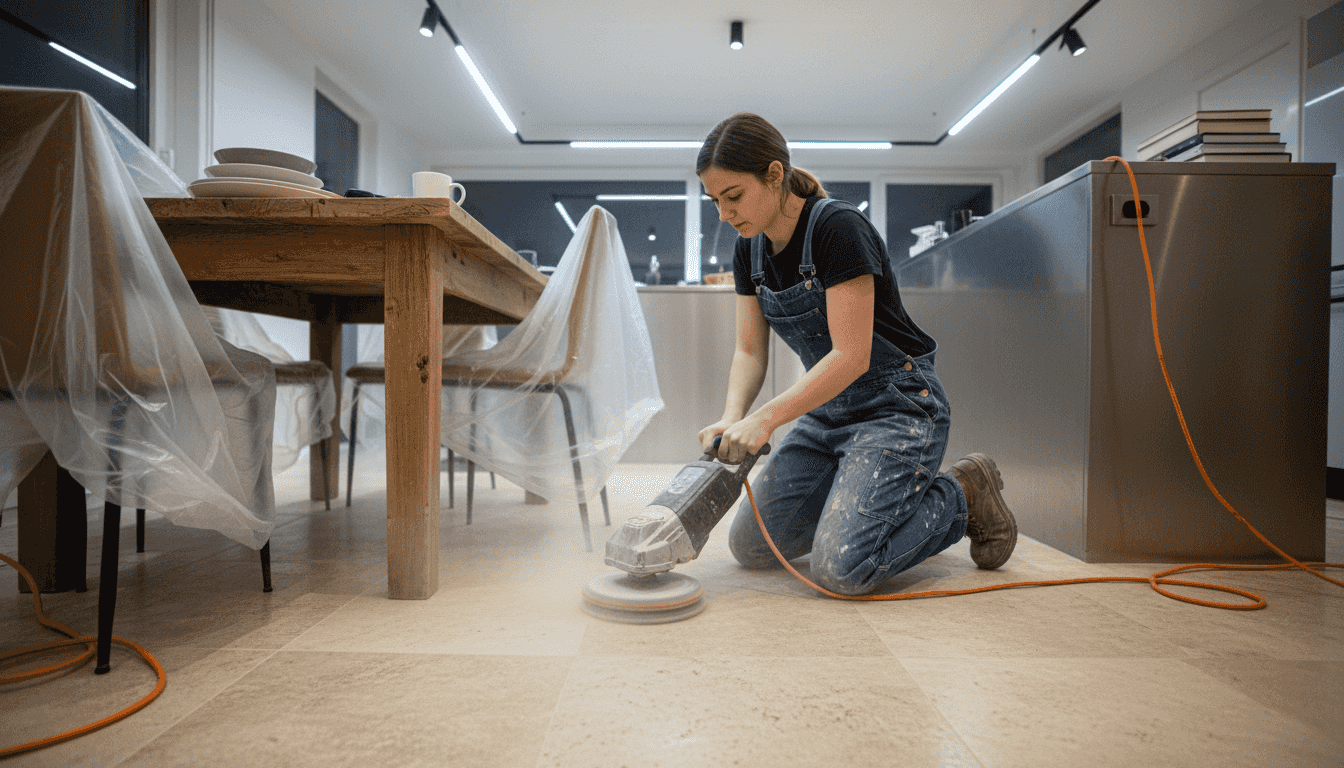
Before you start honing, understand what you’re trying to achieve. Honing creates a satin finish without the high gloss that comes from polishing. It’s the process that smooths out small cracks, fills surface irregularities, and prepares your stone for the brilliant polish that comes next. The goal is to create an even texture across your entire travertine surface so that when you apply the final polish, the results are consistent and uniform. This is especially important in South Florida homes where natural light streams through windows and will highlight any uneven areas.
You’ll need the right abrasive tools for this job. Honing involves using abrasives to systematically smooth the stone surface. Start with a coarser grit abrasive pad and work your way toward finer grits. If you’re doing this as a DIY project, you might use a floor buffer or orbital sander with appropriate stone-safe pads. Begin with 400 to 600 grit pads, then progress to 800 to 1200 grit as you near completion. Work in overlapping circular motions, keeping the tool moving to avoid creating uneven spots or visible patterns.
Start at one corner of your travertine surface and work methodically across the entire area. Don’t rush this step. Each grit level should take adequate time to ensure you’re creating a uniformly smooth surface. As you work, you’ll notice the dull appearance starting to brighten. This is the stone responding to the abrasives, and it’s exactly what you want. Pay special attention to areas with holes, pits, or previous damage. These spots may need extra attention to level them with the surrounding surface. If your travertine has natural texture variations, work carefully to create an even finish without over-smoothing areas that shouldn’t be touched.
Here’s the progression you should follow:
- Start with 400-600 grit pads to remove old sealant residue and surface scratches
- Progress to 800 grit for intermediate smoothing and evening out texture
- Finish with 1000-1200 grit pads for the final smooth, satin appearance
- Work in overlapping motions to avoid leaving visible patterns or lines
- Pay extra attention to high-traffic areas and edges where wear is visible
- Keep the surface wet or use dust collection to manage fine stone particles
Proper honing creates an even foundation that makes your final polish look brilliant and uniform across the entire surface, preventing dull spots or inconsistent shine.
As you work through the different grit levels, the travertine will gradually transform. You’ll feel the difference under your hand, and the visual change will be obvious. By the time you reach your final 1200 grit pass, your travertine should look smooth, refined, and ready for polishing. The surface will have that pre-polished appearance, almost like satin fabric. This is your signal that honing is complete and you’re ready to move to the polishing phase.
One important note: honing creates a lot of fine stone dust. Wear a respiratory mask during this process, and consider wet honing if your equipment allows it. The dust from travertine can irritate your lungs, and you want to protect yourself while working. Ventilate your space well, and clean up the dust thoroughly between grit levels to avoid contaminating your finer abrasives. Your travertine is now smooth, even, and prepared for the polishing that will bring out its true brilliance.
Pro tip: Work with finer grits longer than you think necessary on your final pass, as this extra time creates the smoothest possible foundation for polishing and ensures your final shine looks professional and even.
Step 4: Polish Travertine for Lasting Shine
This is the moment where your travertine transforms from dull and worn to brilliant and radiant. Polishing brings out the natural beauty of the stone and creates that glossy, glass-like finish that makes your floors or countertops look professionally restored. This step takes your honed surface and elevates it to something truly special, something that catches light and makes your space feel more luxurious.
Before you begin polishing, make sure your travertine surface is completely clean and dry. Any dust left from honing will interfere with the polishing pads and create uneven spots. Use a soft brush or vacuum with a fine filter to remove all traces of stone dust. Then wipe the entire surface with a slightly damp cloth and allow it to dry completely. Your travertine should feel smooth and cool under your hand, with no grit or residue.
Polishing requires the right equipment and technique. You’ll use polishing pads that are significantly finer than your honing pads, typically 1500 to 3000 grit depending on the depth of shine you want. Understanding how polishing enhances travertine helps you approach this step with confidence and realistic expectations for the final result. Start with 1500 grit polishing pads and work in the same methodical way you did during honing. Apply consistent, overlapping circular motions across the entire surface. The key is patience and evenness. Rushing this step or applying too much pressure won’t speed things up and may create uneven shine.
As you polish, you’ll see the stone begin to develop a subtle glow. This is the natural oils and minerals in the travertine responding to the friction and heat created by the polishing pads. Keep moving steadily across your surface, spending adequate time on each section. Don’t focus too long on one area or you risk creating a shiny spot surrounded by duller areas. Instead, work systematically from one end of the room to the other, maintaining consistent pressure and motion throughout.
Here’s what your polishing progression should look like:
- Prepare the surface by removing all honing dust and ensuring complete dryness
- Start with 1500 grit polishing pads for initial shine development
- Progress to 2000 grit pads for deeper, more refined polish
- Finish with 3000 grit pads for the final brilliant, glass-like finish
- Work methodically across the entire surface in overlapping patterns
- Maintain consistent pressure to achieve even shine throughout
The difference between a mediocre polish and a brilliant one often comes down to time spent on your finest grit pads, where the real magic of the finish happens.
As you work through the finer grit levels, the travertine will develop increasing depth and brilliance. By the time you reach your 3000 grit final pass, your stone should have a stunning mirror-like quality that reflects light beautifully. The natural veining and coloration of the travertine will become more pronounced and elegant. This is your signal that polishing is nearly complete.
One important consideration for South Florida homes is humidity and temperature. If you’re polishing on a hot or humid day, moisture can affect your polishing pads and slow down the process. If possible, work during cooler, drier times of day. Also, the more passes you make with your finest grit pads, the more brilliant your finish will be. Don’t skimp on this final phase. Spend extra time here, moving slowly and deliberately across every section of your travertine.
After you’ve completed your final polishing pass, step back and admire your work. Your travertine should now have that brilliant, lasting shine that transforms the entire appearance of your space. The stone will be smooth, reflective, and absolutely stunning. This is where all your preparation work pays off. Your stone is now polished, ready for sealing, and prepared to maintain its beauty for years to come with proper care and maintenance.
Pro tip: Perform your final polishing pass in the evening when you have the most time and can work slowly without rushing, ensuring the most consistent and brilliant finish across your entire travertine surface.
Step 5: Seal and Inspect the Finished Surface
Your travertine is polished to perfection, but the job isn’t quite finished. Sealing protects your newly polished surface and ensures it stays beautiful for years to come. This final step locks in your hard work and creates a protective barrier against stains, moisture, and everyday wear. Think of sealing as applying a shield that keeps your travertine looking brilliant while making it easier to maintain.
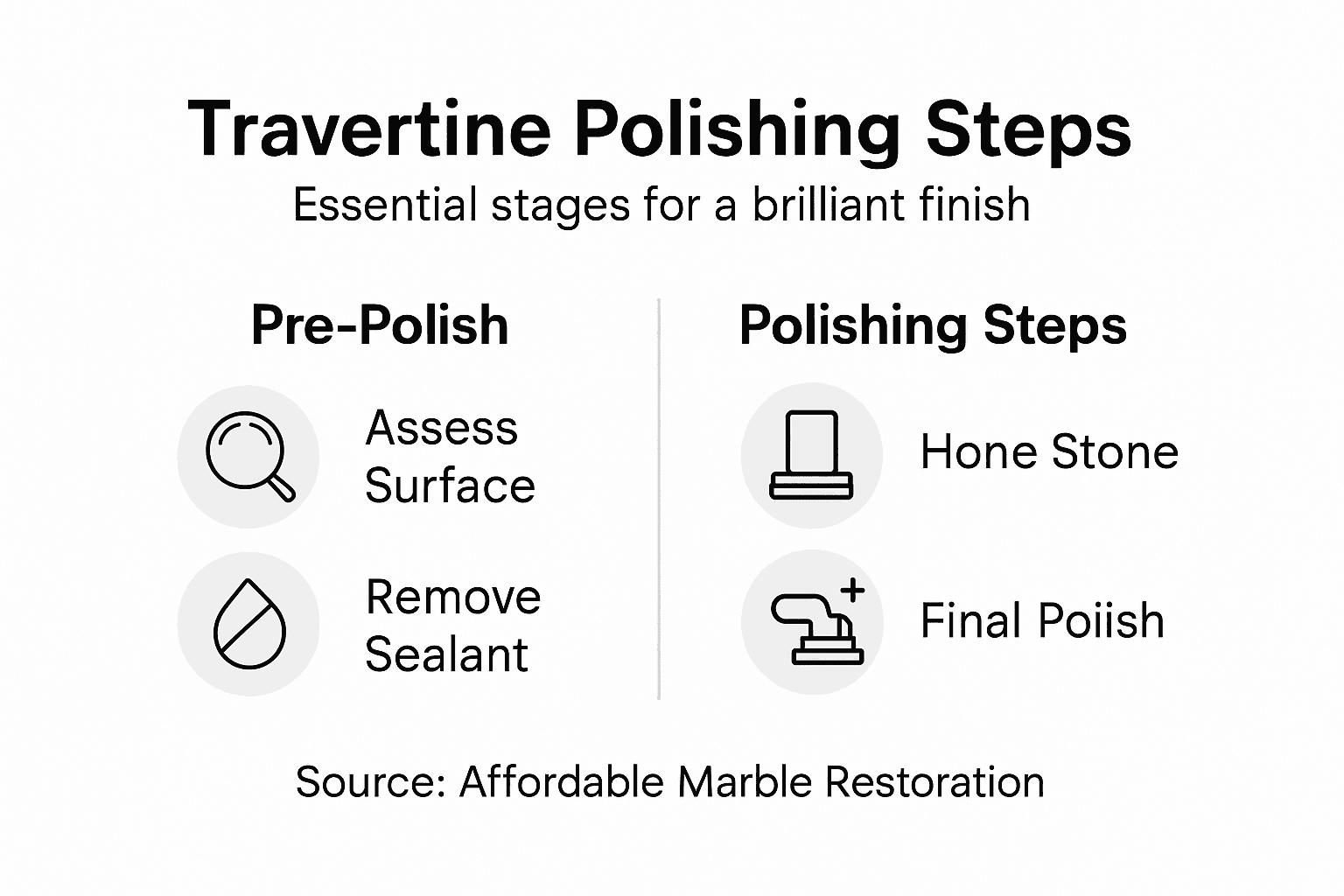
Before you apply any sealer, your travertine surface must be absolutely clean and completely dry. Any residual dust, oil, or moisture will prevent the sealer from bonding properly and create an uneven protective layer. Start by vacuuming thoroughly with a fine-filter vacuum to remove any remaining polishing dust. Then wipe the entire surface with a clean, dry cloth, paying special attention to corners and edges where dust accumulates. If you see any streaks or haze on the stone, use a slightly damp cloth to remove them, then dry immediately. Your surface should feel dry to the touch and look clear without any film or residue.
Choosing the right sealer for your travertine is crucial. Applying a suitable impregnating sealer provides protection while preserving the natural look of your polished stone. Look for a sealer specifically designed for travertine or natural stone, as these products penetrate the porous structure of the stone and provide long-lasting protection against stains and moisture. Many professional-grade sealers come with application instructions, so read these carefully before starting. Some sealers require a buffing step, while others dry to a clear finish. Understanding your specific product ensures you apply it correctly.
Apply your sealer uniformly across the entire surface using a clean cloth, soft brush, or application pad, depending on what your sealer instructions recommend. Work in small sections, approximately 3 by 3 feet at a time, to ensure even coverage. Apply the sealer in thin, consistent coats rather than one thick coat. Many sealers require multiple thin applications rather than one heavy application. Follow the manufacturer’s recommendations for drying time between coats. In humid South Florida conditions, this may take longer than the suggested timeframe, so be patient. Don’t rush to use your travertine before the sealer has fully cured, which typically takes 24 to 48 hours depending on the product and humidity levels.
Here’s your sealing application process:
- Clean and dry the entire surface thoroughly before applying sealer
- Read all product instructions carefully to understand application requirements
- Work in small sections of 3 by 3 feet for even, manageable coverage
- Apply thin coats rather than one thick coat for better penetration
- Allow adequate drying time between coats as specified by manufacturer
- Follow curing instructions before resuming normal use of the surface
A properly sealed travertine surface resists stains and moisture for years, protecting your investment and keeping your stone looking polished and brilliant.
Once your sealer has fully cured, it’s time to inspect your finished work. Walk across your travertine and look for any areas where the seal may not have bonded properly or where the polish is uneven. High-traffic areas and edges deserve special attention. If you notice any dull spots or areas lacking the protective seal, you may need to apply an additional coat of sealer to those specific regions. Check for any haze, streaking, or uneven shine that wasn’t present immediately after polishing. If you spot imperfections, address them now while the sealer is still relatively fresh, before it cures completely.
Run your hand across the sealed surface and feel the difference. The stone should feel smooth but slightly less slippery than before sealing, as the sealer creates a protective layer while maintaining the polished finish. This is exactly what you want. Your travertine has gone through a complete transformation from preparation through polishing to protection. The stone is now ready for years of beauty and durability. Take a moment to admire what you’ve accomplished. Your South Florida home now has travertine surfaces that look professionally restored and protected.
Below is a summary of typical tools and products used in each stage of travertine restoration:
| Step | Key Tools Used | Essential Product Type |
|---|---|---|
| Surface Prep | Straightedge, vacuum | pH-neutral stone cleaner |
| Sealant Removal | Scraper, utility knife | Denatured alcohol |
| Honing | Orbital sander, grit pads | Stone-safe abrasive pads |
| Polishing | Polisher, fine pads | 1500–3000 grit polish pads |
| Sealing | Soft cloth, brush | Impregnating stone sealer |
Pro tip: Test your sealer’s effectiveness by placing a few drops of water on different areas of the sealed surface to ensure they bead up and don’t absorb, confirming the seal is working properly before you consider the project complete.
Restore Your Travertine to Brilliant Perfection Today
If your travertine surfaces show signs of dullness, old sealant buildup, or uneven polish, you are not alone. Achieving the flawless, lasting shine described in “Travertine Polishing Step by Step for a Brilliant Finish” requires professional expertise in every stage — from thorough surface assessment and precise sealant removal to expert honing, polishing, and sealing. Common challenges like natural pits, cracks, and South Florida’s humidity can all affect your travertine’s look and durability.
At Affordable Marble Restoration, we understand these issues and specialize in customized solutions tailored to your stone’s unique condition. Our Boca Raton team uses advanced techniques to gently restore your travertine’s smoothness and gloss, ensuring your floors, countertops, or patios look radiant and protected against everyday wear. Ready to transform your stone surfaces with expert care? Discover how we bring out the true beauty of your travertine by visiting Affordable Marble Restoration. Learn more about our comprehensive stone restoration services and schedule your consultation today to secure a brilliant finish that lasts.
Frequently Asked Questions
How do I prepare my travertine for polishing?
Start by assessing the surface for cracks, chips, and moisture levels. Ensure it is clean and completely dry before proceeding with the honing and polishing steps.
What is the purpose of honing in the travertine polishing process?
Honing smooths the surface of the travertine, removes minor imperfections, and prepares it for polishing. Use progressively finer abrasives to achieve an even texture across the entire area, which enhances the final polish.
How do I apply the sealer after polishing my travertine?
Ensure the surface is deeply cleaned and completely dry before applying sealer. Work in small sections with thin coats to allow proper penetration and drying, following the manufacturer’s recommended drying times between applications.
What should I do if my travertine shows uneven polishing results?
Inspect the surface carefully to identify areas with dull spots or inconsistent shine. If you find imperfections, consider lightly re-polishing those areas with finer grit pads to achieve a uniform finish.
How do I maintain my polished travertine after sealing?
Use a pH-neutral stone cleaner regularly and promptly clean up spills to keep the surface looking its best. Perform periodic resealing as recommended to protect against stains and maintain the polish, typically every 1-2 years, depending on traffic and usage.
