

TL;DR:
- Natural stone requires specialized knowledge to avoid damage during restoration.
- DIY restoration risks uneven results and costly mistakes, especially for delicate stones.
- Professional restoration ensures uniform, long-lasting results tailored to specific stone types and conditions.
Many South Florida homeowners start a DIY stone restoration project with the best intentions, only to realize halfway through that they’ve made things worse. The grout is smeared, the marble looks cloudy, or a harsh chemical has left a dull patch that wasn’t there before. Restoring natural stone is not like repainting a wall. Each stone type reacts differently to products, tools, and technique. Before you rent a floor polisher or order a kit online, you need to understand what you’re actually dealing with, what could go wrong, and when calling a professional is the smarter, cheaper move.
Table of Contents
- Understanding stone surfaces and restoration needs
- DIY stone restoration: Pros, cons, and common pitfalls
- Professional stone restoration: What to expect and benefits explained
- DIY vs professional: Cost, results, and risks compared
- Making your decision: Practical tips for South Florida homeowners
- Expert perspective: What most guides don’t tell you about stone restoration
- Get restored surfaces, guaranteed: Professional help in South Florida
- Frequently asked questions
Key Takeaways
| Point | Details |
|---|---|
| Understand your stone | Stone type and damage determine if DIY or professional restoration is best. |
| DIY risks add up | DIY can seem cheaper but often leads to costly mistakes or incomplete results. |
| Professionals offer lasting value | Expert services deliver uniform, high-quality finishes and protect property value. |
| Make an informed choice | Assess your needs and local factors to choose the safest, most effective solution. |
Understanding stone surfaces and restoration needs
Natural stone adds real character and value to a home. Whether it’s a marble entryway, a granite kitchen countertop, or terrazzo floors in a Boca Raton condo, stone enhances interiors in ways that few other materials can match. But stone is also porous, reactive, and surprisingly easy to damage if you don’t know what you’re working with.
Different stones have very different properties:
- Marble is soft and highly reactive to acids. Even lemon juice or vinegar can etch the surface.
- Granite is harder and more resistant, but still needs proper sealing to prevent staining.
- Travertine has natural pits and voids that trap dirt and require specialized filling techniques.
- Terrazzo is a composite material that needs specific grinding and polishing protocols.
- Limestone and onyx are among the most delicate stones and are easily scratched or discolored.
Common types of damage include surface scratches, deep etching (chemical burns from acidic substances), staining from oils or rust, chips along edges, and general dullness from years of foot traffic. The type of damage matters enormously because each issue requires a different fix. A scratch needs honing. An etch needs a different abrasive approach. A stain may need a poultice treatment that draws the contaminant out of the pores.
Restoration is necessary when cleaning alone no longer restores the surface’s appearance. Value of stone restoration is well established: preserving the beauty and integrity of natural stone directly protects your property’s market appeal and long-term value. Ignoring damage rarely makes it better. It usually makes it worse.
Pro Tip: Always test any cleaner or treatment on a small, hidden section of the stone first. The underside of a step or the inside of a cabinet base works well. Wait 24 hours before proceeding.
DIY stone restoration: Pros, cons, and common pitfalls
Now that you understand your stone’s needs, it’s tempting to try restoring surfaces yourself. There’s a wide range of DIY stone restoration products available, from pH-neutral cleaners to polishing powders and sealers. For very minor issues, like light surface dust or a small water stain on granite, a careful DIY approach can work.
But here’s what DIY actually involves for anything beyond basic cleaning:
- Identifying the exact stone type and finish (polished, honed, brushed)
- Selecting the correct grit sequence for sanding or honing
- Using the right chemical cleaner without damaging adjacent grout or surfaces
- Operating a floor buffer or hand polisher without creating uneven results
- Applying sealer evenly and allowing proper cure time
- Protecting surrounding surfaces from chemical splatter or abrasive dust
Most homeowners underestimate how technical this gets. Choosing the wrong abrasive grit can leave visible swirl marks. Using an acidic cleaner on marble causes etching that looks worse than the original stain. Spreading a stain is one of the most common DIY mistakes, especially with oil-based or rust stains that migrate when agitated incorrectly.
“A single mistake can turn a $200 DIY project into a $2,000 professional repair.”
The perceived cost savings often disappear quickly. Equipment rental, multiple product purchases, and the time spent watching tutorials and redoing sections all add up. And if you cause new damage, professional cleaning benefits become even more necessary because improper DIY techniques can worsen stone damage and lead to more expensive repairs.
Pro Tip: Keep any tools you use for stone restoration dedicated to that purpose only. A sponge or pad that touched a bathroom cleaner can transfer residue that reacts badly with stone treatments.
Professional stone restoration: What to expect and benefits explained
But how does hiring a pro really differ from going the DIY route? The answer comes down to equipment, expertise, and accountability.
A professional restoration process typically follows these steps:
- Inspection and assessment of the stone type, finish, and specific damage
- Deep cleaning using commercial-grade, pH-balanced solutions safe for the specific stone
- Grinding (if needed) to remove deep scratches, chips, or uneven surfaces using diamond-tipped tools
- Honing to create a smooth, consistent surface before polishing
- Polishing using progressively finer grits to achieve the desired sheen
- Sealing with a penetrating sealer appropriate for the stone’s porosity
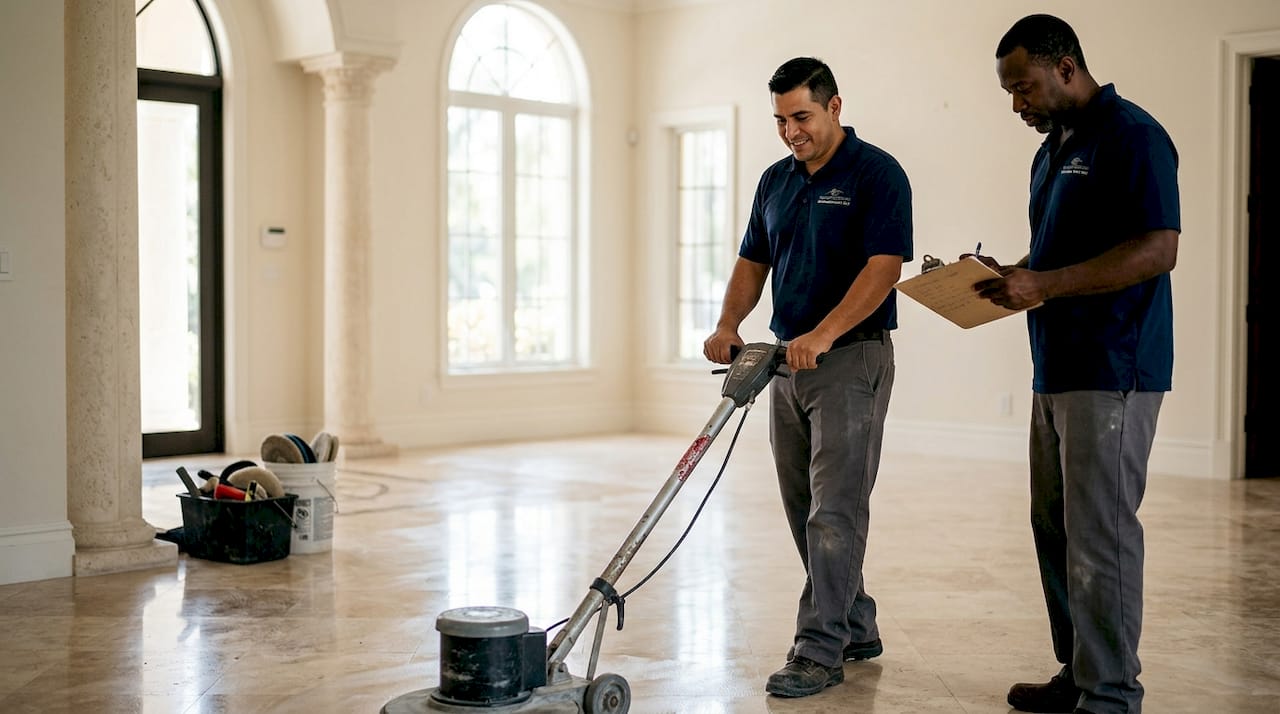
Professionals use diamond abrasive pads, industrial wet polishers, and stone-specific sealers that are simply not available to the general public. The results are uniform, which is critical on large floor areas where any inconsistency is immediately visible.
“Expert restoration protects your investment for years, while DIY risks irreversible harm.”
For elegant stone restoration in a Miami or Boca Raton home, professional restoration delivers lasting beauty by removing deep stains and reversing years of damage. This matters especially for high-traffic areas, rare stone types, or surfaces with sentimental or financial value. If you’ve already attempted a DIY fix and it didn’t work, stone floor restoration by a professional is often the only way to fully recover the surface.
DIY vs professional: Cost, results, and risks compared
With both approaches laid out, here’s a direct comparison to help you decide.
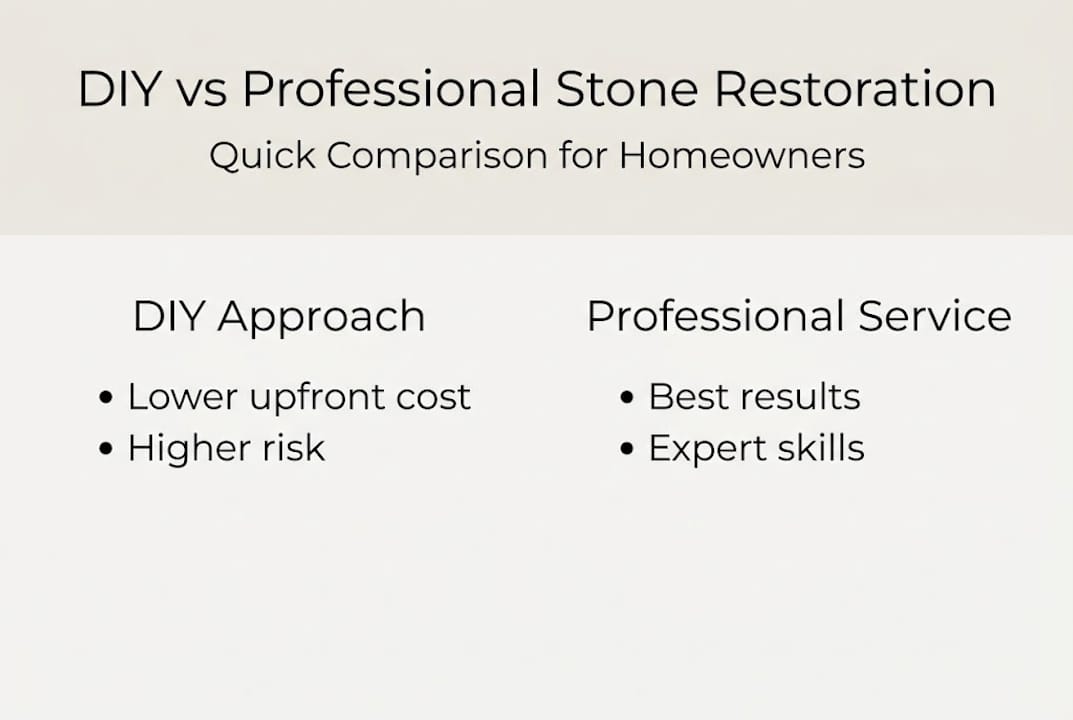
| Factor | DIY | Professional |
|---|---|---|
| Upfront cost | $50 to $300 | $300 to $1,500+ |
| Time investment | Full weekend or more | 1 to 3 days |
| Finish quality | Variable, risk of inconsistency | Uniform, high-quality |
| Safety | Chemical and equipment risks | Trained, insured |
| Guarantee | None | Often included |
| Risk of new damage | High | Very low |
Many property owners underestimate hidden costs and rework associated with DIY stone restoration. Equipment rental alone can run $75 to $150 per day. If you need to redo a section, you’re renting again. Chemical burns or spreading a stain can require full professional intervention at a higher cost than if you’d called a pro first.
Here’s a quick guide to which approach fits which situation:
- DIY is reasonable for: Light surface cleaning, resealing a small countertop, minor water spots on granite
- Professional is essential for: Deep scratches, etching on marble, large floor areas, travertine or onyx surfaces, any prior failed DIY attempt
- Always call a professional for: Antique stone, commercial properties, high-value installations, or if you’re unsure of the stone type
The stone care tips that apply to commercial properties are equally relevant at home: when in doubt, protect your investment by getting an expert opinion before acting.
Making your decision: Practical tips for South Florida homeowners
Once you see the comparisons, here’s a step-by-step way to decide for your home or property.
South Florida’s climate adds a layer of complexity that homeowners in other regions don’t face. High humidity accelerates staining and mold growth in stone pores. Salt air near the coast speeds up surface degradation. Hurricane season brings moisture intrusion that can affect stone floors and outdoor patios. These factors make proper sealing and regular maintenance even more critical here than in drier climates.
Quick decision guide for South Florida stone scenarios:
| Scenario | Recommended approach |
|---|---|
| Small granite countertop, light stain | DIY with pH-neutral cleaner |
| Marble floor, visible etching | Professional honing and polishing |
| Travertine patio, heavy weathering | Professional restoration and sealing |
| Terrazzo floors, dullness after years | Professional grinding and polishing |
| Outdoor limestone, salt air damage | Professional assessment first |
To vet a professional stone restoration service, follow these steps:
- Check online reviews on Google and Yelp, looking for consistent feedback on quality and reliability
- Confirm the company is licensed and insured in Florida
- Ask specifically about experience with your stone type
- Request before-and-after photos of similar projects
- Get a written quote that includes sealing and any guarantee terms
For residential restoration options tailored to your property, the right restoration approach depends on stone type, surface area, damage level, and local factors like humidity and weather.
Pro Tip: In South Florida, always ask any restoration professional about moisture-resistant sealing. A standard sealer may not hold up against the region’s humidity levels. Ask specifically for a penetrating sealer rated for high-humidity environments.
Expert perspective: What most guides don’t tell you about stone restoration
Bringing it all together, here’s what many guides overlook, and what experience really teaches.
The real cost of DIY isn’t just money. It’s the stress of a project that spirals, the weekend lost to a floor that still looks bad, and the frustration of realizing the damage is now worse. We’ve seen it dozens of times: a homeowner tries to fix a small etch on a marble countertop, uses the wrong compound, and ends up with a cloudy patch three times the original size.
What actually makes the difference in stone restoration isn’t the equipment. It’s the small decisions: the grit sequence, the humidity level in the room during polishing, the dwell time for a cleaning solution. These details come from experience, not from a YouTube tutorial. You can rent the same machine a professional uses and still get a completely different result.
Before starting any project, even if you plan to do it yourself, consult a professional first. Many companies offer free assessments. That conversation alone can save you from a costly mistake. Check out real stone restoration examples to understand what’s actually achievable before you commit to either path.
Get restored surfaces, guaranteed: Professional help in South Florida
If you want the assurance of flawless stone without taking risks, here’s how to connect with local experts. At Affordable Marble Restoration, we serve homeowners and property managers across South Florida, from Miami to Pompano Beach, with restoration solutions built around your specific stone and situation. Whether you have granite restoration services needs, require concrete restoration for an outdoor area, or want to explore full stone service options for your property, we bring the expertise, equipment, and guarantees that DIY simply can’t match. Contact us today for a free inspection and quote.
Frequently asked questions
What is the cost difference between DIY and professional stone restoration?
DIY costs less upfront, typically $50 to $300, but hidden costs and rework often erase those savings, making professional restoration more cost-effective overall.
Can I restore any type of stone myself?
Simple cleaning and minor stain removal are possible on some stones, but restoration method depends on stone type and damage level, so deep scratches, etching, and rare stones are best left to professionals.
How long does professional stone restoration take?
Professional restoration usually takes one to three days depending on the surface area and type of damage, saving you time while ensuring quality results.
What mistakes should I avoid with DIY stone restoration?
Avoid harsh chemicals, aggressive scrubbing, and skipping patch tests, since improper DIY techniques often worsen damage and lead to costlier professional repairs down the line.
Recommended
- 6 Expert Commercial Stone Care Tips for Facility Managers
- Why Restore Natural Stone? Protect Value, Beauty & Longevity
- Stone polishing: boost beauty and durability by 70%
- How to restore marble floors: guide for South Florida homes
- Travertine Decor Maintenance Workflow for Lasting Luxury – Marmorique
